Mammals · Artiodactyla · Camelidae
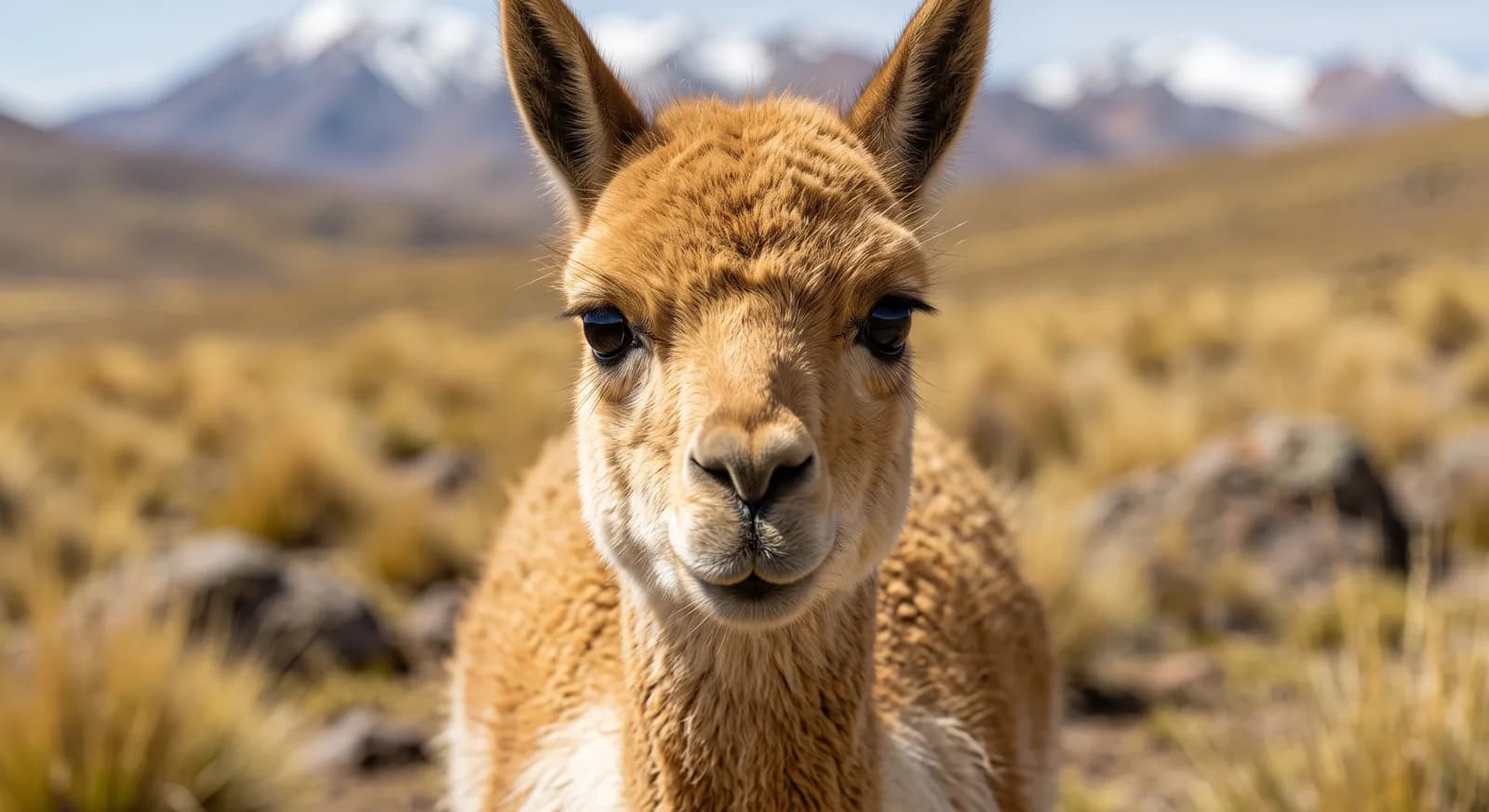
Vicuna
Vicugna vicugna
The species is abundant and widely distributed; it faces no significant short-term risk. See full glossary
The wild relative of the llama and the alpaca, it produces one of the finest and most valuable fibres in the world.
Weight
35 kg – 65 kg
Size
1.5 m – 1.6 m
Lifespan
20 years
Diet
Herbivore
Feeds mainly on plants.
Activity
Diurnal
Active mainly during the day.
Social structure
Herd
Lives in large groups as a strategy against predators.
Sighting difficulty
Easy
Estimated population
Some 347,000 animals in total: around 188,000 in Peru, 127,000 in Argentina, 63,000 in Bolivia, 17,000 in Chile and 2,700 in Ecuador (a population introduced in 1988); the species fell below 10,000 animals in the 1960s
Fun facts
- Its wool is among the most expensive in the world.
- It lives in the Andes at over 4,000 metres.
- It was the sacred animal of the Incas.
Life cycle & biology
- Skeleton type
- Vertebrate - internal bony skeleton (mammal)
- Habitat & environment
- Cold, semi-arid alpine puna of the Andes, between 3,000 and 4,800 m
- Birth weight
- Born precocial, on its feet within about 15 minutes
- Size at birth
- Born precocial
- Sexual maturity
- Female: ~2 years (some are still breeding at 19) | Male: ~3 years
- Gestation / incubation
- ~11 months (330-350 days)
- Litter / clutch size
- 1 young per birth
- Lifespan in captivity
- Documented record of up to 24 years
Sources consulted: A-Z Animals; Britannica; Animals.net; Animalia.bio; Dimensions.com; Exploringnature.org; StudyGuides.com; BioDB; Twycross Zoo; Acebes et al. 2018, IUCN Red List e.T22956A18540534: catalogada como Preocupación menor por su amplia distribución, su tamaño poblacional y su tendencia creciente || IUCN Red List, evaluación de Vicugna vicugna de 2018; Animal Diversity Web
Where to watch it
Parks and dive sites where this species has been documented.
Related species
Other species in the catalogue with the most in common with Vicuna — same habitat, park, country, tags or family.
 Least Concern
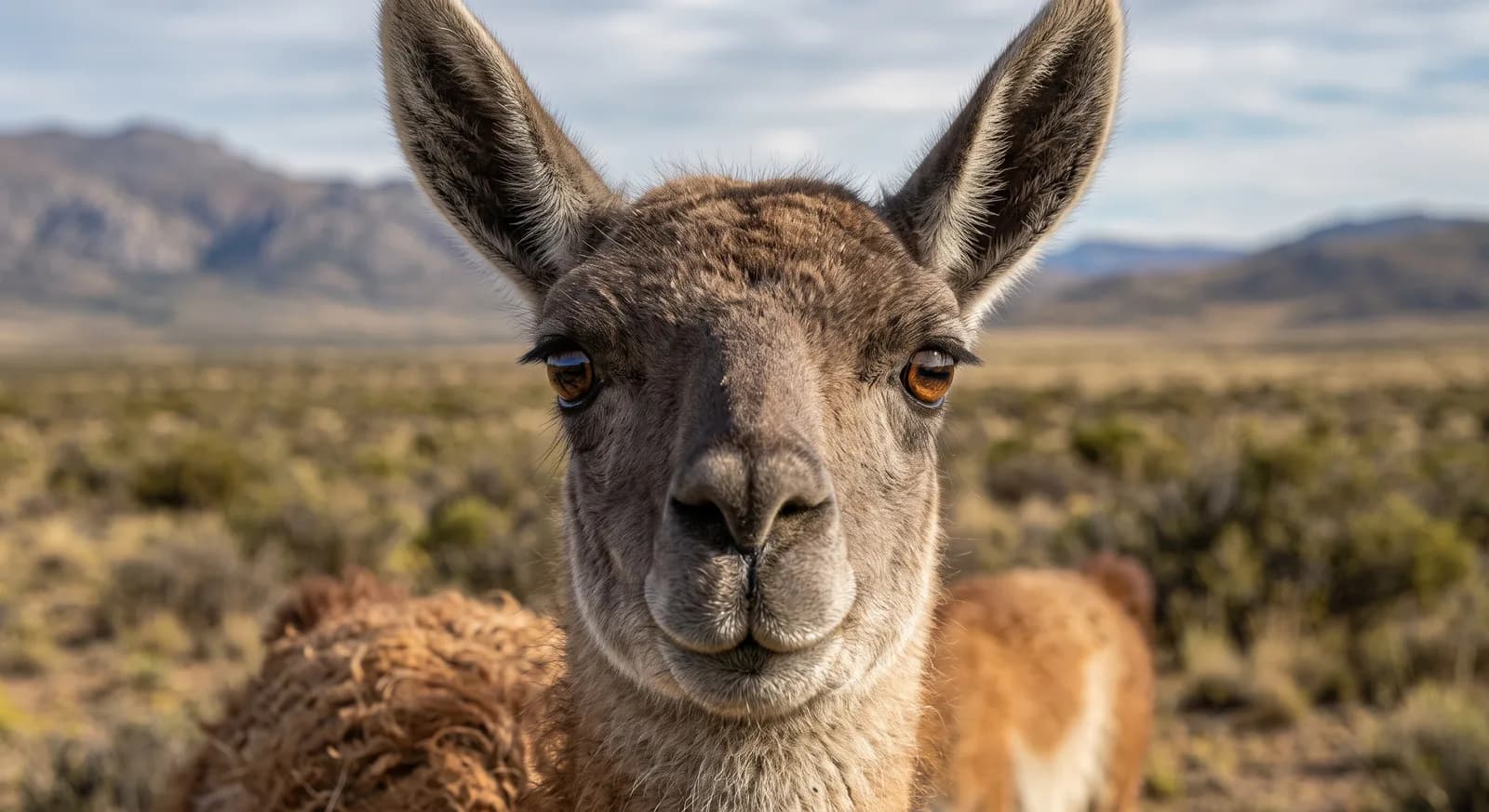
Guanaco
Lama guanicoe
Southern Mountain Viscacha
Lagidium viscacia
Alpaca
Vicugna pacos
Llama
Lama glama
Dusky-legged Guan
Penelope obscura
Giant Coot
Fulica gigantea
Keep exploring
Based on what we already know about vicuna.
Comments
Share an experience, a fun fact or a tip for seeing the vicuna.
Be the first to comment.