One of the 3 guans on WAnimals
Birds · Galliformes · Cracidae
Dusky-legged Guan
Penelope obscura
The species is abundant and widely distributed; it faces no significant short-term risk. See full glossary
The dusky-legged guan is a dark brown cracid with a bare red wattle covering the throat, native to the yungas and the Atlantic forest of the Southern Cone. It feeds on fruit in the canopy and helps to disperse large seeds. It is one of the traditional game birds of north-western Argentina and southern Brazil, and its population is falling because of hunting and logging.
Weight
1 kg – 1.6 kg
Size
68 cm – 75 cm
Lifespan
20 years
Diet
Herbivore
Feeds mainly on plants.
Activity
Diurnal
Active mainly during the day.
Sighting difficulty
Easy
Fun facts
- The male performs a display flight at dawn in which he produces a drumming whirr with his wings, a mechanical sound that carries through the forest and marks his territory.
- It is an important disperser of large seeds in the Atlantic forest and the yungas, and its disappearance reduces the regeneration of several trees of those forests.
- Its meat is prized and it is one of the first large birds to disappear from a forest under hunting pressure, which makes it a good indicator of conservation status.
Life cycle & biology
- Skeleton type
- Vertebrate - internal bony skeleton (bird)
- Habitat & environment
- Subtropical forest, yungas cloud forest and gallery forest of south-eastern South America
- Sexual maturity
- 2 years
- Gestation / incubation
- 28 days of incubation
- Litter / clutch size
- 3 eggs
Sources consulted: https://es.wikipedia.org/wiki/Penelope_obscura
Where to find it
See its range on the interactive mapWhere to watch it
Parks and dive sites where this species has been documented.
Related species
Other species in the catalogue with the most in common with Dusky-legged Guan — same habitat, park, country, tags or family.
Collared Trogon
Trogon collaris
Yellow-Crowned Amazon
Amazona ochrocephala
Eastern Kingbird
Tyrannus tyrannus
 Least Concern
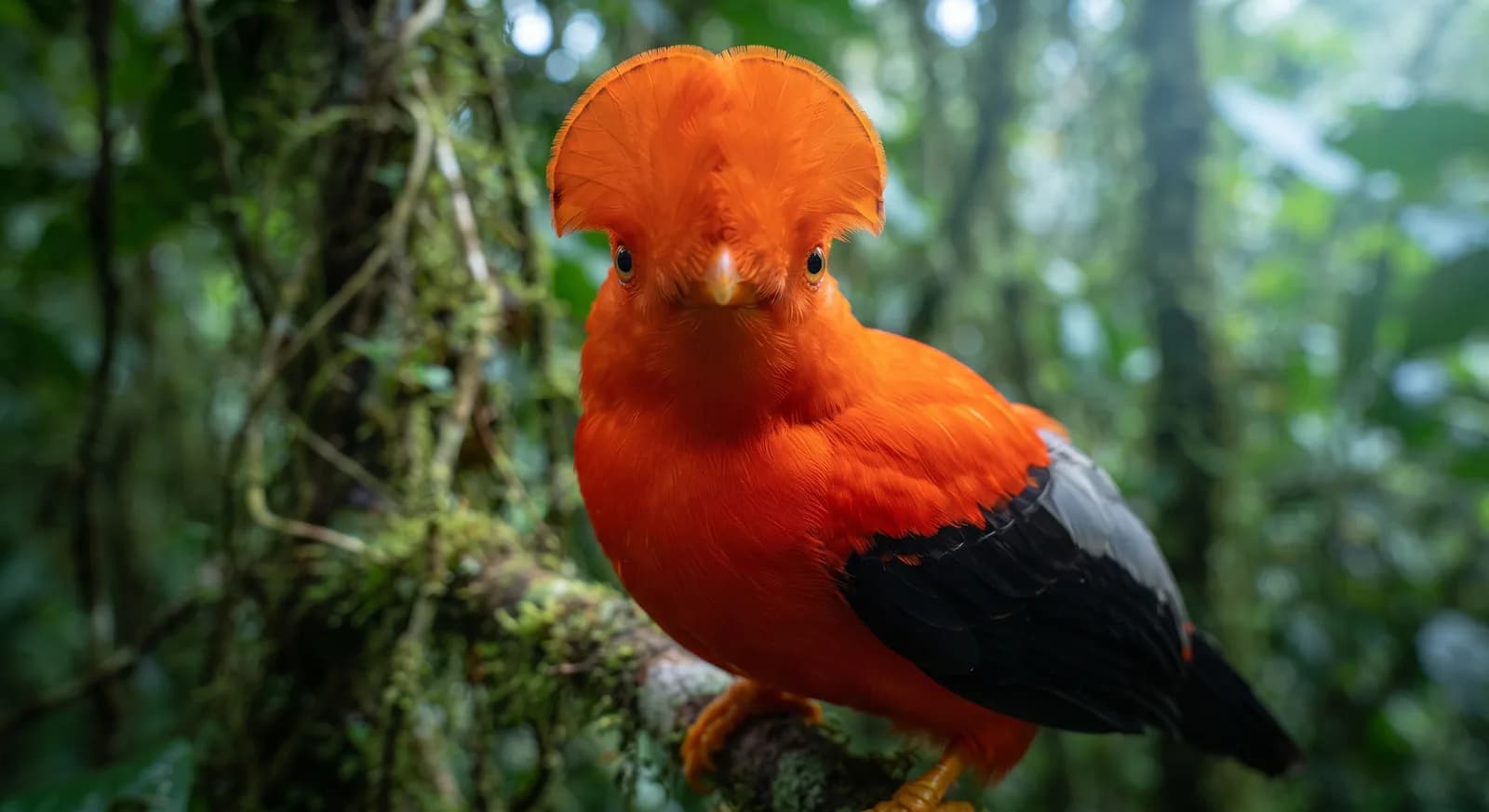
Andean Cock-of-the-rock
Rupicola peruvianus
Plum-throated Cotinga
Cotinga maynana
Horned Screamer
Anhima cornuta
Keep exploring
Based on what we already know about dusky-legged guan.
Comments
Share an experience, a fun fact or a tip for seeing the dusky-legged guan.
Be the first to comment.