Birds · Passeriformes · Cotingidae
Plum-throated Cotinga
Cotinga maynana
The species is abundant and widely distributed; it faces no significant short-term risk. See full glossary
The plum-throated cotinga, also called in Spanish cotinga mayna, munami, cotinga turquesa, cotinga de garganta morada, cotinga golipúrpura or cotinga de garganta lila, is a species of passerine bird of the family Cotingidae belonging to the genus Cotinga. It is native to the central and western Amazon basin in South America.
Weight
55 g – 75 g
Size
18 cm – 20 cm
Lifespan
12 years
Diet
Herbivore
Feeds mainly on plants.
Activity
Diurnal
Active mainly during the day.
Social structure
Solitary
Lives and hunts alone, joining others only to breed.
Sighting difficulty
Easy
Fun facts
- anatomíaIts bright blue comes not from pigment but from the microscopic structure of its feathers, which scatters light much as the sky does.
- Its blue comes from no pigment: it is a structural colour produced by microscopic air cavities in the barbs of the feathers, which scatter blue light. A crushed feather loses the colour completely.
- It is one of the hardest birds to see despite its colour: it stays motionless in the high canopy of flooded forest for long stretches, and is only spotted when the sun catches it full on.
- Its feathers were used for centuries in Amazonian ceremonial headdresses, and their intense blue made them an object of trade between peoples hundreds of kilometres apart.
Life cycle & biology
- Skeleton type
- Vertebrate - internal bony skeleton (bird)
- Habitat & environment
- Canopy of flooded forest, várzea and riverine forest of western Amazonia
- Sexual maturity
- 2 years
- Gestation / incubation
- 25 days of incubation
- Litter / clutch size
- 1 egg
Sources consulted: https://es.wikipedia.org/wiki/Cotinga_maynana
Where to find it
See its range on the interactive mapWhere to watch it
Parks and dive sites where this species has been documented.
Related species
Other species in the catalogue with the most in common with Plum-throated Cotinga — same habitat, park, country, tags or family.
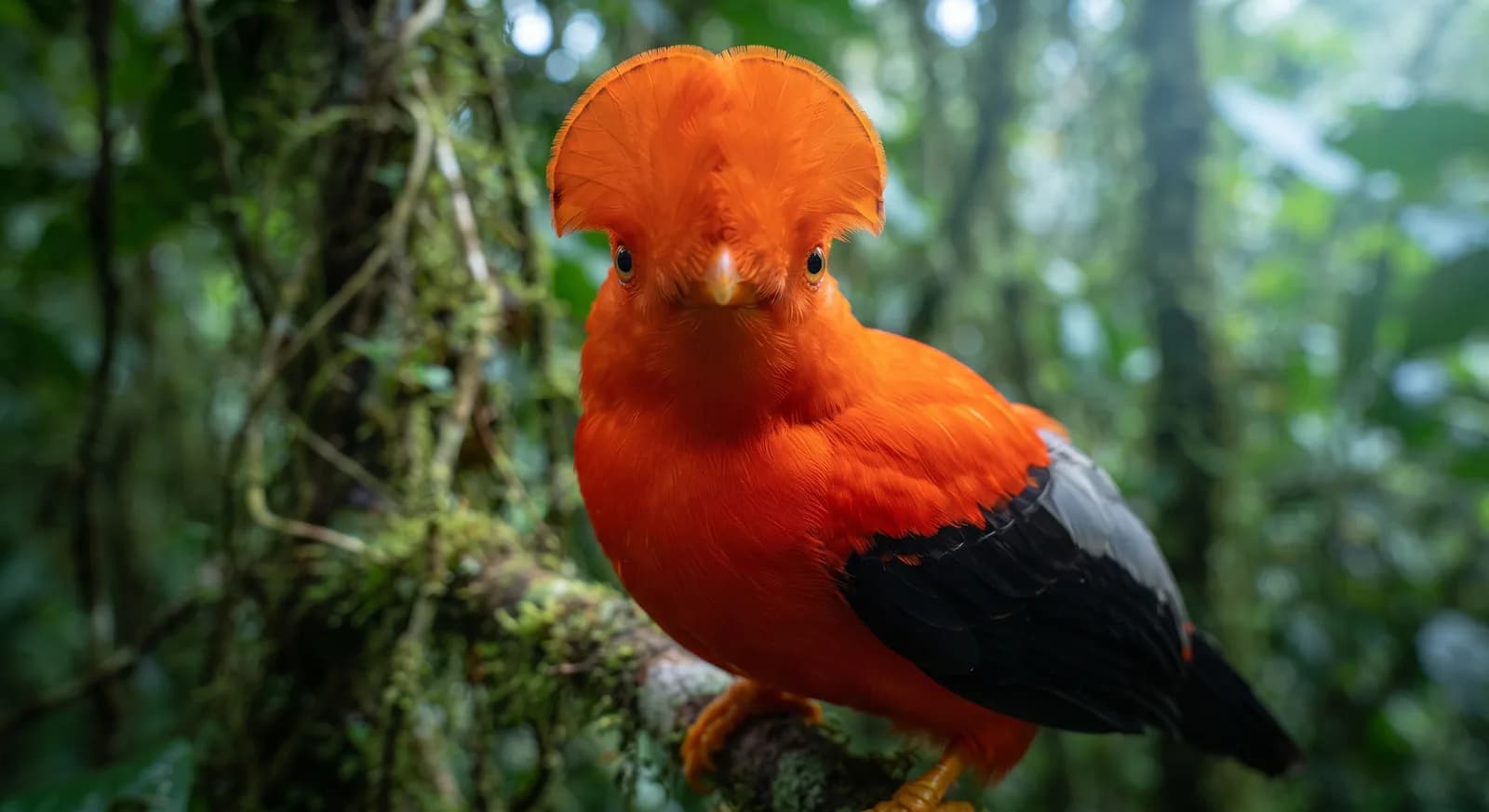 Least Concern
Andean Cock-of-the-rock
Rupicola peruvianus
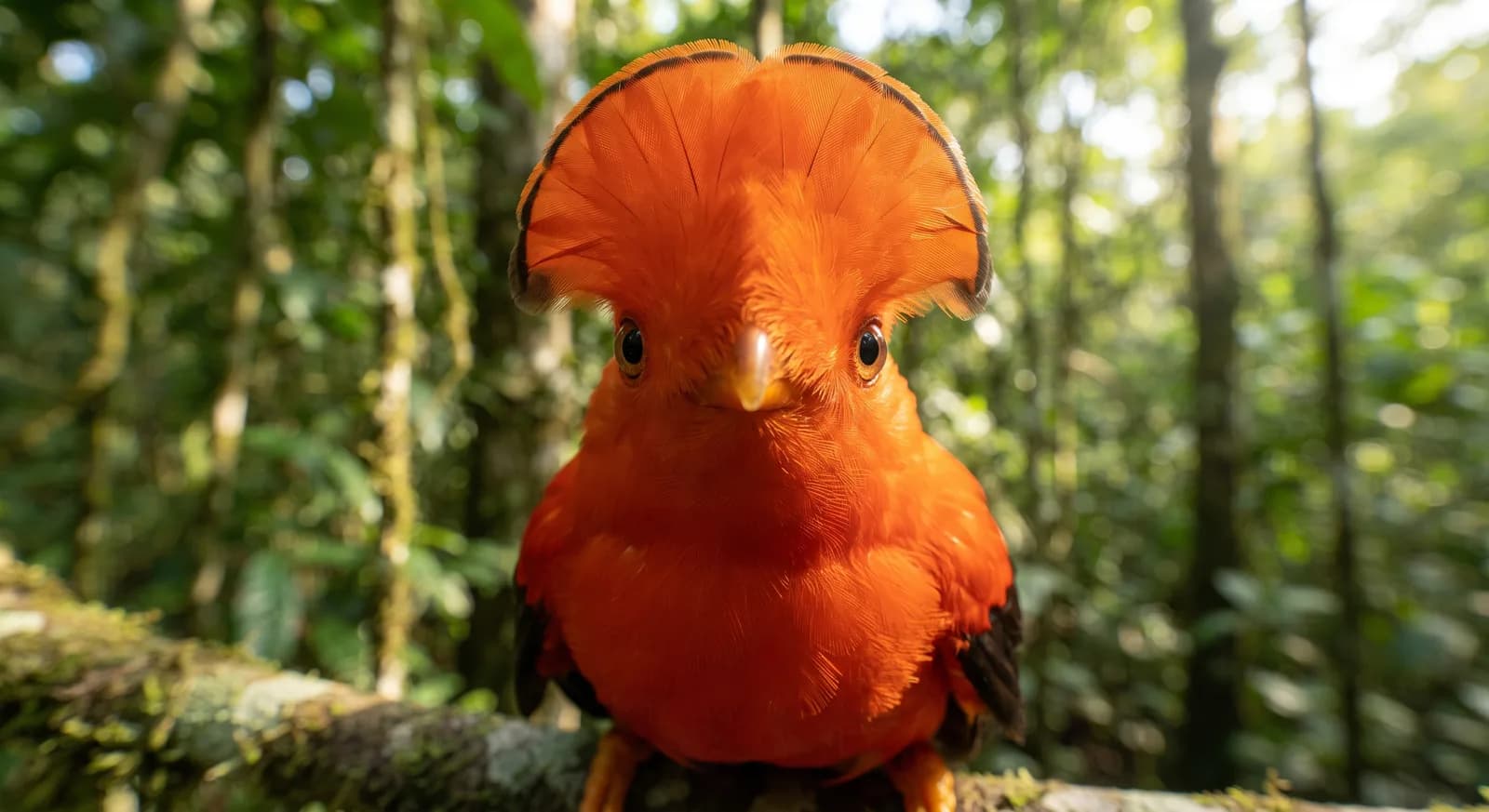 Least Concern
Guianan Cock-Of-The-Rock
Rupicola rupicola
Crimson Topaz
Topaza pella
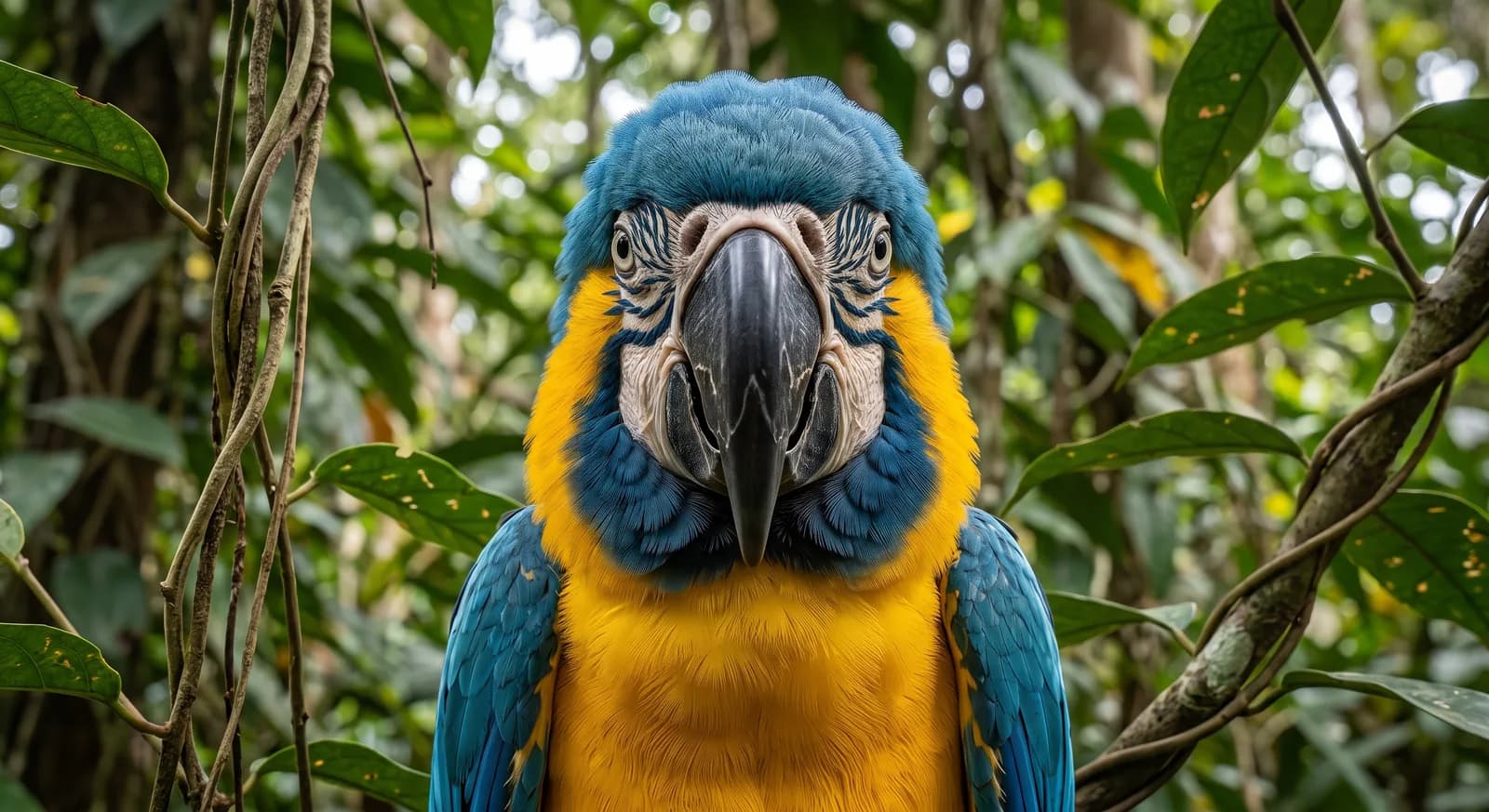 Least Concern
Blue-And-Yellow Macaw
Ara ararauna
Yellow-Crowned Amazon
Amazona ochrocephala
Grey-winged Trumpeter
Psophia crepitans
Keep exploring
Based on what we already know about plum-throated cotinga.
Comments
Share an experience, a fun fact or a tip for seeing the plum-throated cotinga.
Be the first to comment.