One of the 6 macaws on WAnimals
Birds · Psittaciformes · Psittacidae
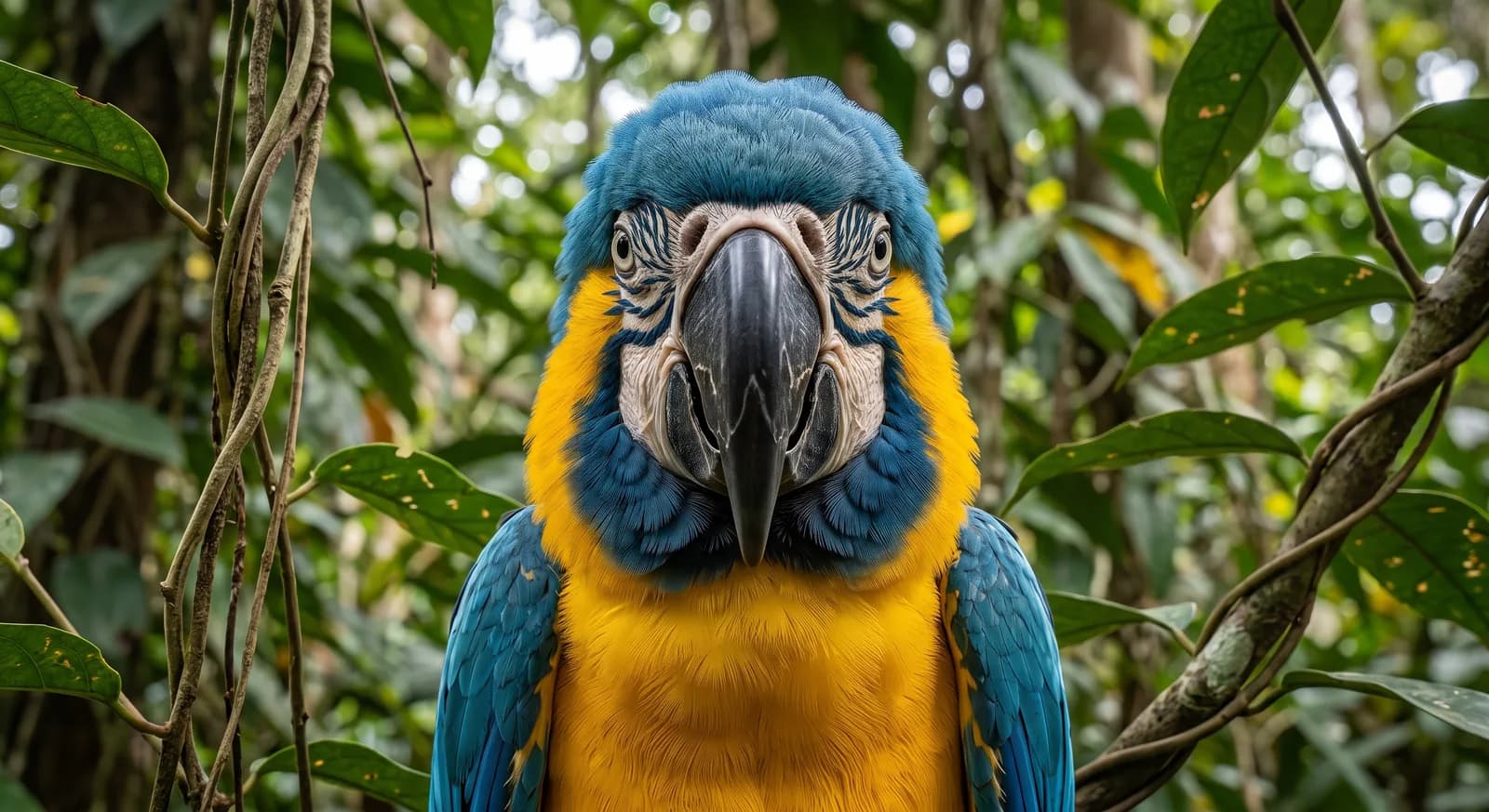
Blue-And-Yellow Macaw
Ara ararauna
The species is abundant and widely distributed; it faces no significant short-term risk. See full glossary
The blue-and-yellow macaw is a parrot of the family Psittacidae endemic to South America. Its range runs from Panama to north-eastern Argentina, taking in the whole of the Amazon basin.
Weight
1 kg on average
Size
81.3 cm – 91.4 cm
Lifespan
43 years
Diet
Herbivore
Feeds mainly on plants.
Activity
Diurnal
Active mainly during the day.
Social structure
In pairs
Usually lives in pairs, sometimes for life.
Sighting difficulty
Easy
Estimated population
More than 10,000 mature individuals; the trend is downward, but the decline is under 10 % in ten years
Fun facts
- It eats clay from river banks, which lets it neutralise the toxins in the unripe seeds it swallows.
Life cycle & biology
- Skeleton type
- Vertebrate - internal bony skeleton (bird)
- Habitat & environment
- Humid rainforest, swampy ground and gallery forest; it nests in cavities high up in old trees
- Birth weight
- An altricial chick, born blind and featherless; it starts to feather at around ten days
- Size at birth
- Born naked and helpless; it becomes independent at around three months
- Sexual maturity
- 3-4 years
- Gestation / incubation
- 24-28 days of incubation
- Litter / clutch size
- 2-3 eggs per clutch, with one clutch every one or two years
- Lifespan in captivity
- Up to 50 years in captivity; 30-35 years is more usual
Sources consulted: https://es.wikipedia.org/wiki/Ara_ararauna
Where to find it
See its range on the interactive mapBest time: From January to July, during the breeding season, when the pairs occupy cavities in tall trees
Where to watch it
Parks and dive sites where this species has been documented.
Related species
Other species in the catalogue with the most in common with Blue-And-Yellow Macaw — same habitat, park, country, tags or family.
 Least Concern
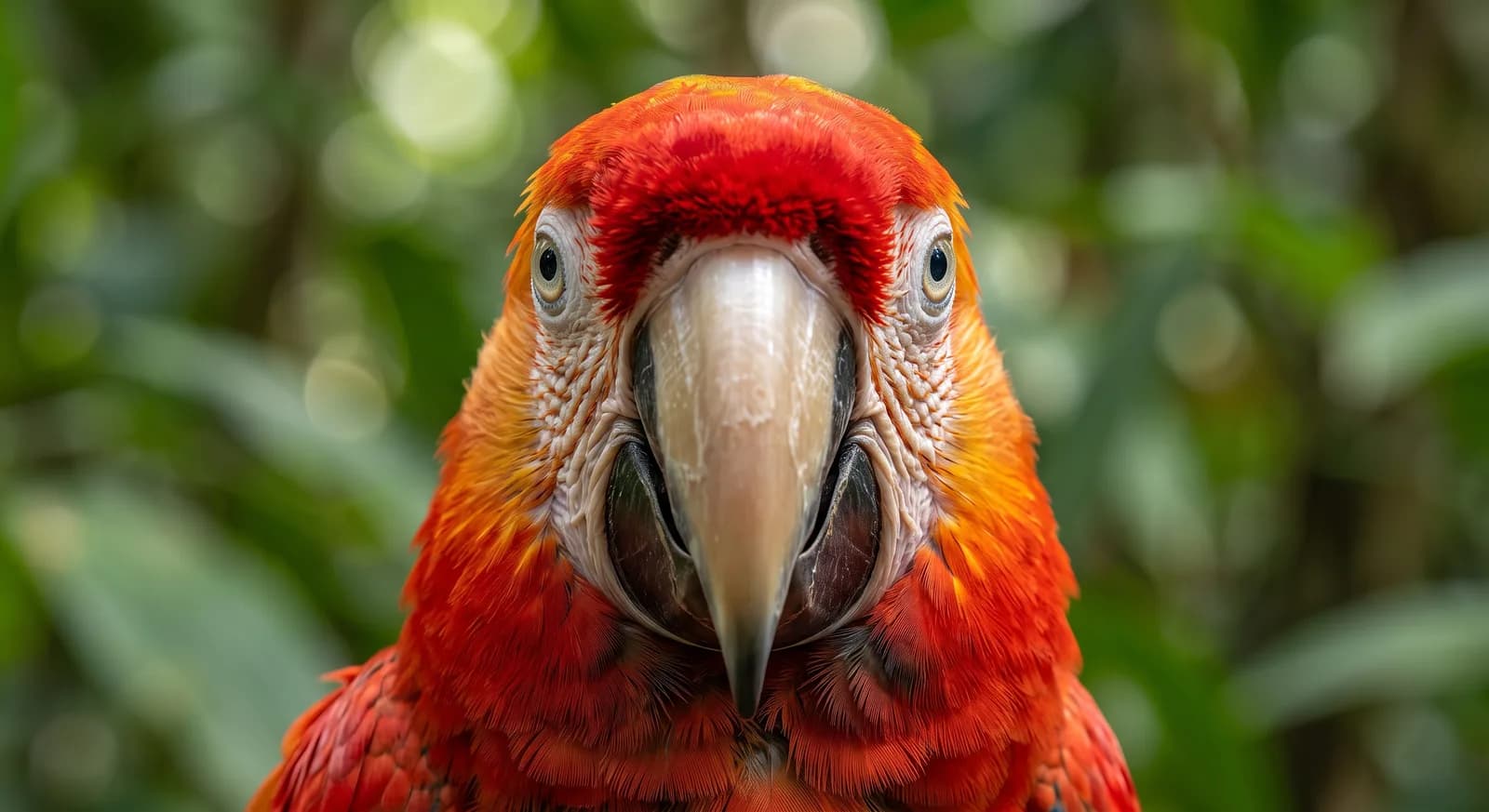
Scarlet Macaw
Ara macao
Yellow-Crowned Amazon
Amazona ochrocephala
Military Macaw
Ara militaris
Hyacinth Macaw
Anodorhynchus hyacinthinus
White-faced Saki
Pithecia pithecia
Collared Trogon
Trogon collaris
Keep exploring
Based on what we already know about blue-and-yellow macaw.
Comments
Share an experience, a fun fact or a tip for seeing the blue-and-yellow macaw.
Be the first to comment.