One of the 6 macaws on WAnimals
Birds · Psittaciformes · Psittacidae
Hyacinth Macaw
Anodorhynchus hyacinthinus
It faces a high risk of extinction in the wild over the medium term. See full glossary
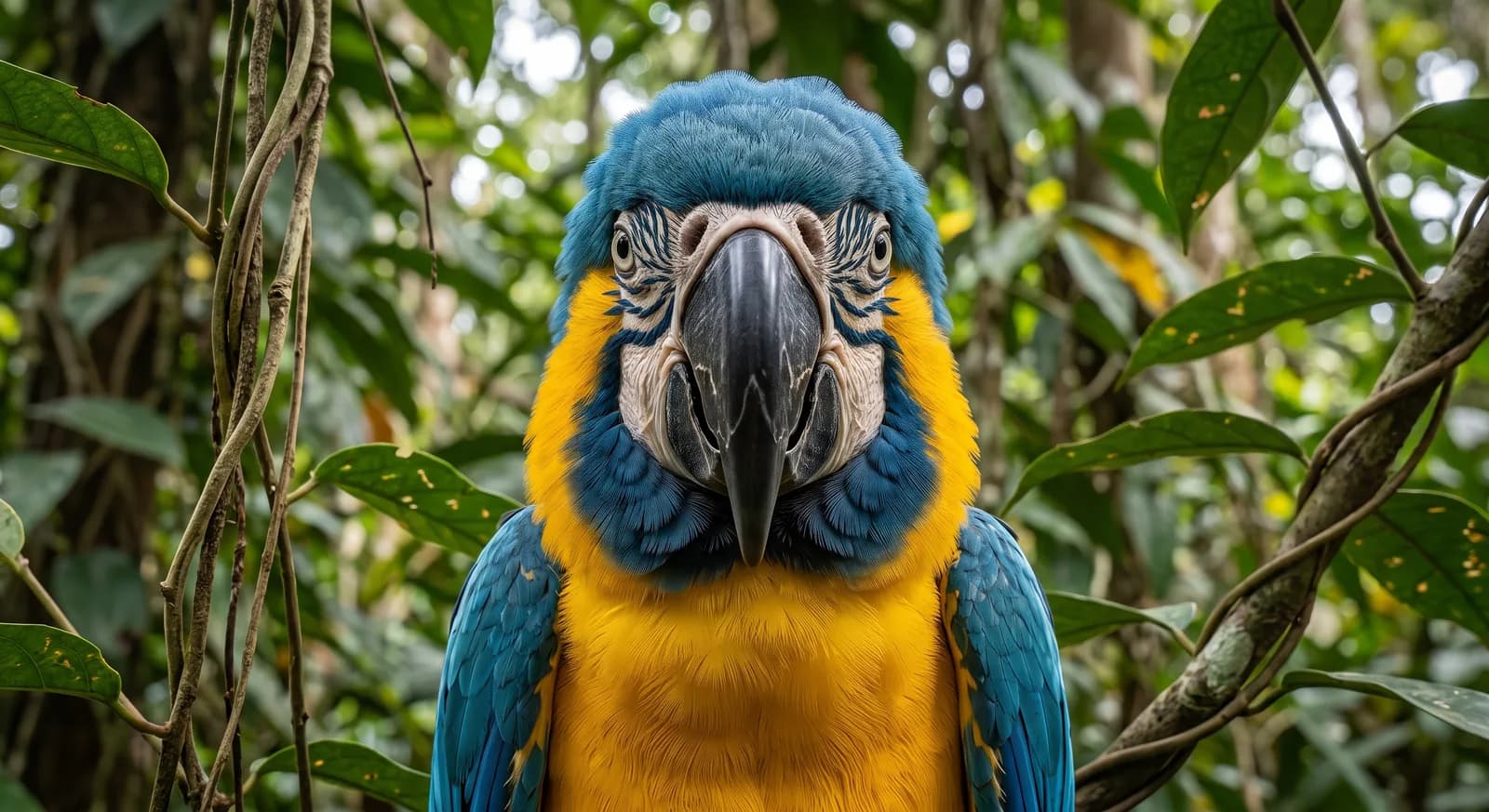
The hyacinth macaw is the largest parrot in the world: a metre in length and a bill capable of cracking palm nuts. It is a uniform cobalt blue with yellow rings around the eye and at the base of the lower mandible. It depends on two or three palm species for food and on enormous trees with hollows in which to nest. Mass capture for the pet trade in the 1980s took tens of thousands of birds, and its recovery in the Pantanal is one of Brazil's great conservation successes.
Weight
1.2 kg – 1.7 kg
Size
95 cm – 1 m
Lifespan
50 years
Diet
Herbivore
Feeds mainly on plants.
Activity
Diurnal
Active mainly during the day.
Social structure
In pairs
Usually lives in pairs, sometimes for life.
Sighting difficulty
Moderate
Estimated population
Around 6,500 individuals
Fun facts
- GeneralThe largest parrot in the world, at 1 m long; its bill opens whole palm nuts.
- Its bill exerts enough force to crack acuri and bocaiuva palm nuts, so hard that they withstand a vehicle driving over them: it is probably the most powerful bill of any bird.
- It depends on the cattle of the Pantanal: it can only open acuri nuts that have already passed through the digestive tract of cattle and tapirs, which strip away the outer pulp.
- It also depends on toucans, which disperse the seeds of the trees it later nests in, even though those same toucans are the main predators of its eggs.
Life cycle & biology
- Skeleton type
- Vertebrate - internal bony skeleton (bird)
- Habitat & environment
- The Pantanal, cerrado and palm savannah
- Sexual maturity
- 7 years
- Gestation / incubation
- 28 days of incubation
- Litter / clutch size
- 2 eggs
Sources consulted: https://www.iucnredlist.org/ | https://animaldiversity.org/ | https://es.wikipedia.org/
Where to find it
See its range on the interactive mapWhere to watch it
Parks and dive sites where this species has been documented.
Related species
Other species in the catalogue with the most in common with Hyacinth Macaw — same habitat, park, country, tags or family.
Military Macaw
Ara militaris
Turquoise-fronted Amazon
Amazona aestiva
Monk Parakeet
Myiopsitta monachus
Yellow-Crowned Amazon
Amazona ochrocephala
 Least Concern
Blue-And-Yellow Macaw
Ara ararauna
 Vulnerable
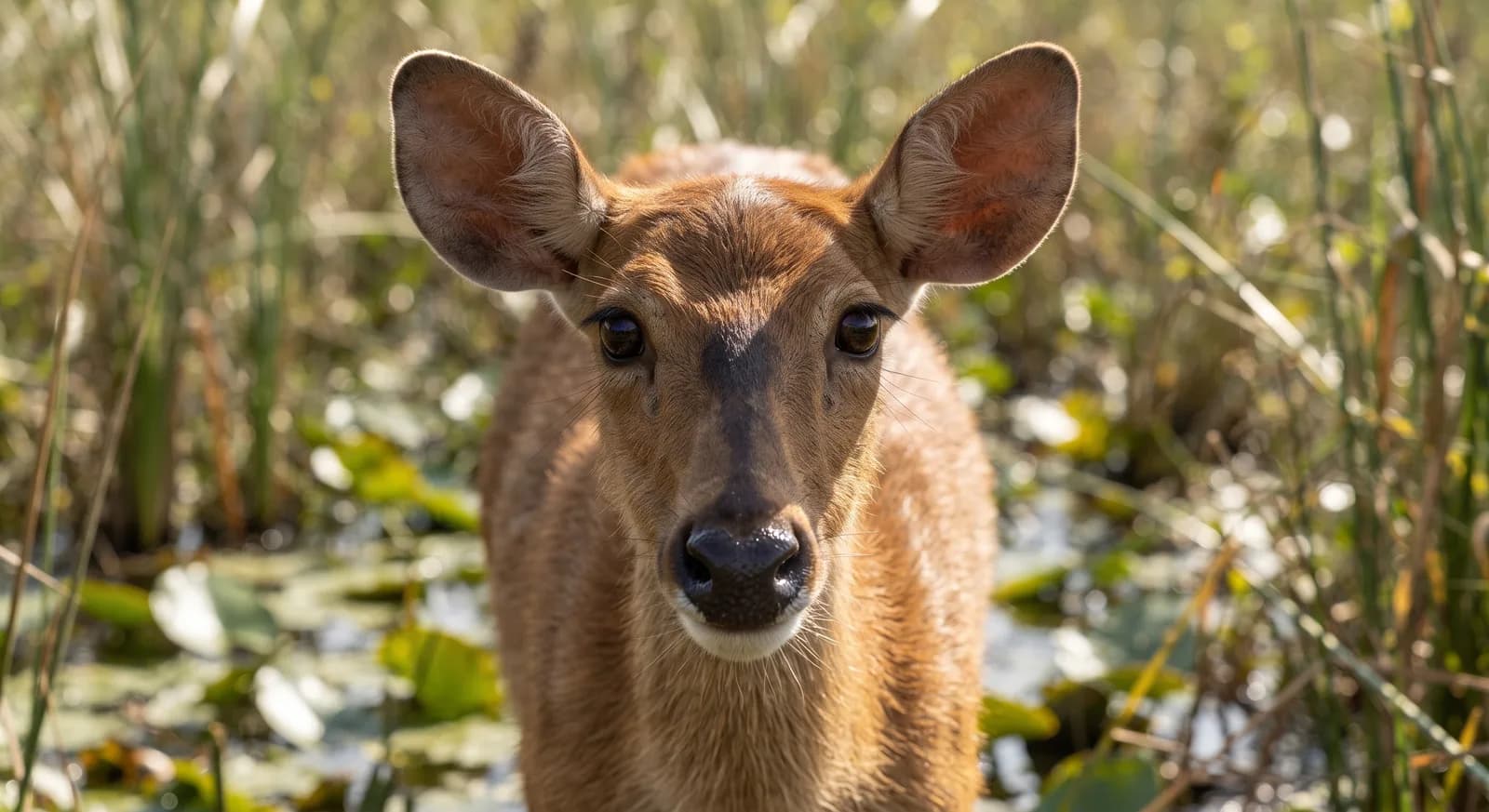
Marsh Deer
Blastocerus dichotomus
How to help
The hyacinth macaw is classified as vulnerable. Organizations such as UICN, WWF y Wildlife Conservation Society work specifically on its conservation and that of its habitat; looking into their programs is a good starting point if you want to get involved.
It's documented in 7 real protected areas — part of why protecting these places matters for its conservation.
Keep exploring
Based on what we already know about hyacinth macaw.
Comments
Share an experience, a fun fact or a tip for seeing the hyacinth macaw.
Be the first to comment.