Birds · Anseriformes · Anhimidae
Horned Screamer
Anhima cornuta
The species is abundant and widely distributed; it faces no significant short-term risk. See full glossary
The horned screamer, known in Spanish as camungo or aruco, is a large black bird of the South American tropical wetlands, unmistakable for the long, slender horny quill that grows forward from its forehead, with no function known for certain. Like the southern screamer it has spurs on its wings and air beneath its skin. It feeds on aquatic plants and gives a deep, resonant call that can be heard more than three kilometres away.
Weight
3.1 kg – 3.5 kg
Size
84 cm – 95 cm
Lifespan
15 years
Diet
Herbivore
Feeds mainly on plants.
Activity
Diurnal
Active mainly during the day.
Social structure
In pairs
Usually lives in pairs, sometimes for life.
Sighting difficulty
Easy
Fun facts
- anatomíaIt has a bony spur on each wing for territorial fights, and small pockets of air beneath its skin that crackle to the touch.
- reproducciónIt can live several decades and usually pairs for life, defending its stretch of wetland against other pairs of its own kind.
- A horn of keratin up to fifteen centimetres long grows from its forehead, unique among all the birds in the world: it is not attached to the skull, it grows continuously, breaks off and grows back, and nobody knows for certain what it is for.
- Its deep, two-syllable call carries several kilometres across the Amazonian wetlands and is one of the characteristic sounds of the Orinoco swamps.
Life cycle & biology
- Skeleton type
- Vertebrate - internal bony skeleton (bird)
- Habitat & environment
- Swamps, lagoons, marshes and flooded forest of Amazonia and the Orinoco
- Sexual maturity
- 3 years
- Gestation / incubation
- 44 days of incubation
- Litter / clutch size
- 4 eggs
Sources consulted: https://es.wikipedia.org/wiki/Anhima_cornuta
Where to find it
See its range on the interactive mapWhere to watch it
Parques y spots de buceo donde se ha documentado esta especie — se muestran 10 de 28 documentados.
Related species
Other species in the catalogue with the most in common with Horned Screamer — same habitat, park, country, tags or family.
Southern Screamer
Chauna torquata
 Least Concern
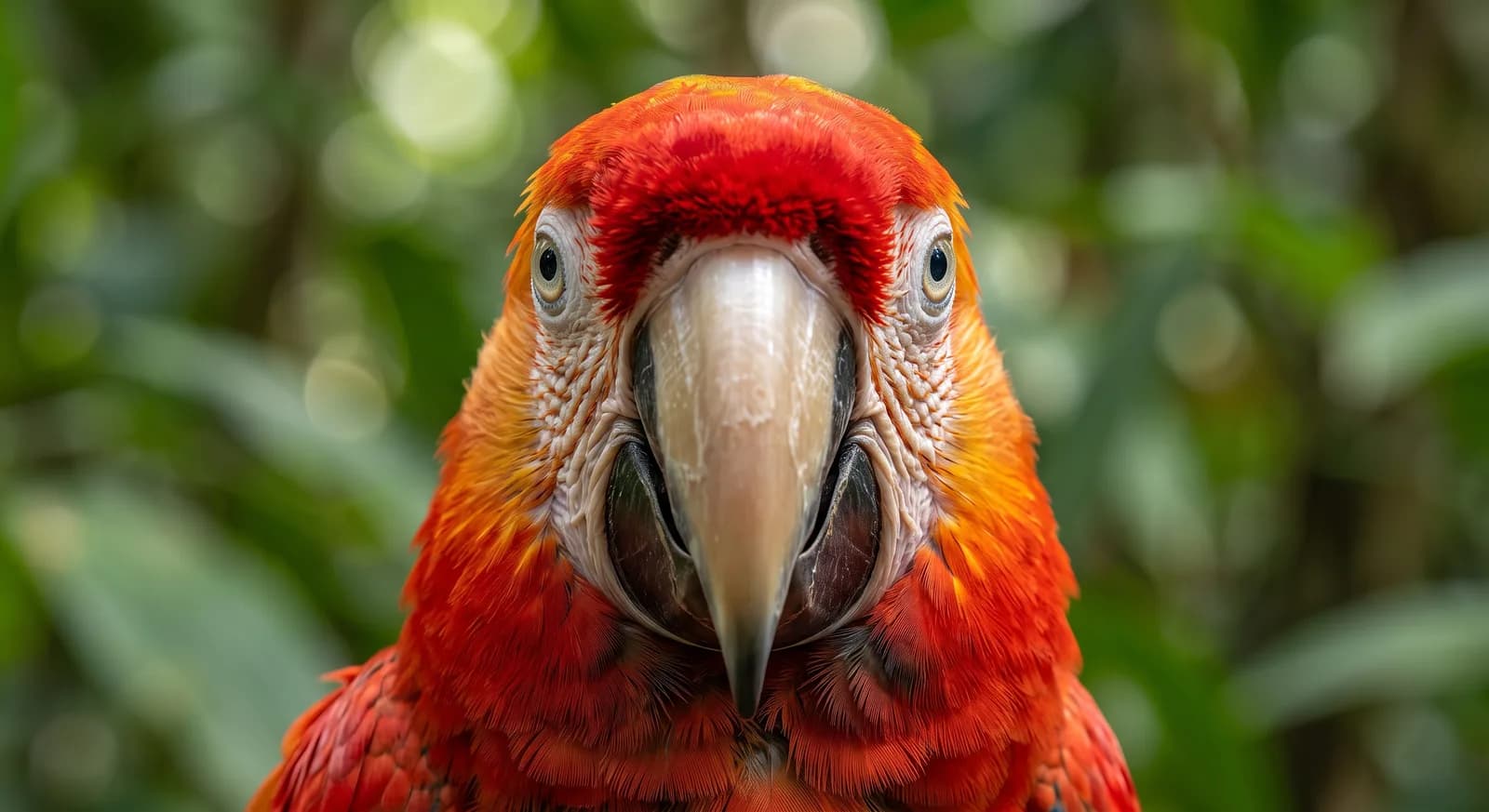
Scarlet Macaw
Ara macao
White-faced Saki
Pithecia pithecia
Crested Guan
Penelope purpurascens
Crimson Topaz
Topaza pella
Jabiru
Jabiru mycteria
Keep exploring
Based on what we already know about horned screamer.
Comments
Share an experience, a fun fact or a tip for seeing the horned screamer.
Be the first to comment.