Birds · Ciconiiformes · Ciconiidae
Jabiru
Jabiru mycteria
The species is abundant and widely distributed; it faces no significant short-term risk. See full glossary
The jabiru, tuyuyú or American jabiru is a species of ciconiiform bird of the family Ciconiidae; it is the largest stork in the New World. At 120-140 cm tall and with a wingspan of 3 metres, it is an unmistakable bird of the American wetlands from Yucatán, through Guatemala, Honduras, Nicaragua, Costa Rica, Panama, Colombia, Venezuela, Ecuador, Guyana, Suriname, Peru, Brazil, Bolivia and Paraguay as far as the Argentine pampas, and is abundant in places such as the Venezuelan llanos, the Pantanal and the Iberá. The name of this bird comes from the Guaraní language.
Weight
4.3 kg – 9 kg
Size
1.2 m – 1.4 m
Lifespan
36 years
Diet
Carnivore
Feeds mainly on other animals.
Activity
Diurnal
Active mainly during the day.
Social structure
In pairs
Usually lives in pairs, sometimes for life.
Sighting difficulty
Easy
Fun facts
- anatomíaIt is one of the largest flying birds in the Americas and builds huge nests that it reuses and enlarges year after year over several breeding seasons.
- It is the tallest flying bird in the Americas: it stands more than a metre and a half tall and spans more than three metres.
- It fishes blind and by touch: it puts its half-open bill into the murky water and snaps it shut by reflex within milliseconds on contact with a fish, without needing to see it.
- Its nest is an enormous platform that the pair enlarges year after year until it is more than a metre thick, and other species often nest beneath it to take advantage of the protection.
Life cycle & biology
- Skeleton type
- Vertebrate - internal bony skeleton (bird)
- Habitat & environment
- Wetlands, marshes, floodplains and flooded savannah of tropical America
- Sexual maturity
- 4 years
- Gestation / incubation
- 32 days of incubation
- Litter / clutch size
- 3 eggs
Sources consulted: https://es.wikipedia.org/wiki/Jabiru_mycteria
Where to find it
See its range on the interactive mapWhere to watch it
Parques y spots de buceo donde se ha documentado esta especie — se muestran 10 de 15 documentados.
Related species
Other species in the catalogue with the most in common with Jabiru — same habitat, park, country, tags or family.
Wood Stork
Mycteria americana
Southern Screamer
Chauna torquata
 Least Concern
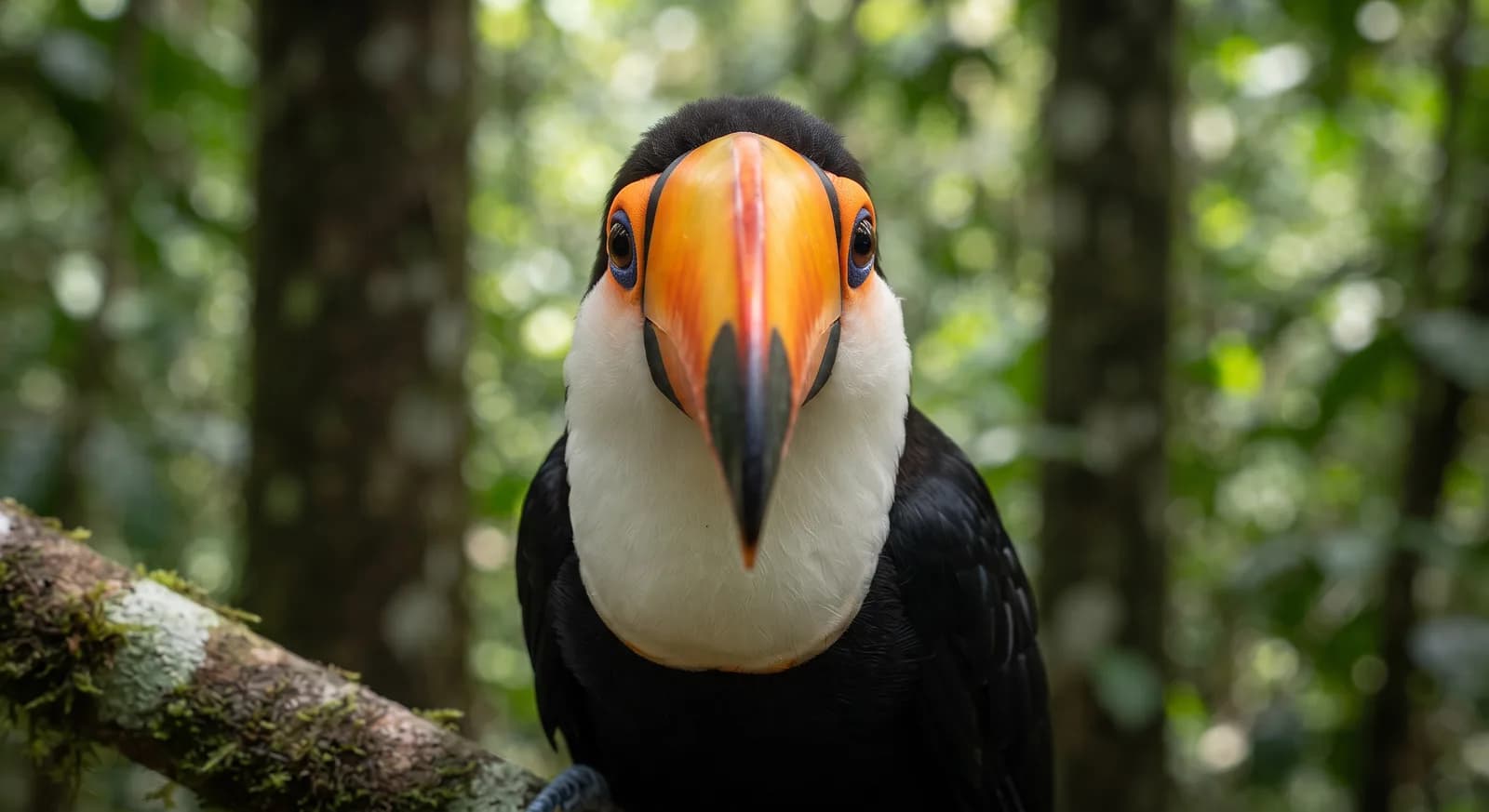
Toco Toucan
Ramphastos toco
Crested Caracara
Caracara plancus
Yellow-Crowned Amazon
Amazona ochrocephala
Horned Screamer
Anhima cornuta
Keep exploring
Based on what we already know about jabiru.
Comments
Share an experience, a fun fact or a tip for seeing the jabiru.
Be the first to comment.