Birds · Ciconiiformes · Ciconiidae
Wood Stork
Mycteria americana
The species is abundant and widely distributed; it faces no significant short-term risk. See full glossary
A large wading bird with white plumage except for the tail and flight feathers, which are black with greenish and purplish iridescence. The head and neck are entirely bare and dark grey, and the bill, long and broad at the base, curves downwards in a characteristic way. Juveniles keep a feathered head and a yellow bill.
Weight
2.5 kg on average
Size
85 cm – 1.2 m
Lifespan
30 years
Diet
Piscivore
Feeds mainly on fish.
Activity
Diurnal
Active mainly during the day.
Social structure
Colony
Lives in large concentrations, often for breeding reasons.
Sighting difficulty
Easy
Estimated population
Some 250,000 birds worldwide, around 30,000 of them in the United States, with an increasing trend
Fun facts
- alimentaciónIt finds its prey mainly by touch, holding its bill half open in the murky water and snapping it shut by reflex within milliseconds of feeling a fish.
- Like the rest of the Mycteria storks, it hunts by touch: it detects prey with the sensitive tip of its bill in murky water where it could not see them.
- In flight it stretches its neck out and trails its legs, unlike the herons, which draw the neck back into an S.
- Its toes turn pink during the breeding season.
Life cycle & biology
- Skeleton type
- Vertebrate - internal bony skeleton (bird)
- Habitat & environment
- Tropical and subtropical wetlands of the Americas and the Caribbean
- Size at birth
- Semi-altricial chicks, fed by both parents on regurgitated fish, which depend on them for 55 to 60 days until they fly
- Sexual maturity
- 4 years
- Gestation / incubation
- 30 days
- Litter / clutch size
- 3
- Lifespan in captivity
- A captive individual reached 27 years
Sources consulted: IUCN Red List; Birda (ficha Wood Stork); World Atlas (revisión de cigüeñas del mundo)
Where to find it
See its range on the interactive mapBest time: All year round in South America; the North American populations migrate south
Where to watch it
Parques y spots de buceo donde se ha documentado esta especie — se muestran 10 de 12 documentados.
Related species
Other species in the catalogue with the most in common with Wood Stork — same habitat, park, country, tags or family.
Jabiru
Jabiru mycteria
Great Blue Heron
Ardea herodias
 Least Concern
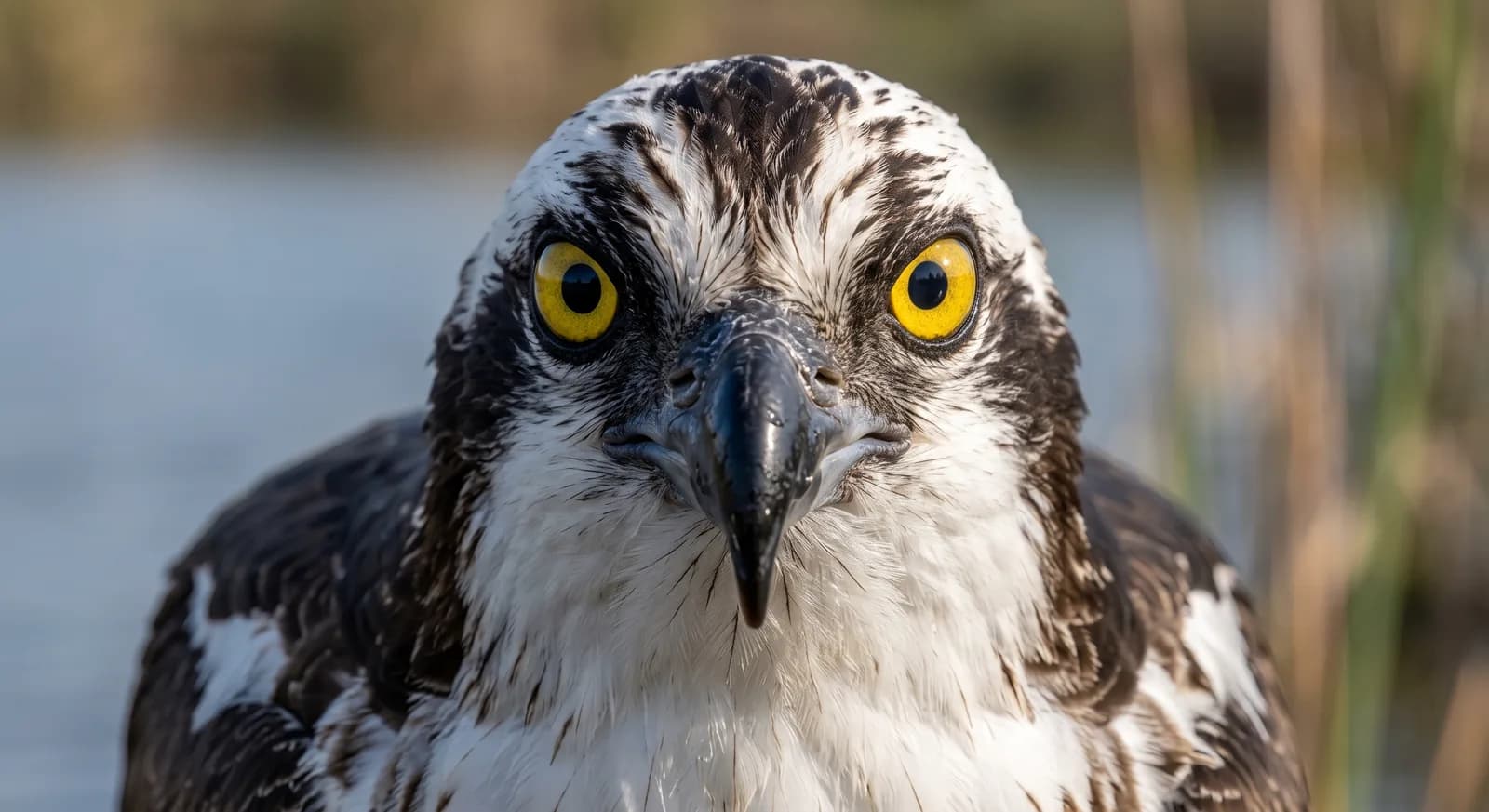
Osprey
Pandion haliaetus
Red-Winged Blackbird
Agelaius phoeniceus
Anhinga
Anhinga anhinga
Little Blue Heron
Egretta caerulea
Keep exploring
Based on what we already know about wood stork.
Comments
Share an experience, a fun fact or a tip for seeing the wood stork.
Be the first to comment.