Birds · Pelecaniformes · Ardeidae
Great Blue Heron
Ardea herodias
The species is abundant and widely distributed; it faces no significant short-term risk. See full glossary
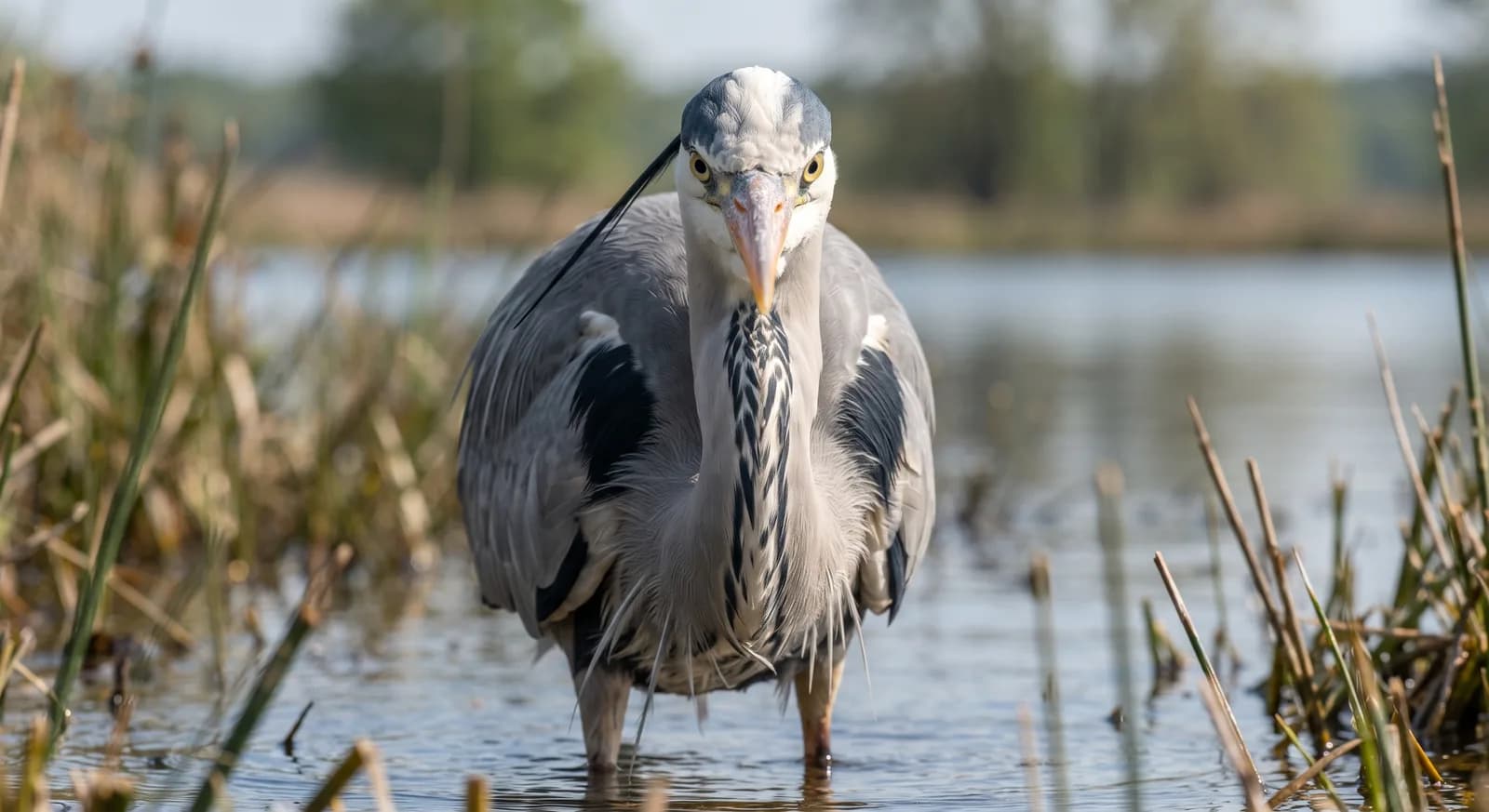
The largest heron in North America, bluish grey in colour, with a heavy bill and a powerful voice. There is an entirely white morph, confined to the Florida Keys, which was long regarded as a separate species.
Weight
1.9 kg on average
Size
97 cm – 1.4 m
Lifespan
24 years
Diet
Carnivore
Feeds mainly on other animals.
Activity
Diurnal
Active mainly during the day.
Social structure
Colony
Lives in large concentrations, often for breeding reasons.
Sighting difficulty
Easy
Fun facts
- It forms a superspecies with the Eurasian grey heron and the South American cocoi heron: all three have almost identical skeletal morphology.
- It usually stays completely still until it detects prey, and then strikes with lightning speed.
- The white morph of the Florida Keys is known as the great white heron and is confused with the great egret.
Life cycle & biology
- Skeleton type
- Vertebrate - internal bony skeleton (bird)
- Habitat & environment
- Fresh and salt water wetlands across North America, where it stalks motionless in the shallows waiting for fish and crustaceans
- Birth weight
- 50 g at hatching
- Sexual maturity
- 22 months
- Gestation / incubation
- 28 days
- Litter / clutch size
- 4
Sources consulted: IUCN Red List; BirdLife DataZone (ficha Ardea herodias); Birds and Blooms; Avian Report
Where to find it
See its range on the interactive mapBest time: All year round over much of its range; the northern populations migrate
Where to watch it
Parques y spots de buceo donde se ha documentado esta especie — se muestran 10 de 80 documentados.
Related species
Other species in the catalogue with the most in common with Great Blue Heron — same habitat, park, country, tags or family.
Little Blue Heron
Egretta caerulea
Snowy Egret
Egretta thula
 Least Concern
Grey Heron
Ardea cinerea
Great Egret
Ardea alba
Cattle Egret
Bubulcus ibis
Little Egret
Egretta garzetta
Keep exploring
Based on what we already know about great blue heron.
Comments
Share an experience, a fun fact or a tip for seeing the great blue heron.
Be the first to comment.