One of the 3 herons on WAnimals
Birds · Pelecaniformes · Ardeidae
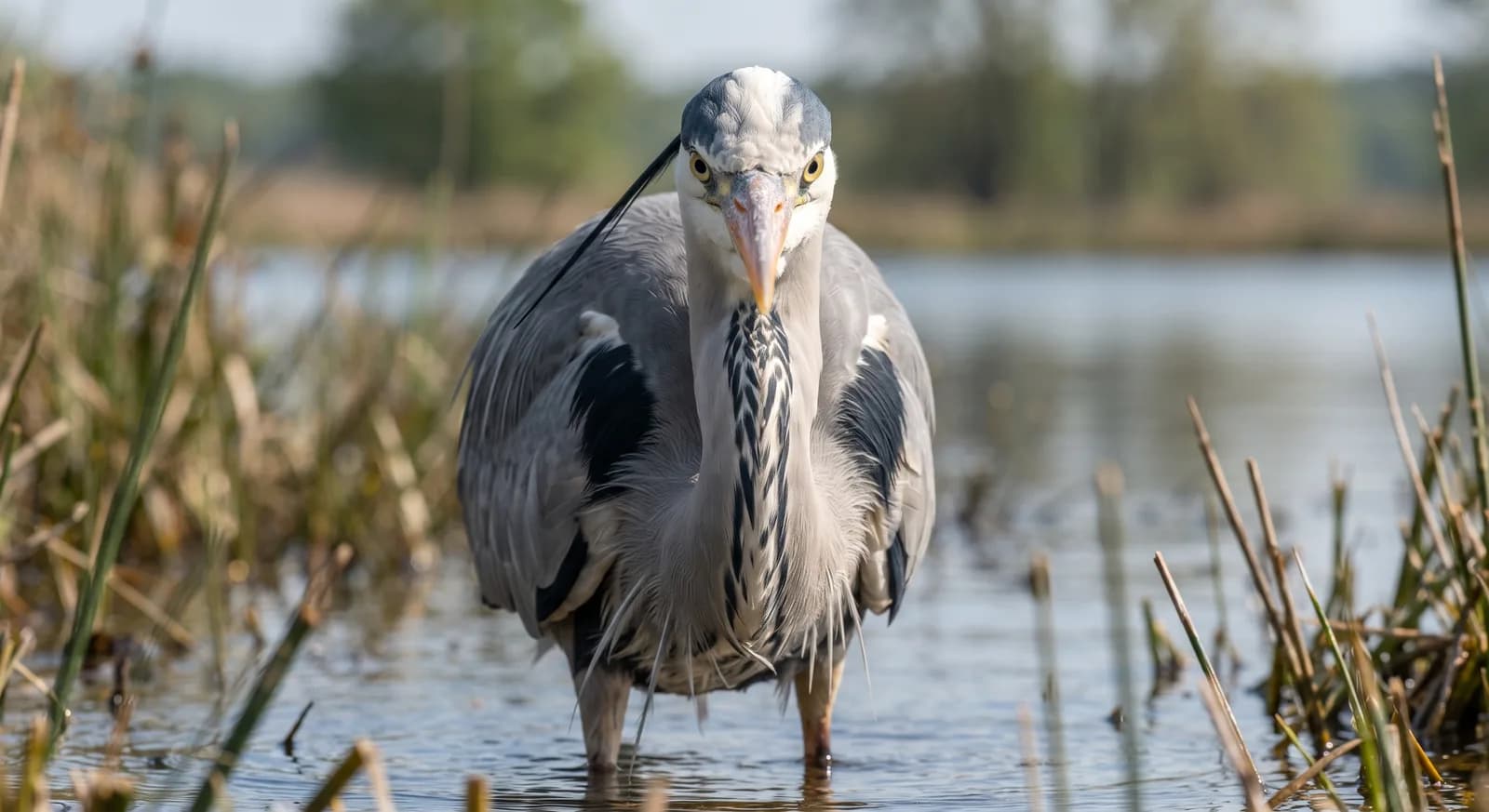
Grey Heron
Ardea cinerea
The species is abundant and widely distributed; it faces no significant short-term risk. See full glossary
The chicks compete fiercely for the food their parents bring up, and cannibalism between siblings has been documented. Even after surviving that, more than 80% do not live through their first year in the wild.
Weight
1 kg – 2.1 kg
Size
84 cm – 1 m
Lifespan
5 years
Diet
Carnivore
Feeds mainly on other animals.
Activity
Diurnal
Active mainly during the day.
Social structure
Colony
Lives in large concentrations, often for breeding reasons.
Sighting difficulty
Easy
Fun facts
- comportamientoIt can stand completely still at the water's edge for long stretches, waiting for a fish to come close enough before striking with an extraordinarily fast stab of the bill.
Life cycle & biology
- Skeleton type
- Vertebrate - pneumatised bony skeleton (bird)
- Habitat & environment
- A wide range of wetlands across Europe, Asia and Africa: rivers, lakes, marshes and coasts
- Birth weight
- Exact weight at hatching not found as a precise figure
- Size at birth
- Altricial and completely dependent on its parents, but already able to compete aggressively with its siblings for food
- Sexual maturity
- 1-2 years
- Gestation / incubation
- 25-28 days
- Litter / clutch size
- 1 to 10 eggs per clutch (most commonly 3-5)
Sources consulted: AnAge; A-Z Animals; Earth Life; Animalia.bio; BDI; Wikipedia; BioKIDS; Animal Diversity Web
Where to find it
See its range on the interactive mapWhere to watch it
Parks and dive sites where this species has been documented.
Related species
Other species in the catalogue with the most in common with Grey Heron — same habitat, park, country, tags or family.
Little Egret
Egretta garzetta
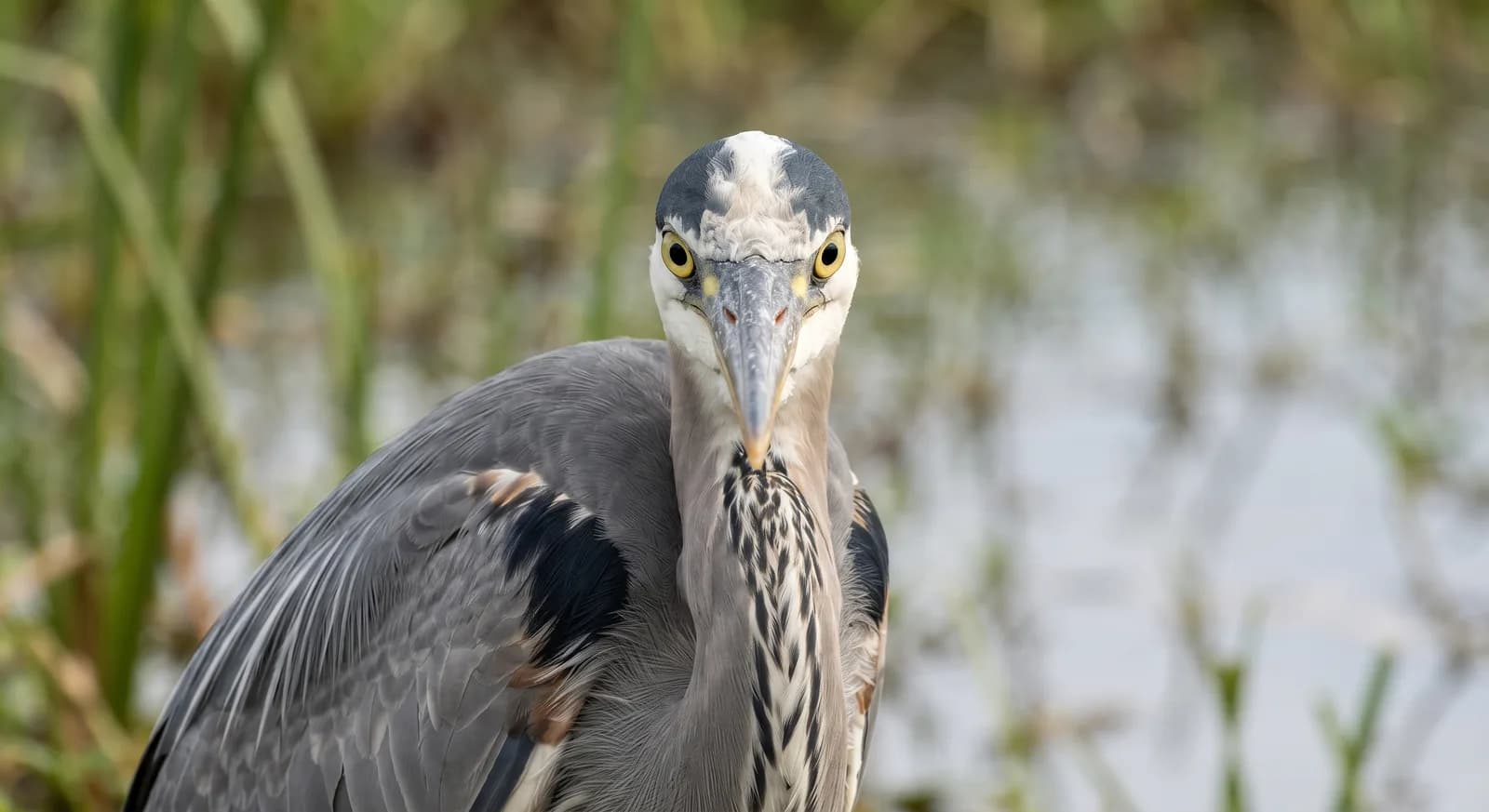
Great Blue Heron
Ardea herodias
 Least Concern
Cocoi Heron
Ardea cocoi
Little Bittern
Ixobrychus minutus
 Least Concern
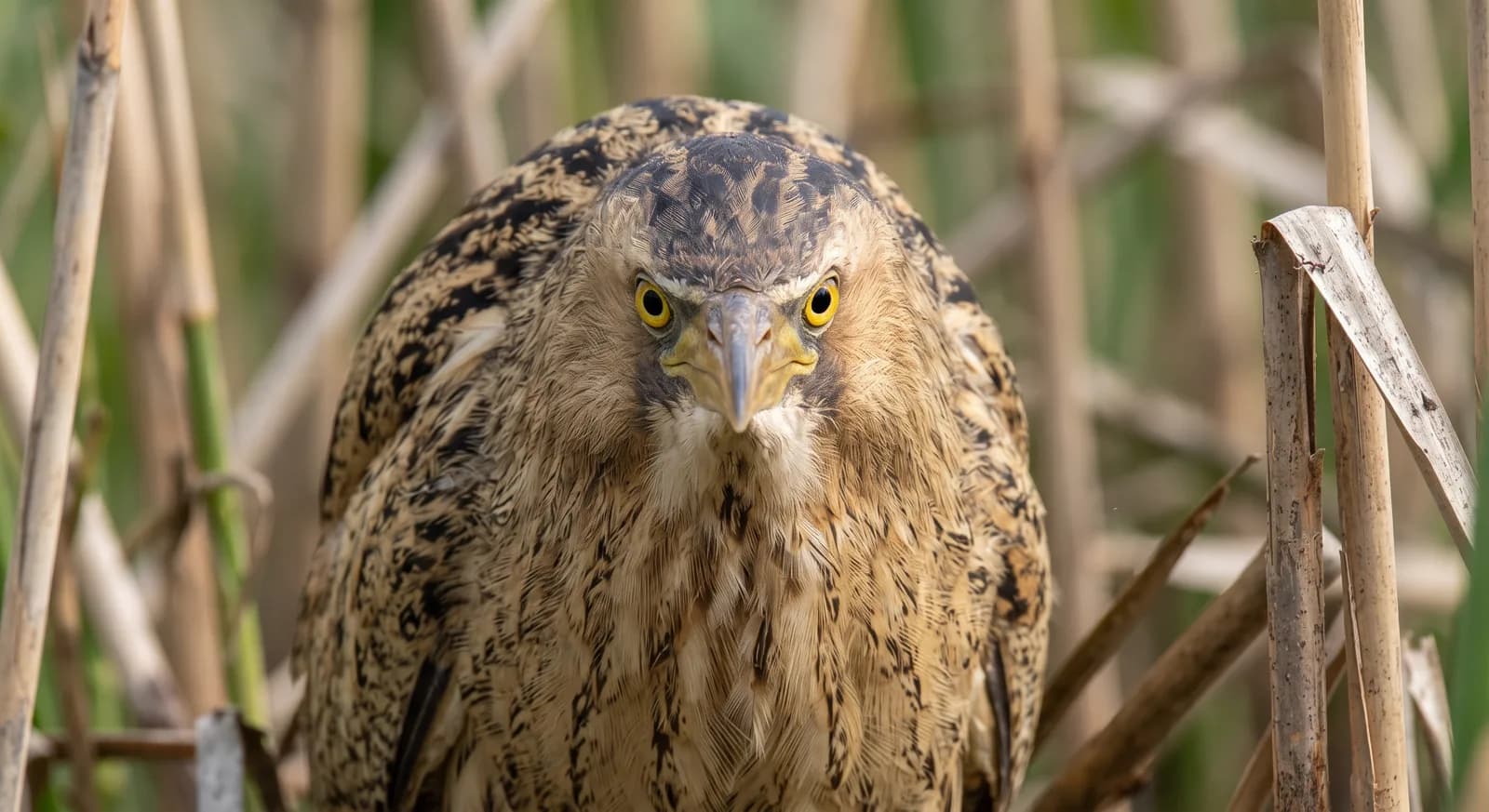
Eurasian Bittern
Botaurus stellaris
Cattle Egret
Bubulcus ibis
Keep exploring
Based on what we already know about grey heron.
Comments
Share an experience, a fun fact or a tip for seeing the grey heron.
Be the first to comment.