Birds · Pelecaniformes · Ardeidae
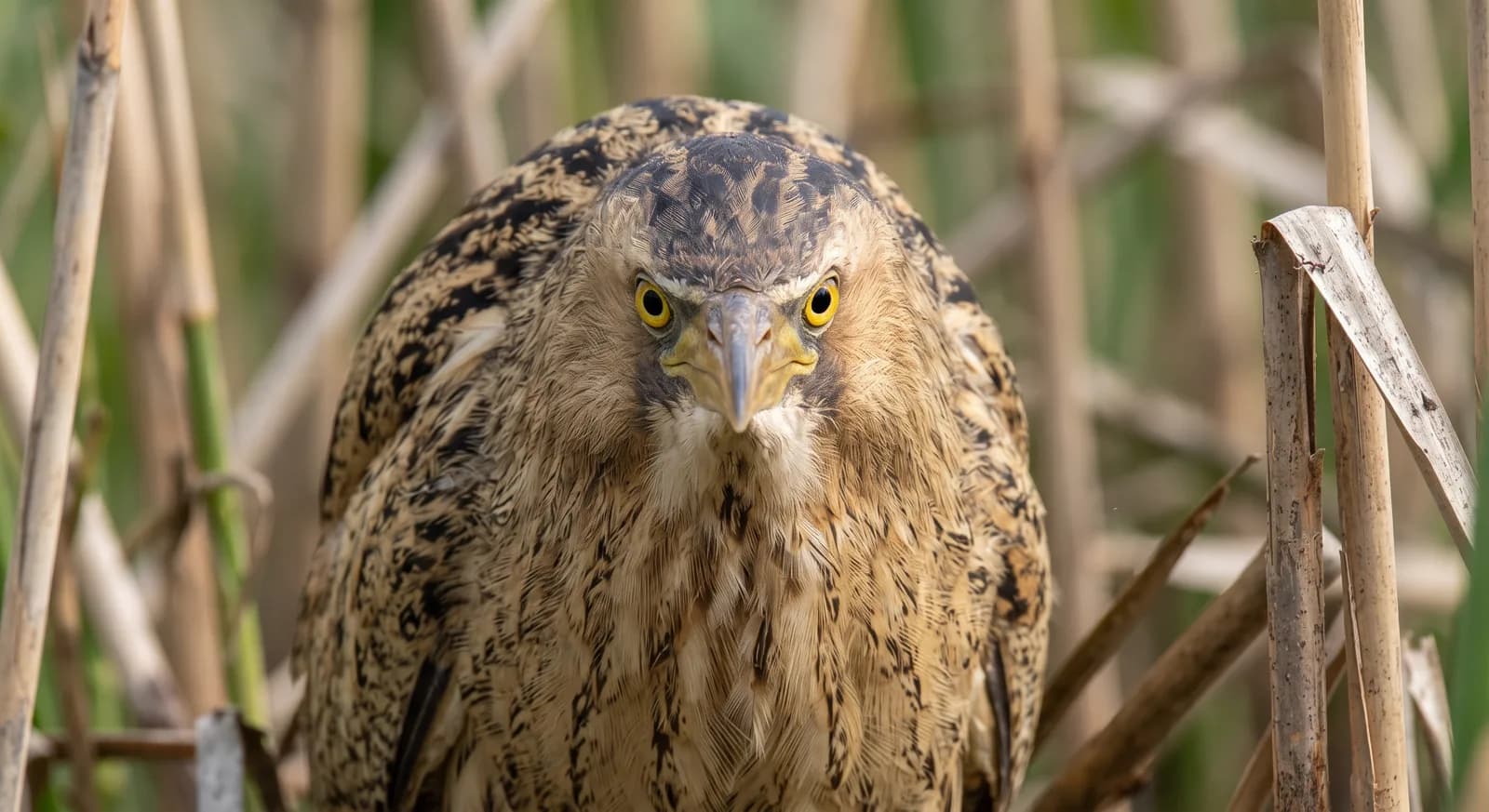
Eurasian Bittern
Botaurus stellaris
The species is abundant and widely distributed; it faces no significant short-term risk. See full glossary
It is a master of camouflage: when threatened it points its bill skywards and stands still, swaying like the reeds around it. The polygynous male may mate with as many as five different females.
Weight
650 g – 1.2 kg
Size
69 cm – 81 cm
Lifespan
7 years
Diet
Carnivore
Feeds mainly on other animals.
Activity
Nocturnal
Active mainly at night.
Social structure
Solitary
Lives and hunts alone, joining others only to breed.
Sighting difficulty
Easy
Fun facts
- defensaWhen threatened it stands upright with its bill pointing at the sky, blending into the reeds of the wetland where it lives.
Life cycle & biology
- Skeleton type
- Vertebrate - pneumatised bony skeleton (bird)
- Habitat & environment
- Dense reedbeds and freshwater wetlands of Europe, North Africa and Asia
- Birth weight
- 42 grams
- Size at birth
- Altricial, downy and wholly dependent on its mother
- Sexual maturity
- 1-2 years
- Gestation / incubation
- 25-26 days
- Litter / clutch size
- 4 to 6 eggs per clutch
Sources consulted: AnAge; World Species; Animalia.bio; Critter Science; Animal Diversity Web; BioDB; Wikipedia
Where to find it
See its range on the interactive mapWhere to watch it
Parques y spots de buceo donde se ha documentado esta especie — se muestran 10 de 155 documentados.
Related species
Other species in the catalogue with the most in common with Eurasian Bittern — same habitat, park, country, tags or family.
Little Bittern
Ixobrychus minutus
 Least Concern
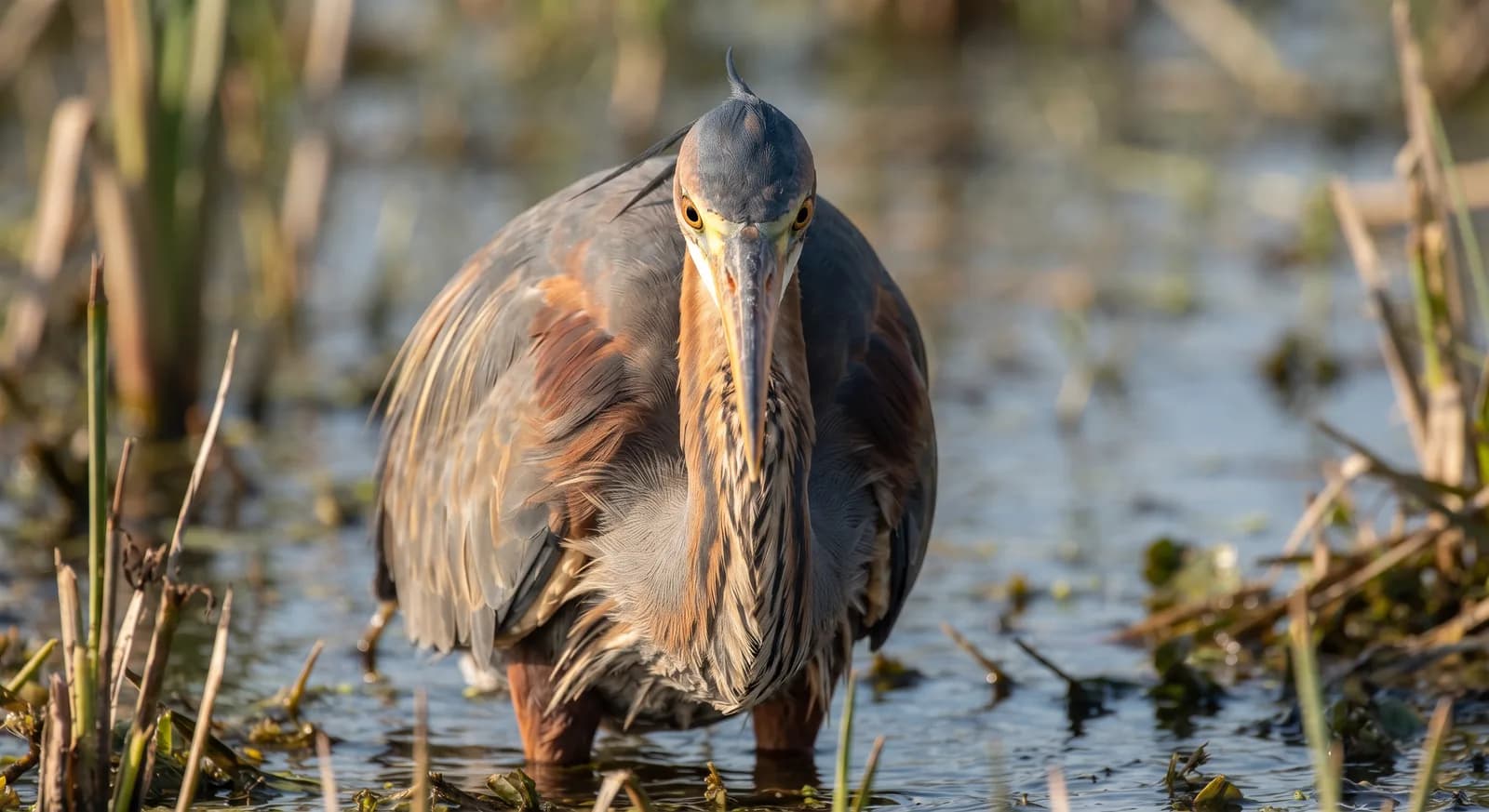
Purple Heron
Ardea purpurea
Little Egret
Egretta garzetta
 Least Concern
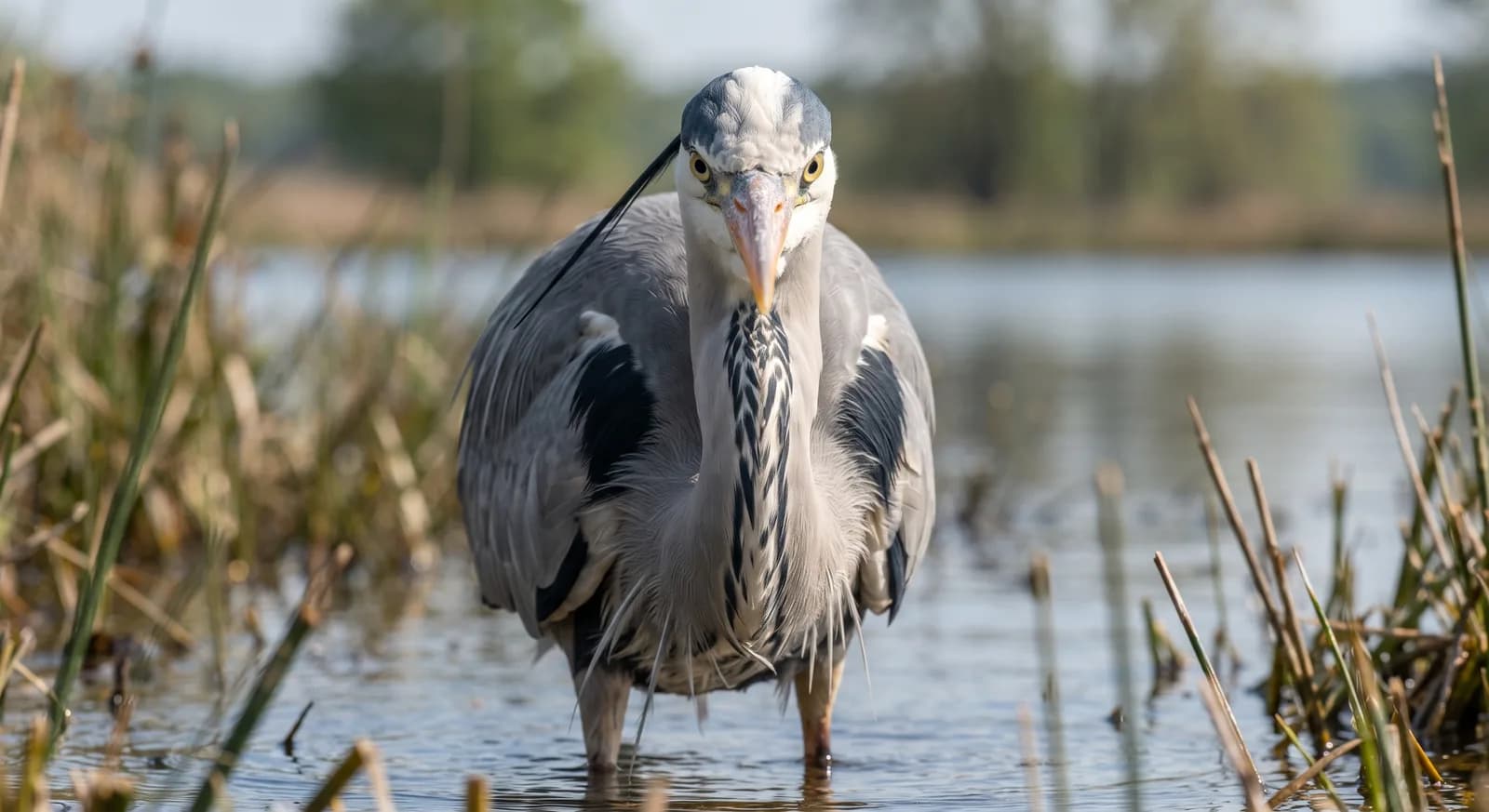
Grey Heron
Ardea cinerea
Black-crowned Night Heron
Nycticorax nycticorax
Great Egret
Ardea alba
Keep exploring
Based on what we already know about eurasian bittern.
Comments
Share an experience, a fun fact or a tip for seeing the eurasian bittern.
Be the first to comment.