Birds · Pelecaniformes · Ardeidae
Little Bittern
Ixobrychus minutus
The species is abundant and widely distributed; it faces no significant short-term risk. See full glossary
The smallest heron in Europe, tiny and extraordinarily unobtrusive. It moves easily through the marsh vegetation, climbing the stems, and is very hard to see despite occupying well-visited wetlands.
Weight
140 g – 160 g
Size
33 cm – 38 cm
Lifespan
5 years
Diet
Carnivore
Feeds mainly on other animals.
Activity
Nocturnal
Active mainly at night.
Social structure
In pairs
Usually lives in pairs, sometimes for life.
Sighting difficulty
Easy
Estimated population
A Spanish population of close to 2,000 pairs
Fun facts
- It is the emblem bird of the South-East Regional Park in Madrid, where its population does not exceed 25-30 pairs.
- Despite its tiny size it catches small vertebrates as well as large insects.
- Its crepuscular habits and its ability to freeze among the reeds make it one of the least known inhabitants of our wetlands.
Life cycle & biology
- Skeleton type
- Vertebrate - internal bony skeleton (bird)
- Habitat & environment
- Marshes, riverbanks, reservoirs, lagoons and wetlands with plenty of marsh vegetation, above all reedbeds, where it places its nest and moves among the stems
- Birth weight
- Altricial: born blind, naked or with sparse down and entirely dependent
- Size at birth
- Altricial: born blind, naked or with sparse down and entirely dependent
- Sexual maturity
- 2 years
- Gestation / incubation
- 17-19 days of incubation
- Litter / clutch size
- 5-6 white eggs, in a nest built in the reedbed
Sources consulted: SEO/BirdLife (ficha y III Atlas de las aves en época de reproducción en España); IUCN Red List; Asturnatura; estudio sobre biología reproductora en el delta del Ebro; Parque Regional del Sureste (Comunidad de Madrid); MITECO
Where to find it
See its range on the interactive mapBest time: From spring to summer, at dawn and dusk; it is a summer visitor in Spain
Where to watch it
Parques y spots de buceo donde se ha documentado esta especie — se muestran 10 de 33 documentados.
Related species
Other species in the catalogue with the most in common with Little Bittern — same habitat, park, country, tags or family.
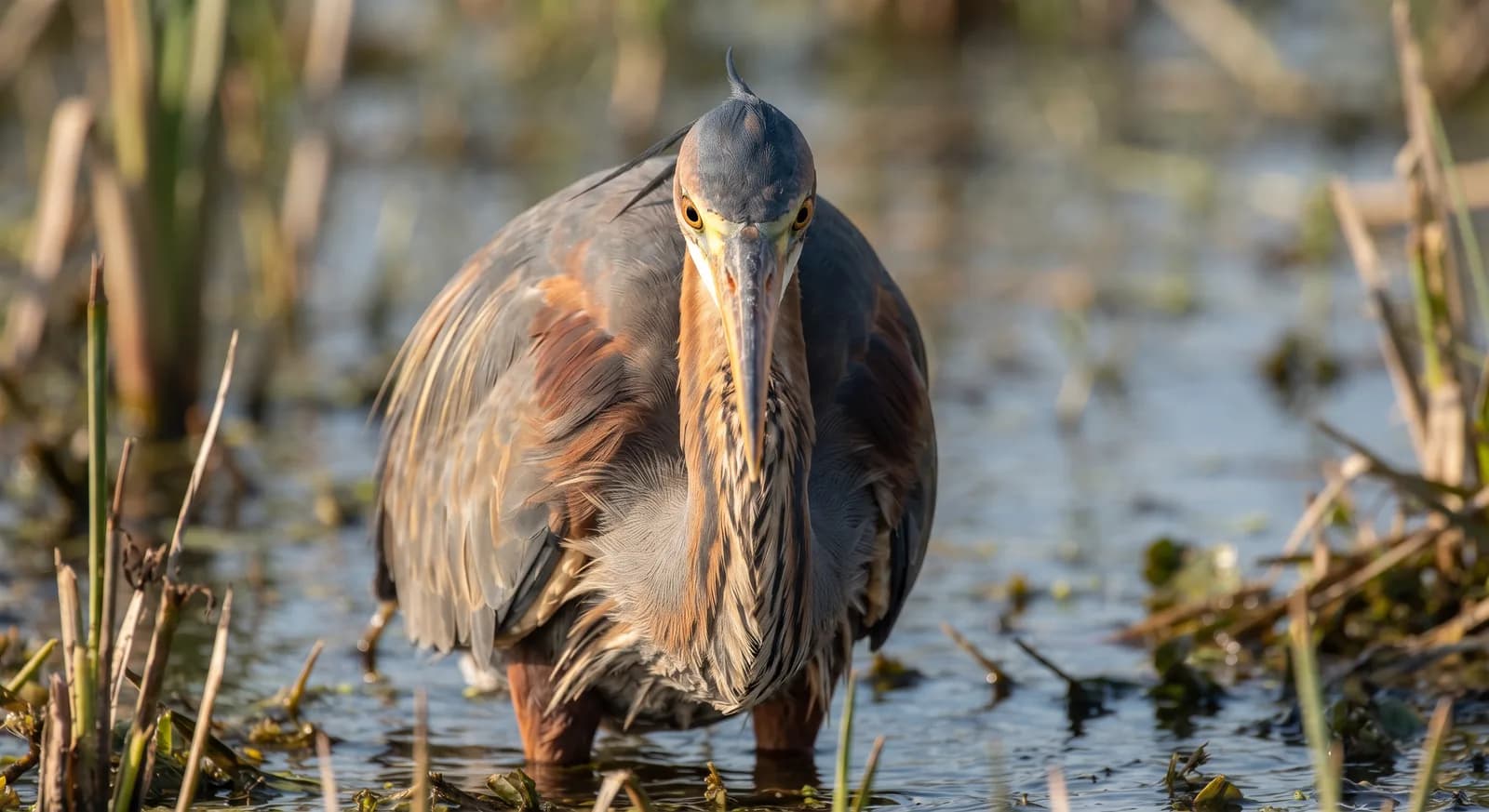 Least Concern
Purple Heron
Ardea purpurea
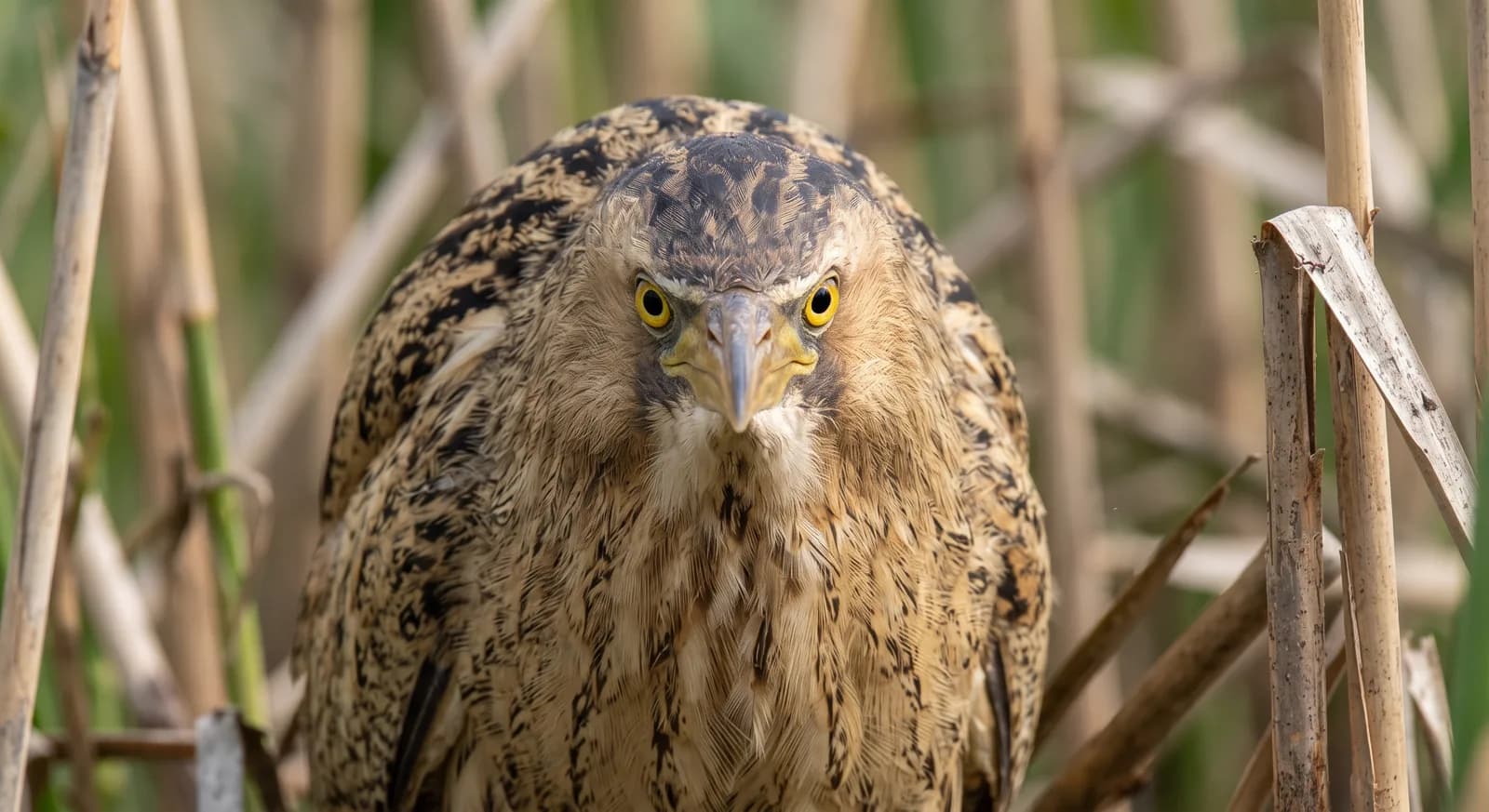 Least Concern
Eurasian Bittern
Botaurus stellaris
Little Egret
Egretta garzetta
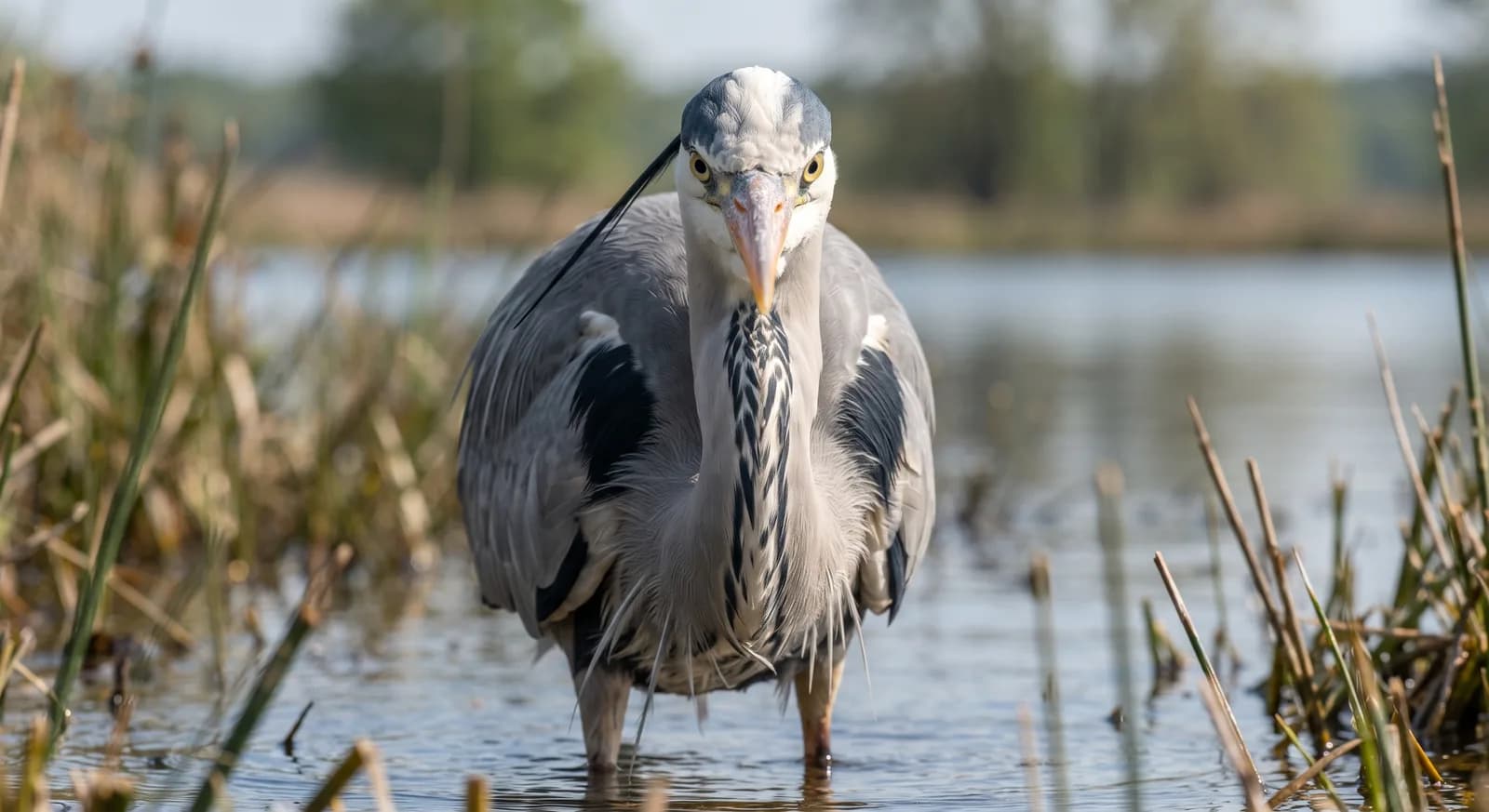 Least Concern
Grey Heron
Ardea cinerea
Black-crowned Night Heron
Nycticorax nycticorax
Great Egret
Ardea alba
Keep exploring
Based on what we already know about little bittern.
Comments
Share an experience, a fun fact or a tip for seeing the little bittern.
Be the first to comment.