One of the 3 herons on WAnimals
Birds · Pelecaniformes · Ardeidae
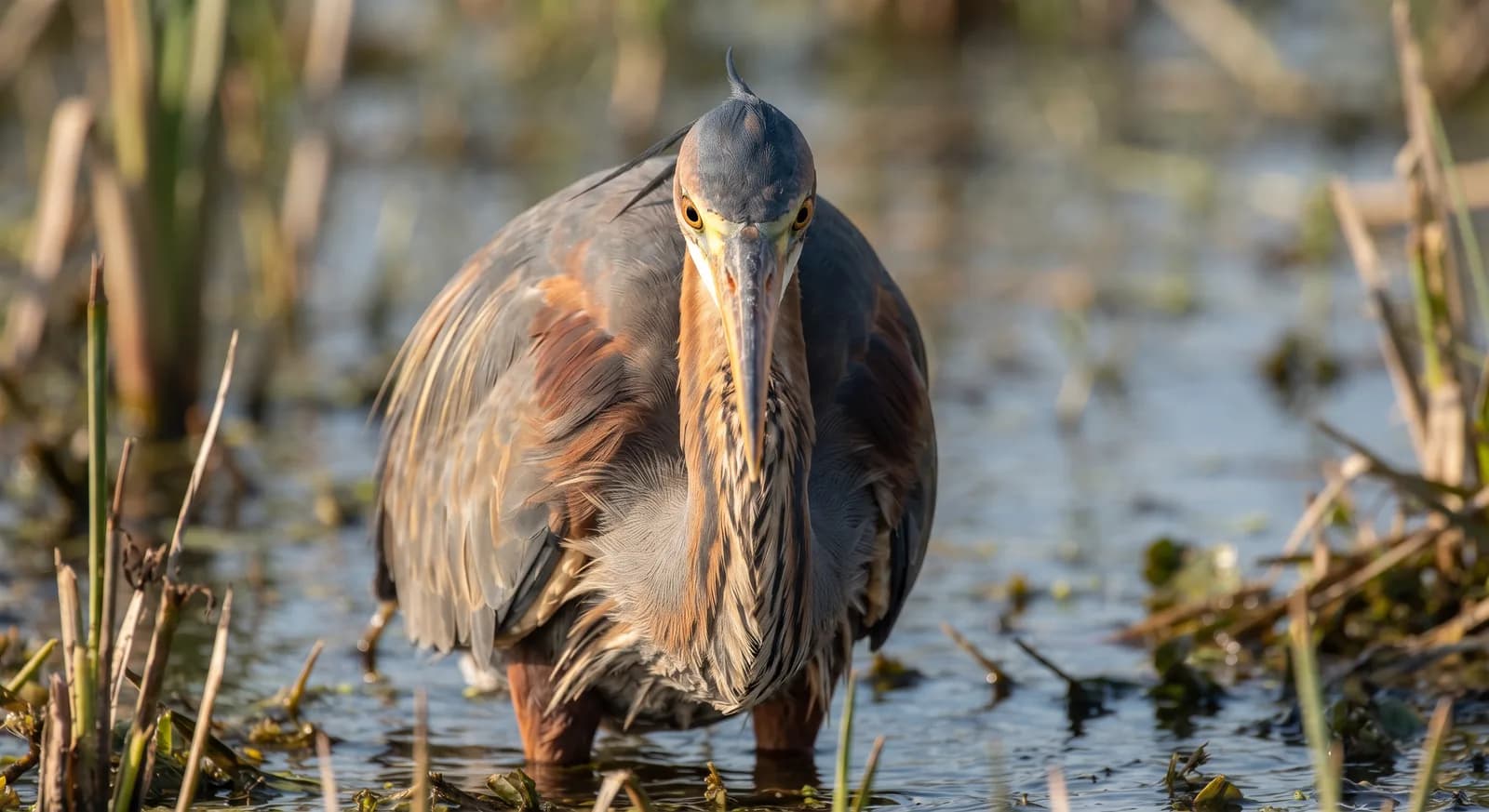
Purple Heron
Ardea purpurea
The species is abundant and widely distributed; it faces no significant short-term risk. See full glossary
A very slender, streamlined heron, smaller and darker than the grey heron. Dark blue-grey back, a thin, sinuous neck of reddish orange crossed by a blackish stripe, chestnut-red breast and flanks and a black belly. In flight it carries its neck drawn back in an S.
Weight
1.3 kg on average
Size
78 cm – 97 cm
Diet
Carnivore
Feeds mainly on other animals.
Activity
Nocturnal
Active mainly at night.
Social structure
Colony
Lives in large concentrations, often for breeding reasons.
Sighting difficulty
Easy
Estimated population
The world population is estimated at between 270,000 and 570,000 individuals. In Spain, the 2011 national survey put it at 5,379 breeding pairs, 70% in Andalusia and another 13% in Catalonia
Fun facts
- GeneralIt nests on bent-over reeds and hides by stretching its neck straight up.
- Faced with a threat it adopts what is known as the 'bittern stance': it stretches its neck to the full with its bill pointing skywards and freezes, becoming almost invisible among the reeds. The chicks already do it.
- The parents carry food in their crop and regurgitate it when the chicks prompt them by grasping their bill.
- In 2011 more than half of its Spanish colonies were mixed with other herons.
Life cycle & biology
- Skeleton type
- Vertebrate - internal bony skeleton (bird)
- Habitat & environment
- Extensive reedbeds, marshes and rice paddies
- Sexual maturity
- 2 years
- Gestation / incubation
- 25-30 days, with both members of the pair taking turns
- Litter / clutch size
- 4-5 pale blue-green eggs, sometimes up to 8 (though large clutches are usually from two females in the same nest), laid at three-day intervals. A single clutch a year
Sources consulted: SEO/BirdLife (ficha y III Atlas de las aves en época de reproducción en España); IUCN Red List; Asturnatura; Garrido López 2022, III Atlas; Garrido, Molina y Del Moral 2012, Las garzas en España (SEO/BirdLife); Acuerdo AEWA; Región de Murcia Digital
Where to find it
See its range on the interactive mapBest time: From April to September; it is a summer visitor in Spain
Where to watch it
Parks and dive sites where this species has been documented.
Related species
Other species in the catalogue with the most in common with Purple Heron — same habitat, park, country, tags or family.
Little Egret
Egretta garzetta
Little Bittern
Ixobrychus minutus
 Least Concern
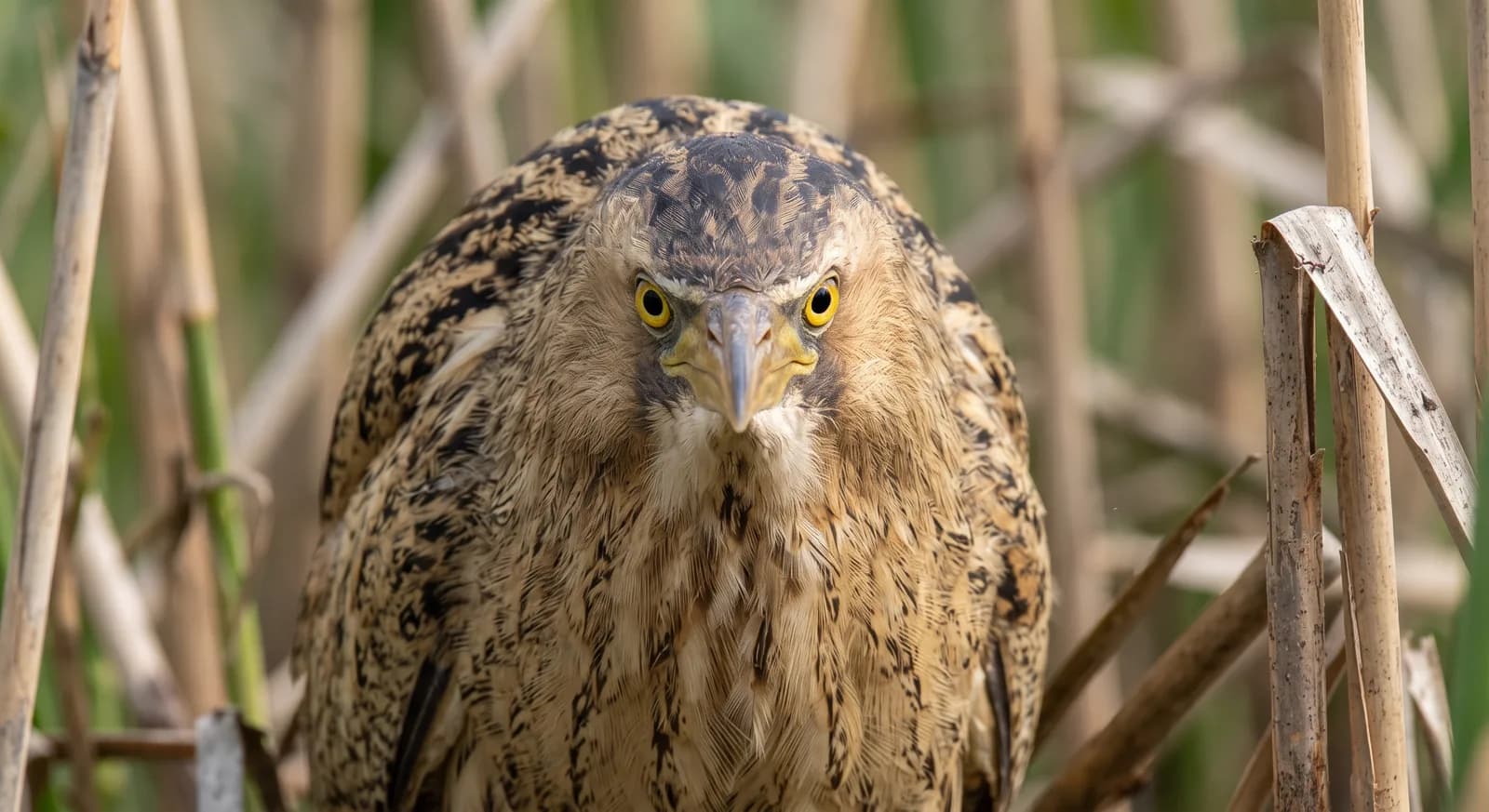
Eurasian Bittern
Botaurus stellaris
Black-crowned Night Heron
Nycticorax nycticorax
Great Egret
Ardea alba
Cattle Egret
Bubulcus ibis
Keep exploring
Based on what we already know about purple heron.
Comments
Share an experience, a fun fact or a tip for seeing the purple heron.
Be the first to comment.