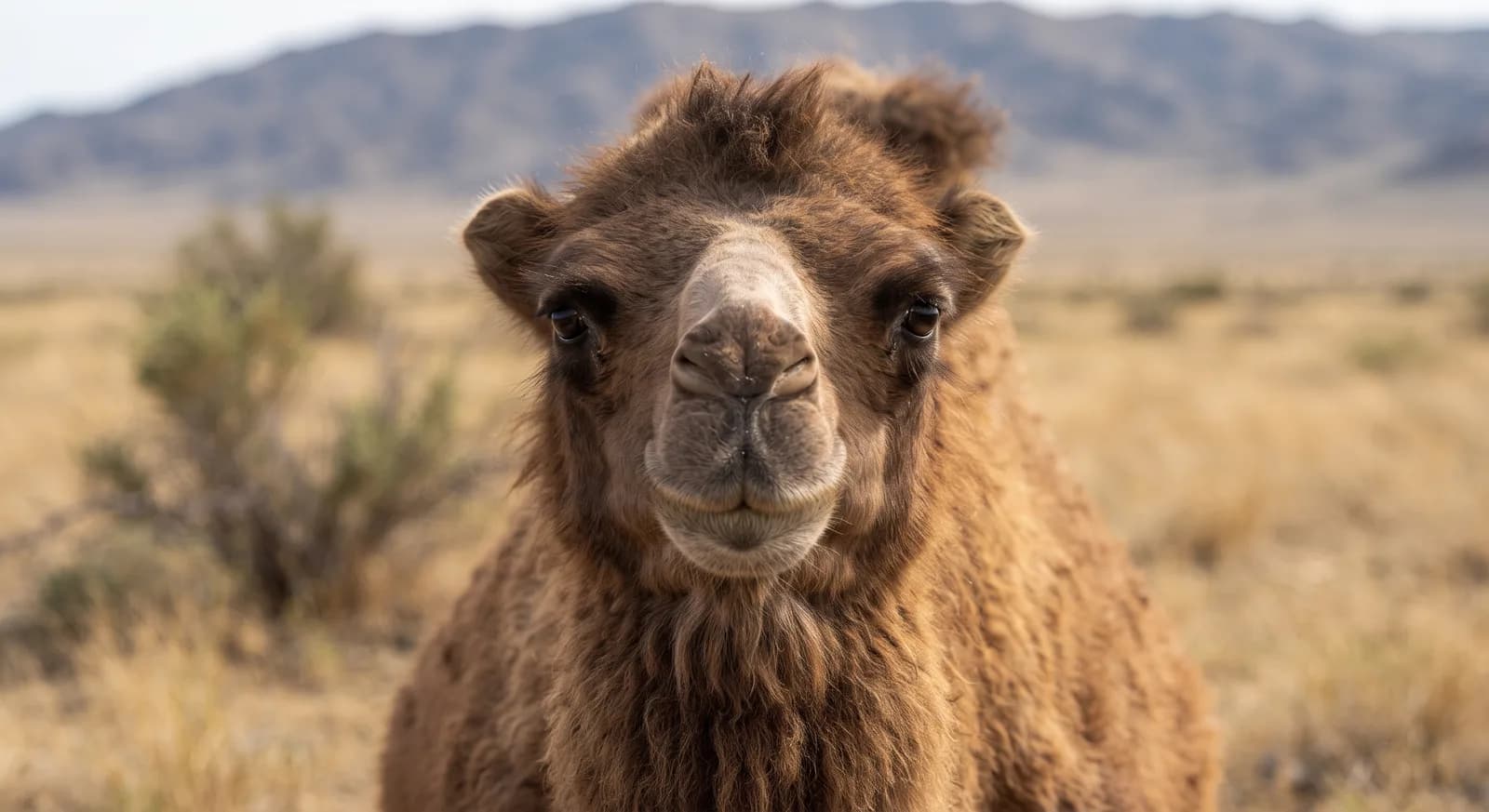
Mammals · Artiodactyla · Camelidae
Bactrian Camel
Camelus bactrianus
It faces an extremely high risk of imminent extinction in the wild. See full glossary
Its two humps store fat, not water as popularly believed, and can visibly slump after a long spell without food. Domesticated more than 4,500 years ago, it was central to trade along the Silk Road.
Weight
300 kg – 1 t
Size
2.3 m – 3.5 m
Lifespan
25 years
Diet
Herbivore
Feeds mainly on plants.
Activity
Diurnal
Active mainly during the day.
Social structure
Herd
Lives in large groups as a strategy against predators.
Sighting difficulty
Very hard
Fun facts
- anatomíaUnlike the dromedary it has two humps, and is built to withstand extremes both in summer and through the bitter Central Asian winter.
Life cycle & biology
- Skeleton type
- Vertebrate - internal bony skeleton (mammal)
- Habitat & environment
- Cold steppe and high-altitude desert of Central Asia, tolerating extremes between -40°C and 55°C
- Birth weight
- 36 kg
- Size at birth
- Precocial, able to stand and run soon after birth
- Sexual maturity
- Female: 3-4 years | Male: 5-6 years
- Gestation / incubation
- 12-15 months (~13 months)
- Litter / clutch size
- 1 young (twins very rare), with 2 years between births
- Lifespan in captivity
- Documented record of up to 35.4 years in captivity
Sources consulted: Animal Kingdom Wiki Fandom; A-Z Animals; Animalia.bio; AnAge; Denver Zoo Conservation Alliance; Bright's Zoo; Idaho Falls; Animal Diversity Web; PMC
Where to find it
See its range on the interactive mapWhere to watch it
Parks and dive sites where this species has been documented.
Related species
Other species in the catalogue with the most in common with Bactrian Camel — same habitat, park, country, tags or family.
One-Humped Camel
Camelus dromedarius
Pallas's Pika
Ochotona pallasii
Asiatic Wild Ass
Equus hemionus
Saiga
Saiga tatarica
Takhi
Equus przewalskii
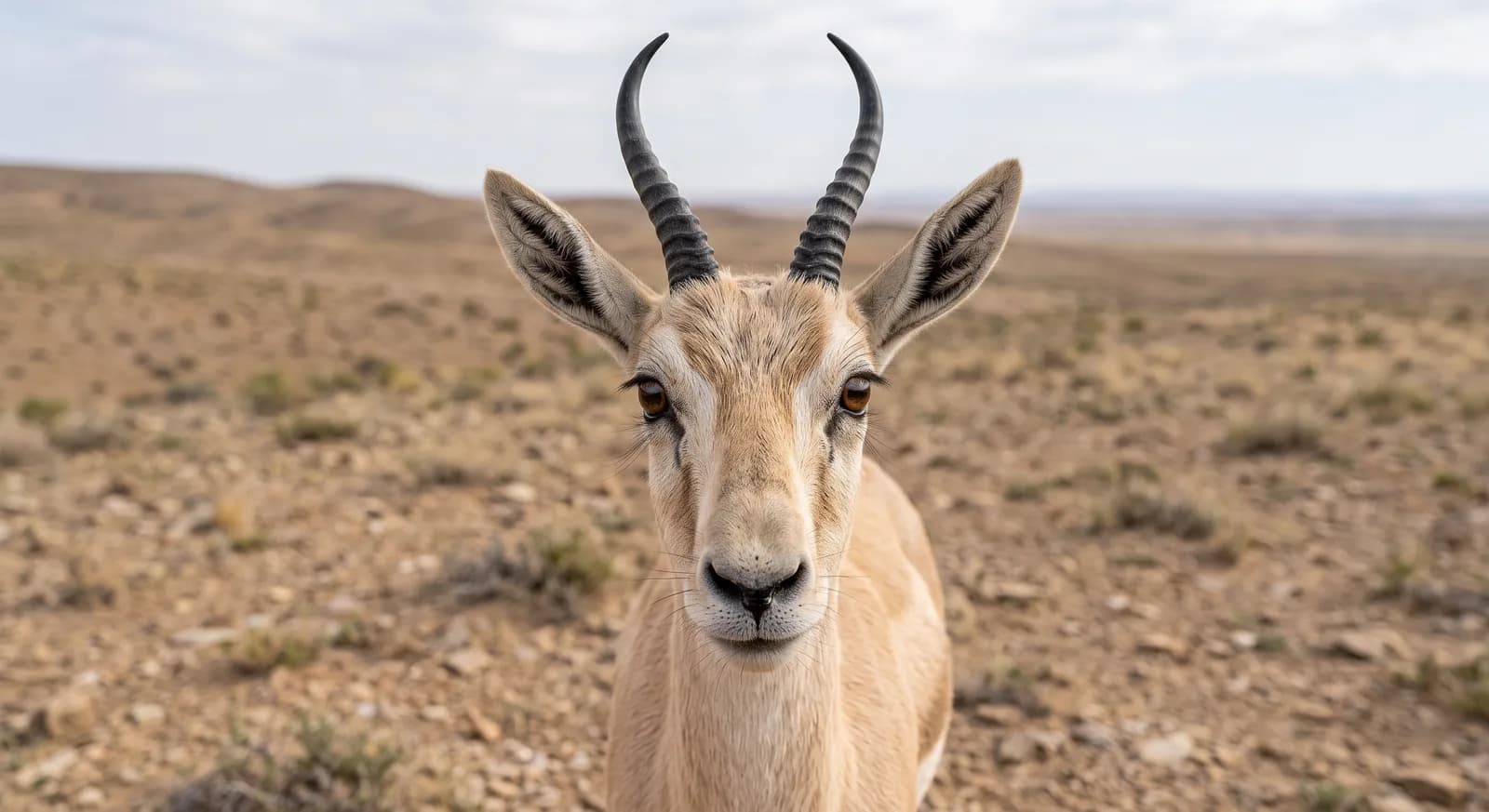 Vulnerable
Goitered Gazelle
Gazella subgutturosa
How to help
The bactrian camel is classified as critically endangered. Organizations such as UICN, WWF y Wildlife Conservation Society work specifically on its conservation and that of its habitat; looking into their programs is a good starting point if you want to get involved.
It's documented in 4 real protected areas — part of why protecting these places matters for its conservation.
Keep exploring
Based on what we already know about bactrian camel.
Comments
Share an experience, a fun fact or a tip for seeing the bactrian camel.
Be the first to comment.