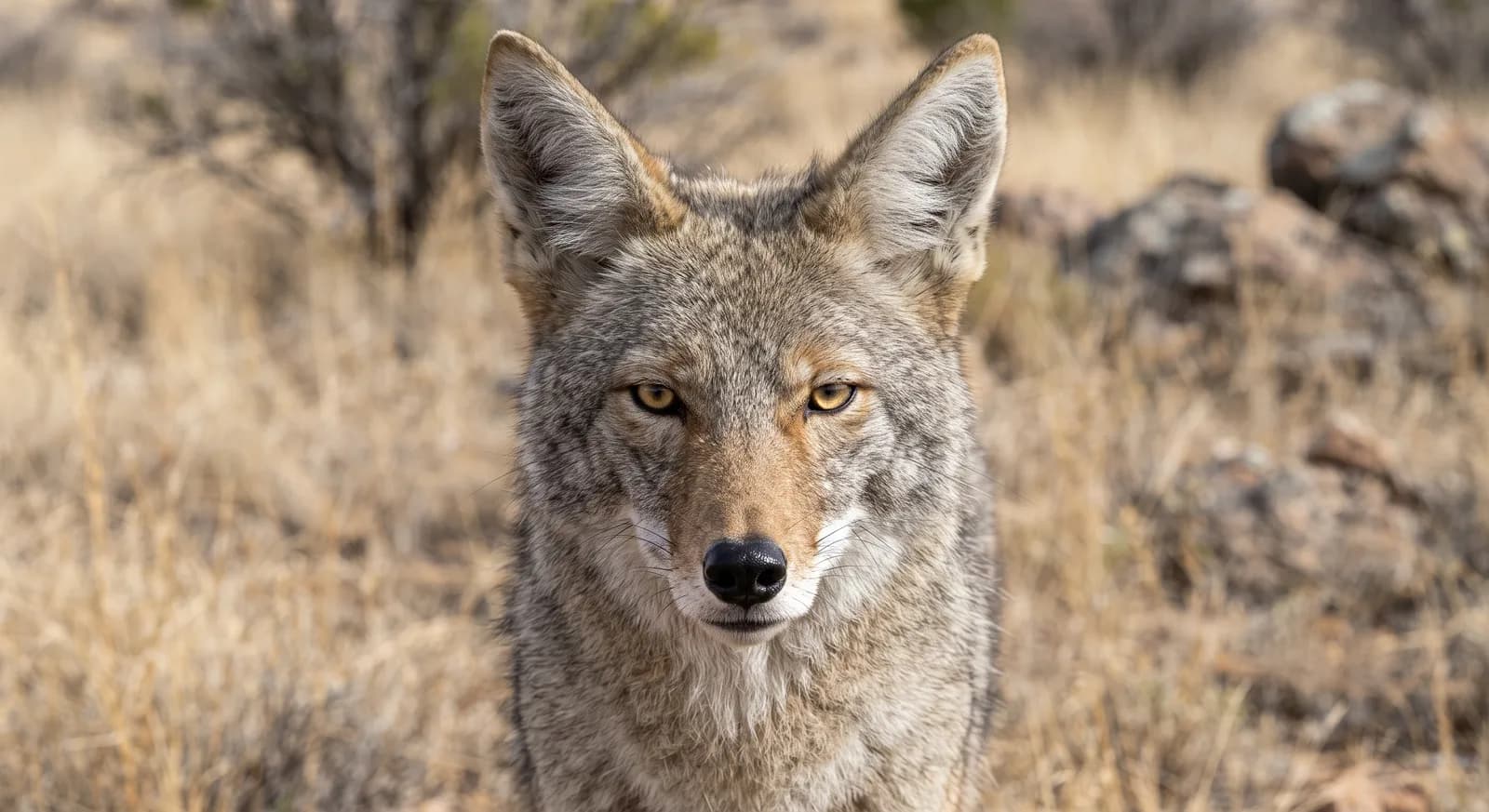
Mammals · Carnivora · Canidae
Coyote
Canis latrans
The species is abundant and widely distributed; it faces no significant short-term risk. See full glossary
Unlike many canids, both parents take an active part in raising the young, feeding the pups regurgitated food.
Weight
9 kg – 20 kg
Size
70 cm – 1.2 m
Lifespan
6 years
Diet
Omnivore
Combines animal and plant food depending on availability.
Activity
Nocturnal
Active mainly at night.
Social structure
In pairs
Usually lives in pairs, sometimes for life.
Sighting difficulty
Easy
Fun facts
- Its range has expanded markedly over the past century, until it now covers practically all of North America.
- It feeds on small mammals, fruit, insects and carrion.
- It lives in a wide range of habitats, from prairie to city.
- comportamientoIt can shift its social behaviour, living alone or forming packs, depending on how much food there is and how much pressure it faces from other predators.
Life cycle & biology
- Skeleton type
- Vertebrate - internal bony skeleton (mammal)
- Habitat & environment
- A wide range of habitats from prairie to city across North and Central America
- Birth weight
- ~250 g at birth, blind and with floppy ears
- Size at birth
- ~250 g at birth
- Sexual maturity
- 9-12 months
- Gestation / incubation
- 60-63 days
- Litter / clutch size
- 1 to 19 young per litter (average 6)
- Lifespan in captivity
- Documented record of up to 18-19 years
Sources consulted: Nature Table (WordPress); Animal Diversity Web; The Animal Facts; Zoo Idaho; UF/IFAS EDIS
Where to watch it
Parques y spots de buceo donde se ha documentado esta especie — se muestran 10 de 41 documentados.
Related species
Other species in the catalogue with the most in common with Coyote — same habitat, park, country, tags or family.
Kit Fox
Vulpes macrotis
Swift Fox
Vulpes velox
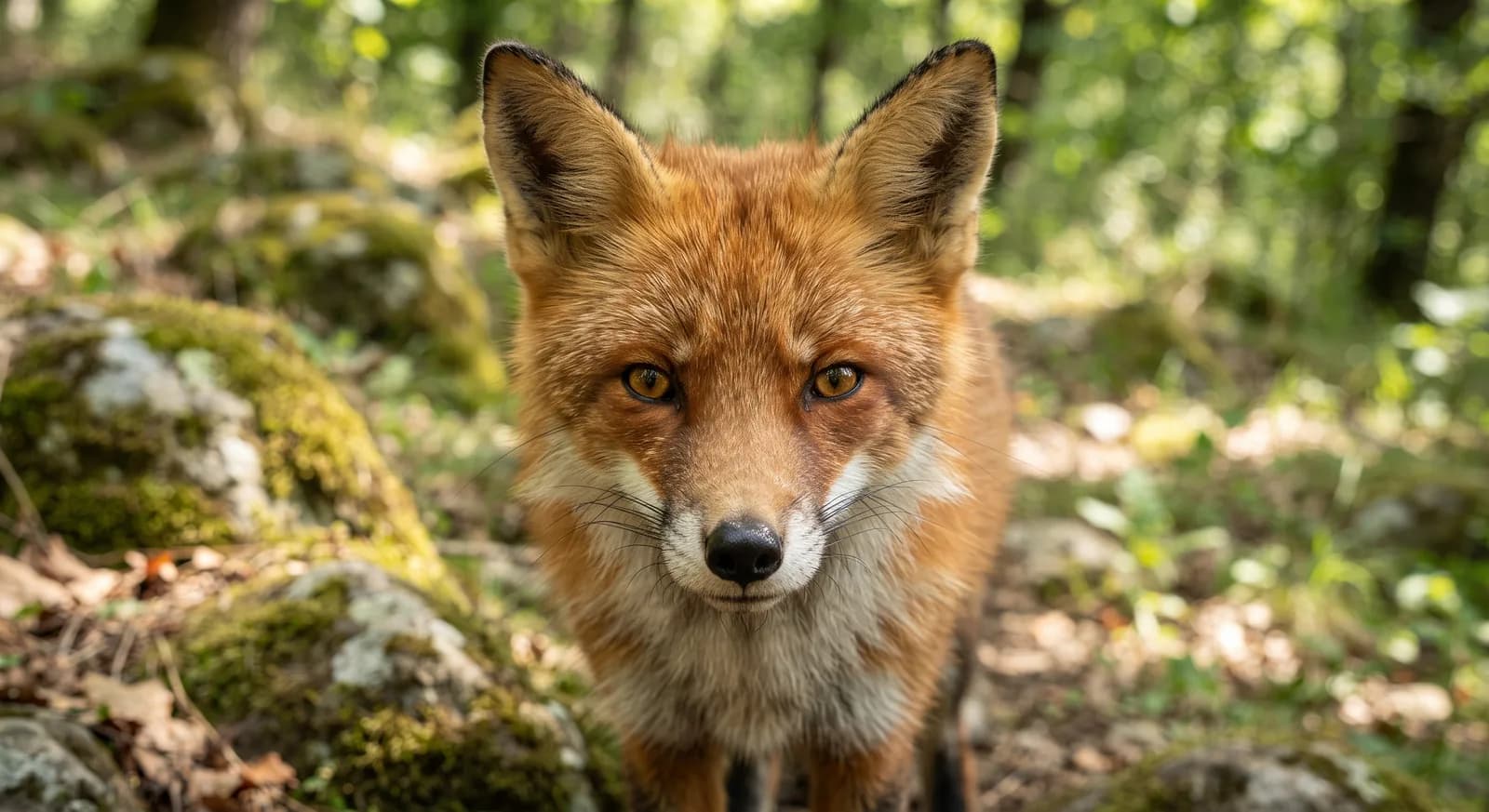 Least Concern
Red Fox
Vulpes vulpes
 Least Concern
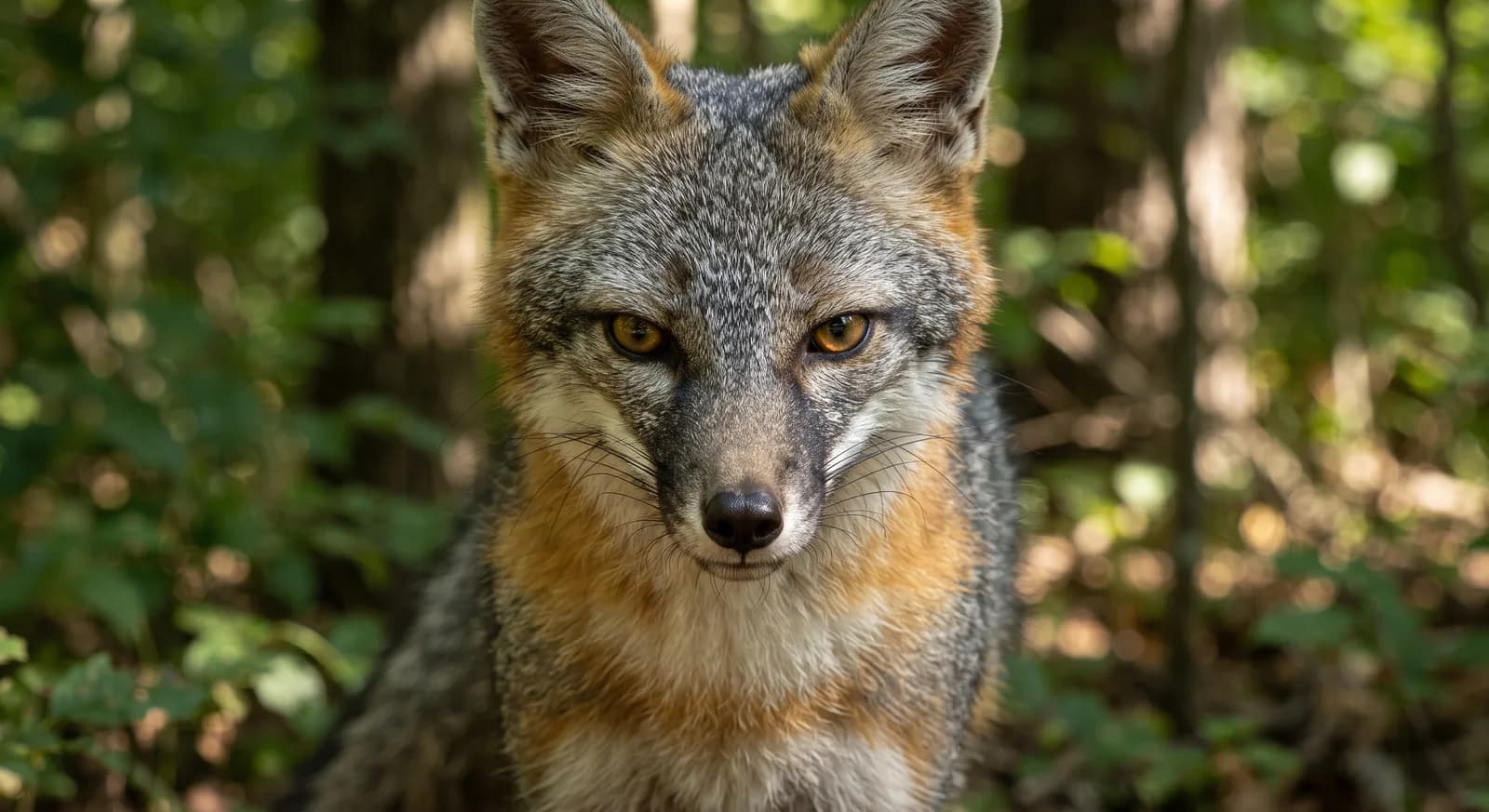
Gray Fox
Urocyon cinereoargenteus
 Least Concern
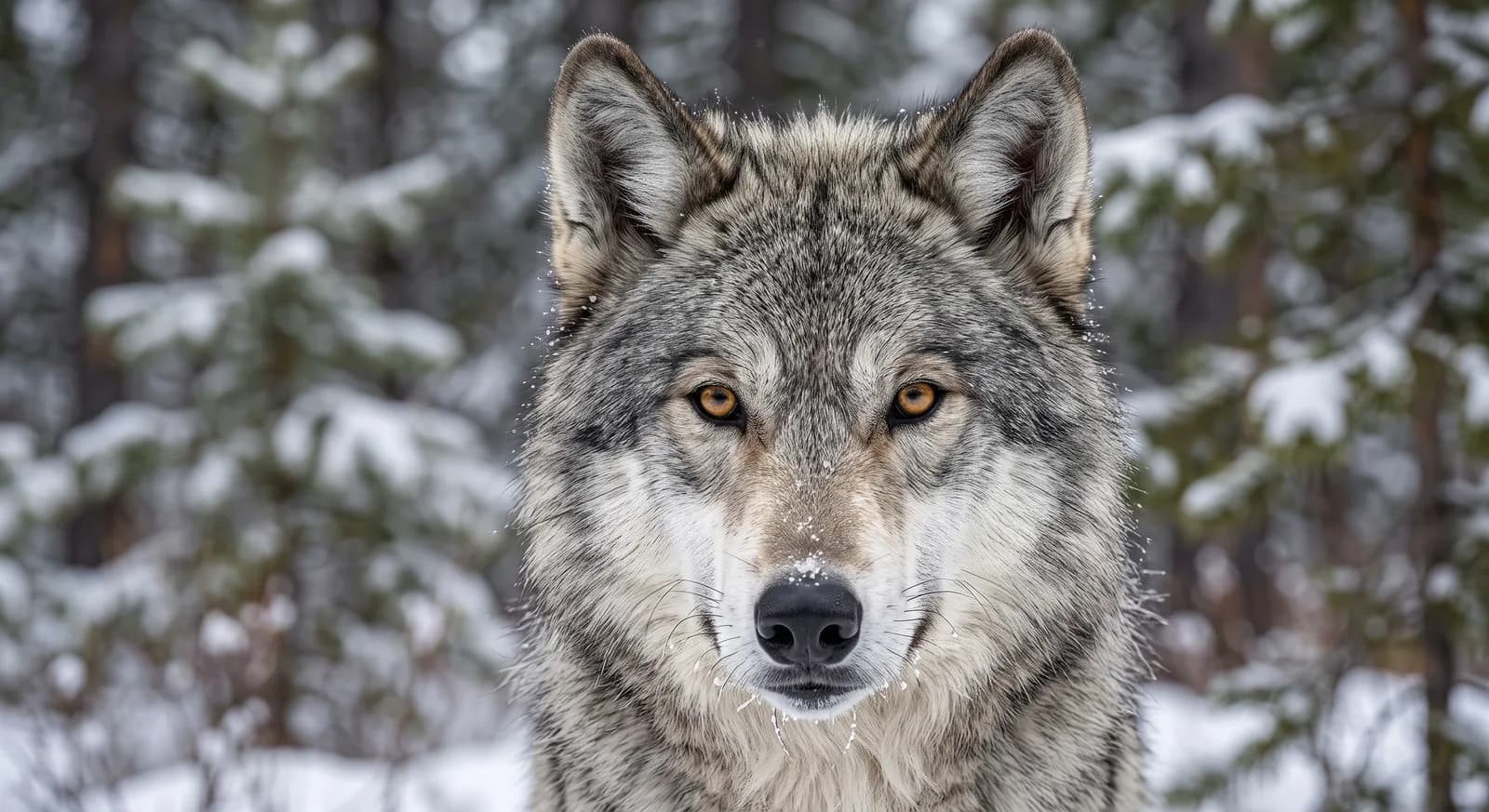
Gray Wolf
Canis lupus
Big Brown Bat
Eptesicus fuscus
Keep exploring
Based on what we already know about coyote.
Comments
Share an experience, a fun fact or a tip for seeing the coyote.
Be the first to comment.