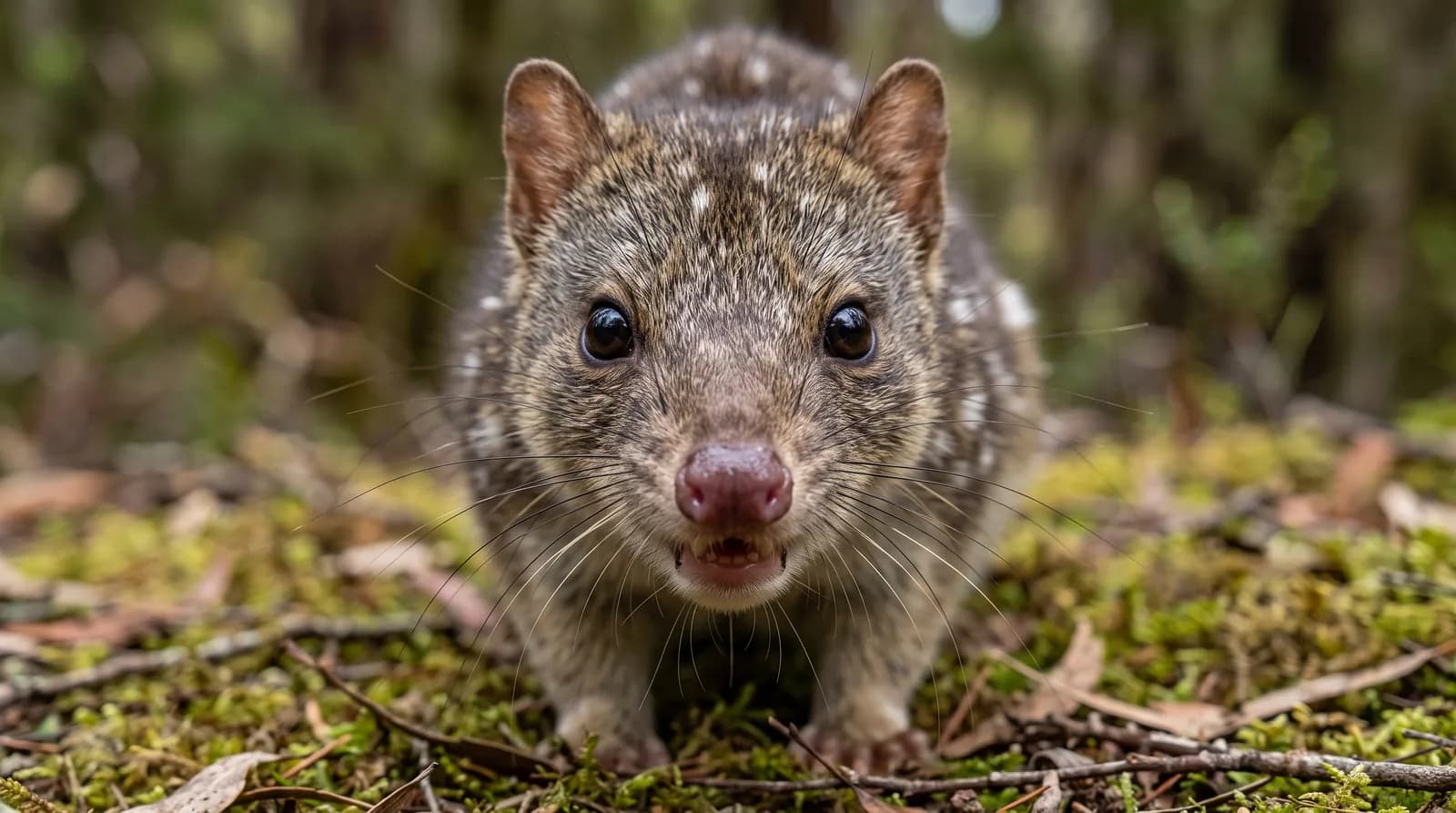
One of the 2 quolls on WAnimals
Mammals · Dasyuromorphia · Dasyuridae
Eastern Quoll
Dasyurus viverrinus
It faces a very high risk of extinction in the wild in the near future. See full glossary
As many as 30 young can be born in a single litter, but the mother has only 6 to 8 working teats, so the great majority do not survive their first few minutes of life.
Weight
600 g – 2 kg
Size
28 cm – 45 cm
Lifespan
3 years
Diet
Carnivore
Feeds mainly on other animals.
Activity
Nocturnal
Active mainly at night.
Social structure
Solitary
Lives and hunts alone, joining others only to breed.
Sighting difficulty
Hard
Fun facts
- As many as 30 young can be born in a litter, but only 6 to 8 survive because there are no more teats.
- It died out on mainland Australia around the 1960s because of the red fox.
- It has been reintroduced to protected mainland sanctuaries since 2016.
Life cycle & biology
- Skeleton type
- Vertebrate - internal bony skeleton (marsupial mammal)
- Habitat & environment
- Grassland, woodland and farmland of Tasmania and Bruny Island; extinct on mainland Australia since the 1960s, with recent reintroductions
- Birth weight
- 0.02 grams (one of the smallest mammal newborns in the world)
- Size at birth
- Extremely undeveloped and tiny at birth, finishing its development in the pouch over some 8-10 weeks
- Sexual maturity
- 10-11 months (both sexes)
- Gestation / incubation
- 19-24 days
- Litter / clutch size
- As many as 30 young born per litter, though only 6-8 survive the competition for the available teats
- Lifespan in captivity
- Documented record of up to 6.8 years in captivity
Sources consulted: AnAge (genomics.senescence.info); Sydney Zoo; ACT Government fact sheet; Animal Diversity Web; Australian Geographic; The Animal Facts; Animalia.bio; PMC (mesopredator release cats study)
Where to watch it
Parks and dive sites where this species has been documented.
Related species
Other species in the catalogue with the most in common with Eastern Quoll — same habitat, park, country, tags or family.
 Endangered
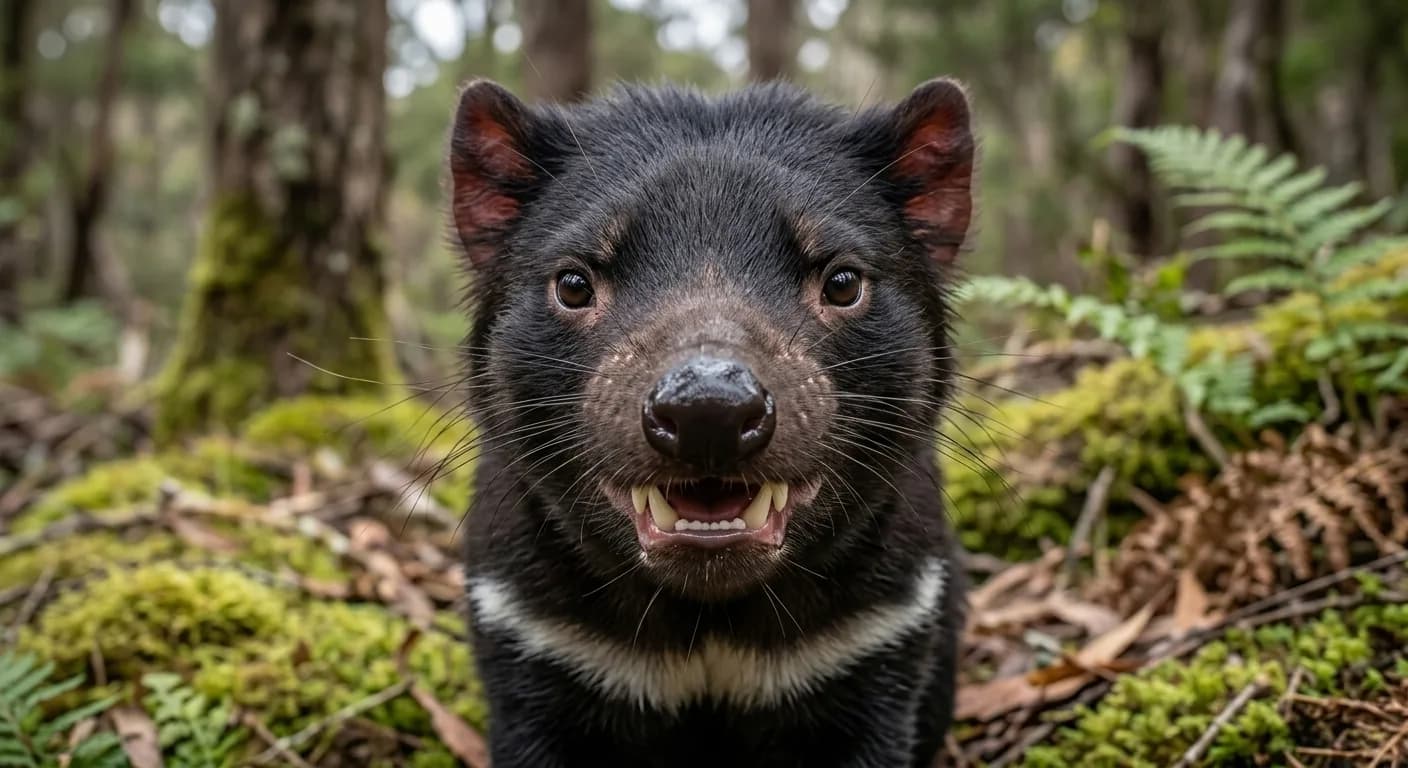
Tasmanian Devil
Sarcophilus harrisii
 Near Threatened
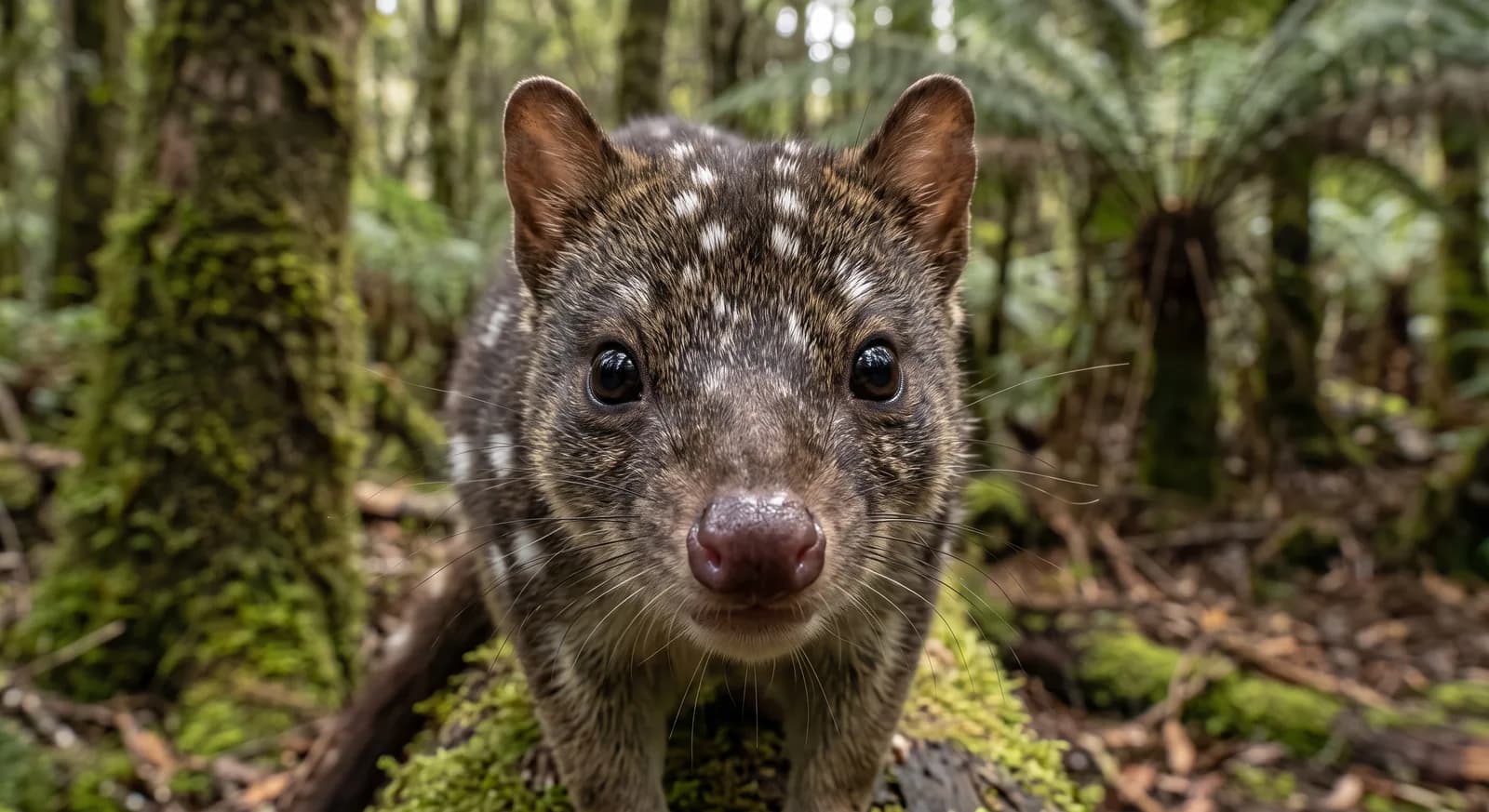
Spotted-tailed Quoll
Dasyurus maculatus
Brown Antechinus
Antechinus stuartii
Fat-tailed Dunnart
Sminthopsis crassicaudata
Brush-tailed Phascogale
Phascogale tapoatafa
Southern Brown Bandicoot
Isoodon obesulus
How to help
The eastern quoll is classified as endangered. Organizations such as UICN, WWF y Wildlife Conservation Society work specifically on its conservation and that of its habitat; looking into their programs is a good starting point if you want to get involved.
It's documented in 4 real protected areas — part of why protecting these places matters for its conservation.
Keep exploring
Based on what we already know about eastern quoll.
Comments
Share an experience, a fun fact or a tip for seeing the eastern quoll.
Be the first to comment.