One of the 17 dolphins on WAnimals
Mammals · Artiodactyla · Lipotidae
Baiji
Lipotes vexillifer
It faces an extremely high risk of imminent extinction in the wild. See full glossary
The baiji was a river dolphin endemic to the Yangtze, with a pale body, a long upturned snout and tiny eyes, almost useless in permanently turbid water. It navigated and hunted by echolocation. Industrialisation of the river, dams, river traffic, electrical fishing gear and pollution reduced its population from thousands of animals to a handful in barely fifty years. An international expedition searched for it without success in 2006 and declared it functionally extinct.
Weight
135 kg – 230 kg
Size
2 m – 2.5 m
Lifespan
24 years
Diet
Carnivore
Feeds mainly on other animals.
Activity
Diurnal
Active mainly during the day.
Sighting difficulty
Very hard
Estimated population
No confirmed sighting since 2002; it is considered functionally extinct
Fun facts
- GeneralDeclared probably extinct in 2006: the first cetacean lost to human causes.
- conservaciónIt was declared functionally extinct in the mid-2000s after an exhaustive expedition failed to find a single animal, and is reckoned one of the first cetaceans lost to human causes.
- Its lineage had been separate from the rest of the cetaceans for some twenty million years: with it went not just a species but a whole family of mammals.
- It is the first cetacean human activity has driven to extinction, and it happened without any targeted hunting: transforming its river was enough.
Life cycle & biology
- Skeleton type
- Vertebrate - internal bony skeleton (mammal)
- Habitat & environment
- A turbid river and its associated lakes
- Sexual maturity
- 8 years
- Gestation / incubation
- 10.5 months
- Litter / clutch size
- 1
Sources consulted: https://www.iucnredlist.org/ | https://animaldiversity.org/ | https://es.wikipedia.org/
Related species
Other species in the catalogue with the most in common with Baiji — same habitat, park, country, tags or family.
Chinese Alligator
Alligator sinensis
Oriental Small-clawed Otter
Aonyx cinereus
Siberian Crane
Leucogeranus leucogeranus
 Vulnerable
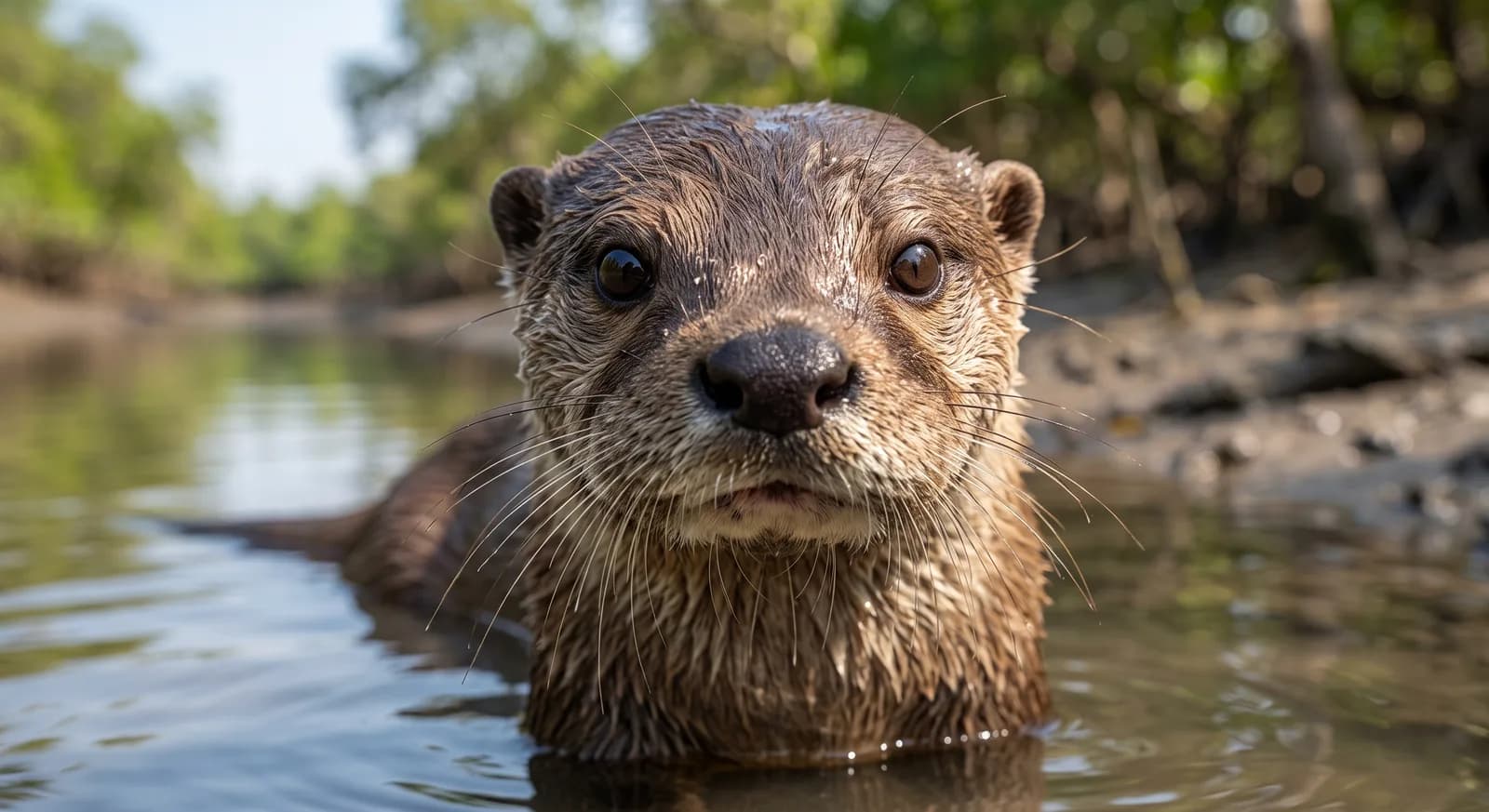
Smooth-coated Otter
Lutrogale perspicillata
How to help
The baiji is classified as critically endangered. Organizations such as UICN, WWF y Wildlife Conservation Society work specifically on its conservation and that of its habitat; looking into their programs is a good starting point if you want to get involved.
Keep exploring
Based on what we already know about baiji.
Comments
Share an experience, a fun fact or a tip for seeing the baiji.
Be the first to comment.