One of the 11 cranes on WAnimals
Birds · Gruiformes · Gruidae
Siberian Crane
Leucogeranus leucogeranus
It faces an extremely high risk of imminent extinction in the wild. See full glossary
The Siberian crane is a species of gruiform bird of the family Gruidae. It breeds in Arctic Russia, in Yakutia and in western Siberia. It is a long-distance migrant. The eastern population winters on the Yangtze River and at Lake Poyang in China, the central population winters in Keoladeo National Park, India, and the western population at Fereidoonkenar and Isfahan in Iran. It breeds and winters in wetlands, where it feeds on the shoots, roots and tubers of aquatic plants. No subspecies are recognised.
Weight
4.9 kg – 8.6 kg
Size
1.4 m – 1.5 m
Lifespan
60 years
Diet
Omnivore
Combines animal and plant food depending on availability.
Activity
Diurnal
Active mainly during the day.
Social structure
In pairs
Usually lives in pairs, sometimes for life.
Sighting difficulty
Very hard
Estimated population
Some 3,500-4,000 individuals, almost all of the eastern population
Fun facts
- Almost the entire species winters in a single wetland: Lake Poyang, in China, which holds more than 95% of the world population. A single change to that lake could finish off the Siberian crane.
- The western population, which crossed Asia as far as India, is extinct: the last known bird on that route was seen in Iran in 2009.
Life cycle & biology
- Skeleton type
- Vertebrate - internal bony skeleton (bird)
- Habitat & environment
- Arctic tundra and peat bogs of Siberia for breeding; the wetlands of Lake Poyang, in China, for wintering
- Sexual maturity
- 6 years
- Gestation / incubation
- 29 days of incubation
- Litter / clutch size
- 2 eggs
Sources consulted: https://es.wikipedia.org/wiki/Leucogeranus_leucogeranus
Where to find it
See its range on the interactive mapWhere to watch it
Parks and dive sites where this species has been documented.
Related species
Other species in the catalogue with the most in common with Siberian Crane — same habitat, park, country, tags or family.
Sarus Crane
Antigone antigone
Red-crowned Crane
Grus japonensis
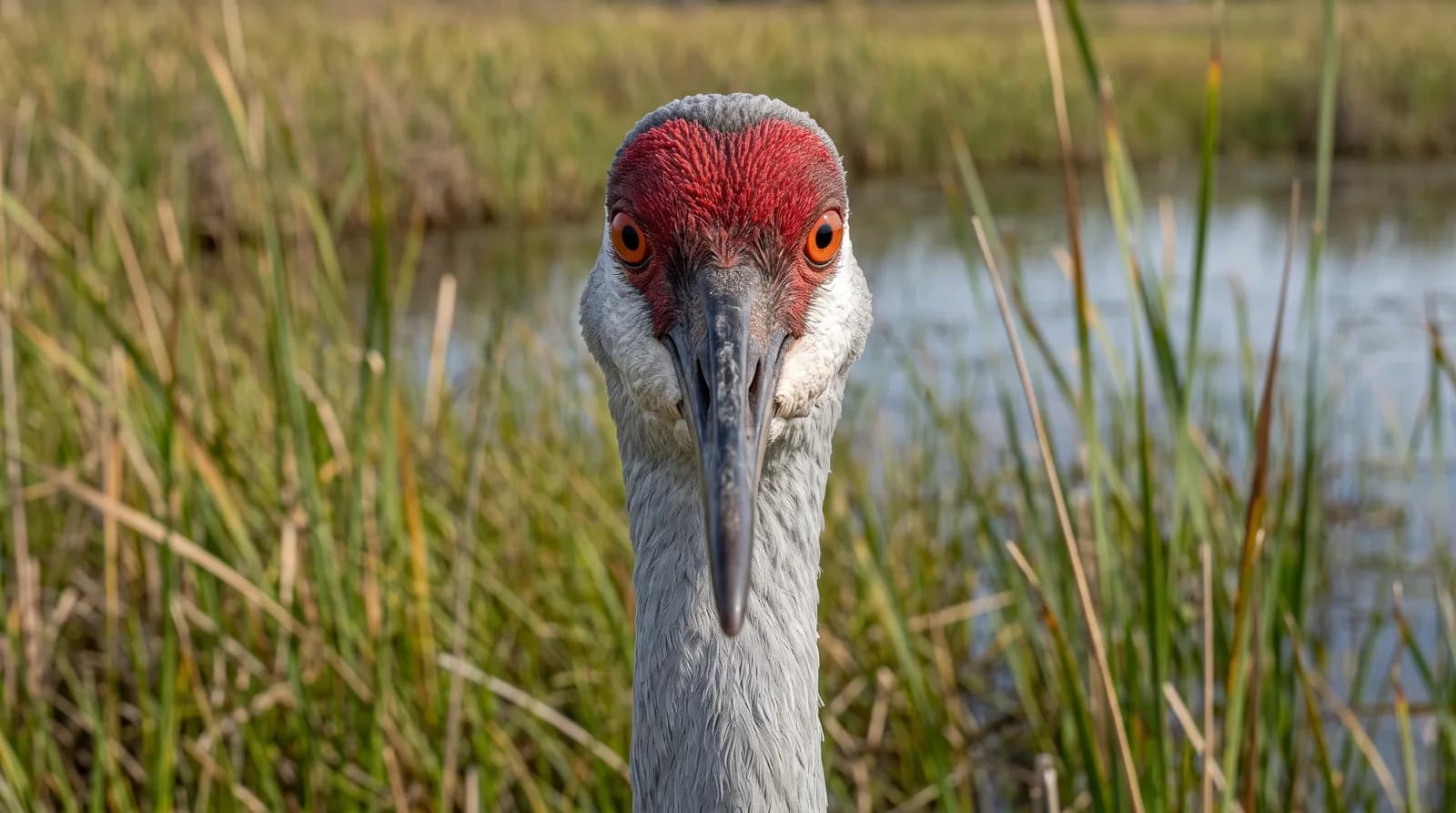 Least Concern
Sandhill Crane
Antigone canadensis
Demoiselle Crane
Grus virgo
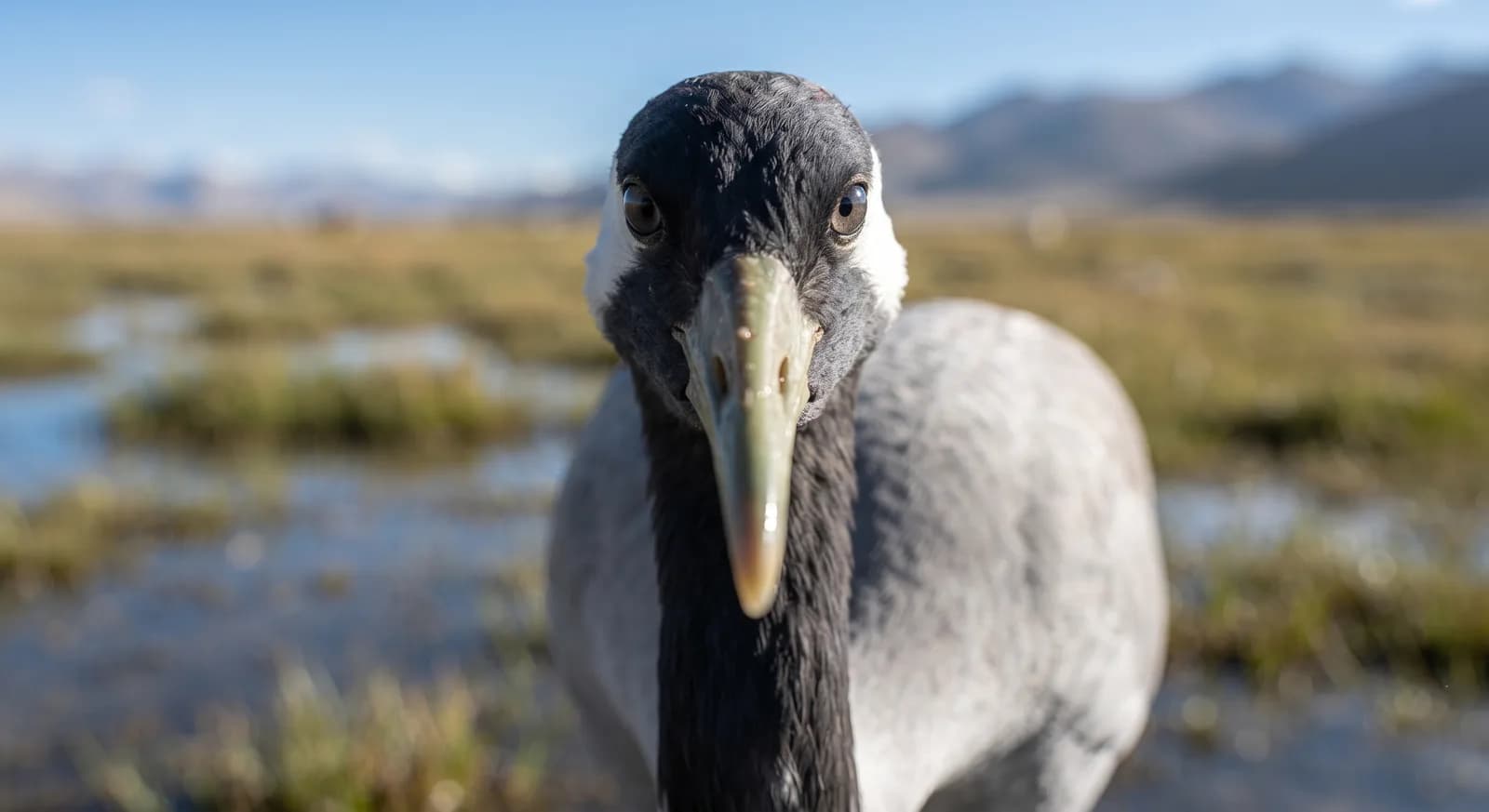 Near Threatened
Black-necked Crane
Grus nigricollis
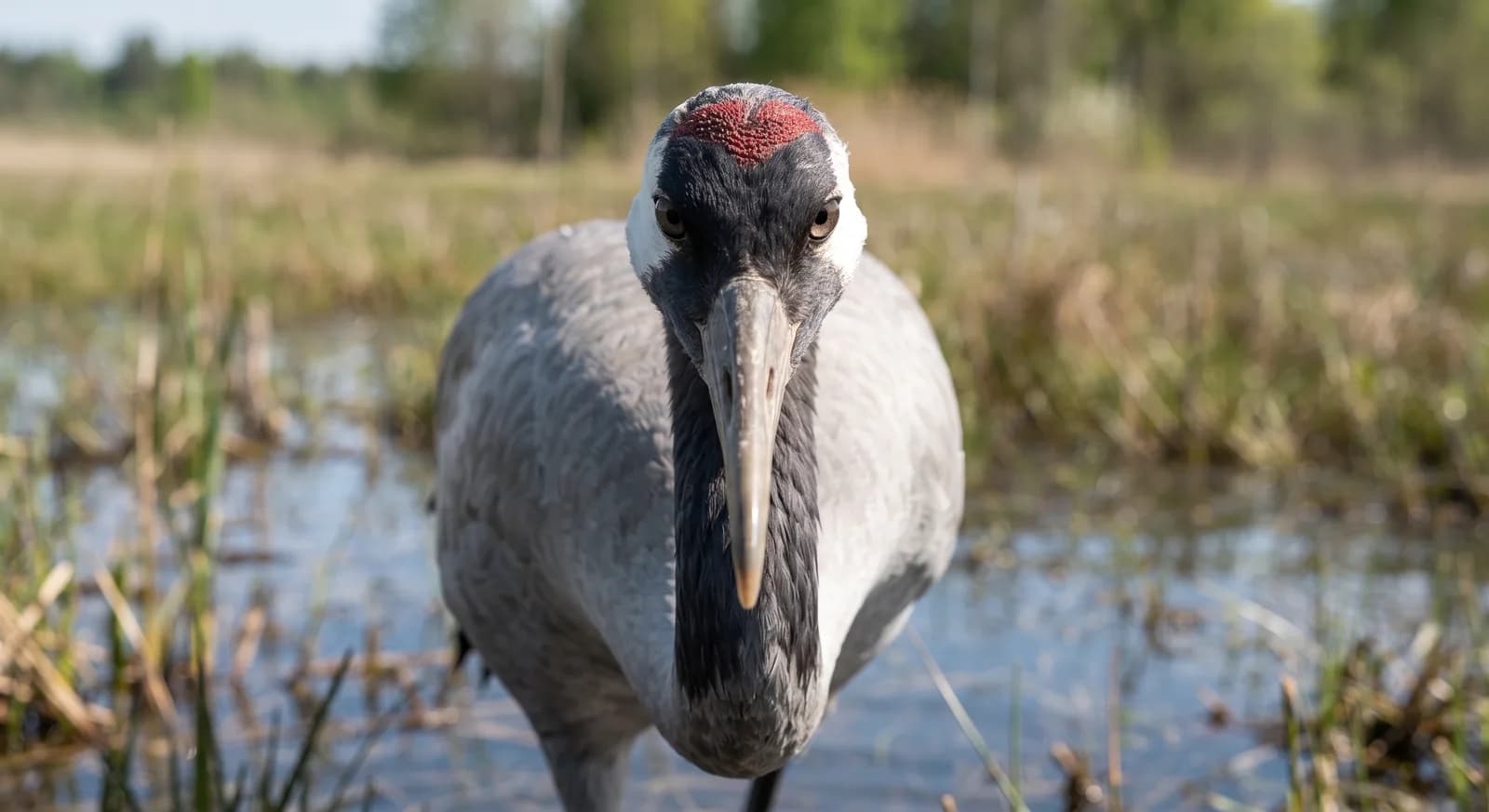 Least Concern
Common Crane
Grus grus
How to help
The siberian crane is classified as critically endangered. Organizations such as UICN, WWF y Wildlife Conservation Society work specifically on its conservation and that of its habitat; looking into their programs is a good starting point if you want to get involved.
It's documented in 7 real protected areas — part of why protecting these places matters for its conservation.
Keep exploring
Based on what we already know about siberian crane.
Comments
Share an experience, a fun fact or a tip for seeing the siberian crane.
Be the first to comment.