One of the 11 cranes on WAnimals
Birds · Gruiformes · Gruidae
Red-crowned Crane
Grus japonensis
It faces a high risk of extinction in the wild over the medium term. See full glossary
The red-crowned crane is the second largest crane in the world and one of the rarest. It is white with a black neck and secondaries and a patch of bare red skin on the crown. In East Asia it has been a symbol of longevity and fidelity for a thousand years, appearing in Chinese, Korean and Japanese art for centuries. The Japanese population on Hokkaido is non-migratory and was saved from extinction after some thirty birds were discovered in 1924.
Weight
7 kg – 10.5 kg
Size
1.5 m – 1.6 m
Lifespan
40 years
Diet
Omnivore
Combines animal and plant food depending on availability.
Activity
Diurnal
Active mainly during the day.
Social structure
In pairs
Usually lives in pairs, sometimes for life.
Sighting difficulty
Moderate
Estimated population
Between 2,000 and 3,000 individuals
Fun facts
- GeneralA symbol of long life in Japan; the pairs perform a synchronised dance on the snow.
- In Japan, China and Korea it has symbolised longevity and marital fidelity for more than a thousand years, and the tradition of folding a thousand origami cranes is inspired by it.
- The Japanese population was given up for extinct until some thirty surviving birds were found in the Kushiro marshes on Hokkaido in 1924: today there are more than a thousand, thanks to winter feeding stations maintained by local farmers.
- It performs its courtship dance, with leaps, wing-flapping and the tossing of tufts of grass, outside the breeding season too, and it appears to work as a reinforcement of the pair bond.
Life cycle & biology
- Skeleton type
- Vertebrate - internal bony skeleton (bird)
- Habitat & environment
- Freshwater marshes and wetlands of north-eastern Asia; winters in the rice fields and estuaries of China and Korea
- Sexual maturity
- 3 years
- Gestation / incubation
- 31 days
- Litter / clutch size
- 2
Sources consulted: https://es.wikipedia.org/wiki/Grus_japonensis
Where to find it
See its range on the interactive mapWhere to watch it
Parks and dive sites where this species has been documented.
Related species
Other species in the catalogue with the most in common with Red-crowned Crane — same habitat, park, country, tags or family.
Siberian Crane
Leucogeranus leucogeranus
Demoiselle Crane
Grus virgo
Steller's Sea Eagle
Haliaeetus pelagicus
 Near Threatened
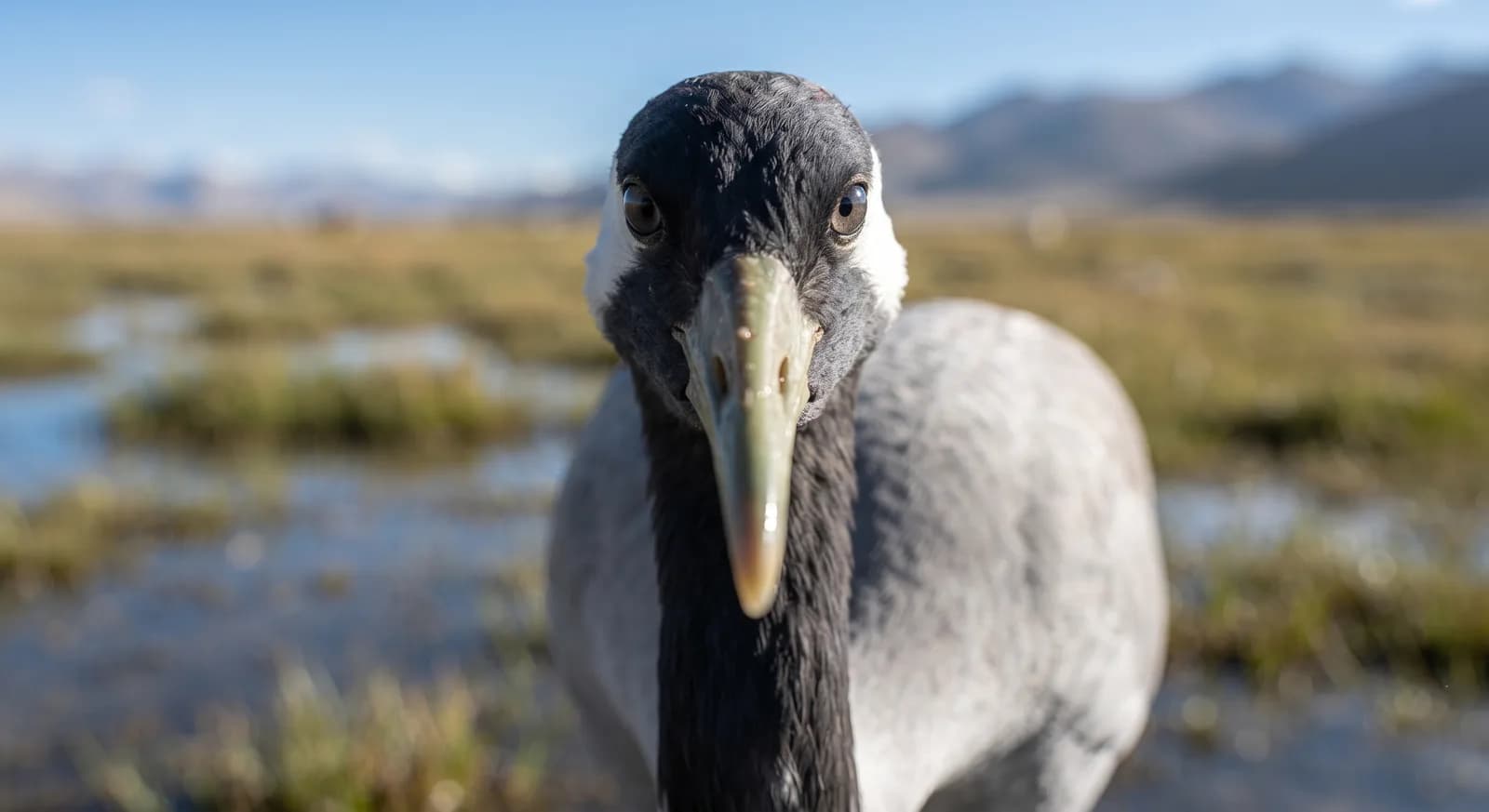
Black-necked Crane
Grus nigricollis
 Least Concern
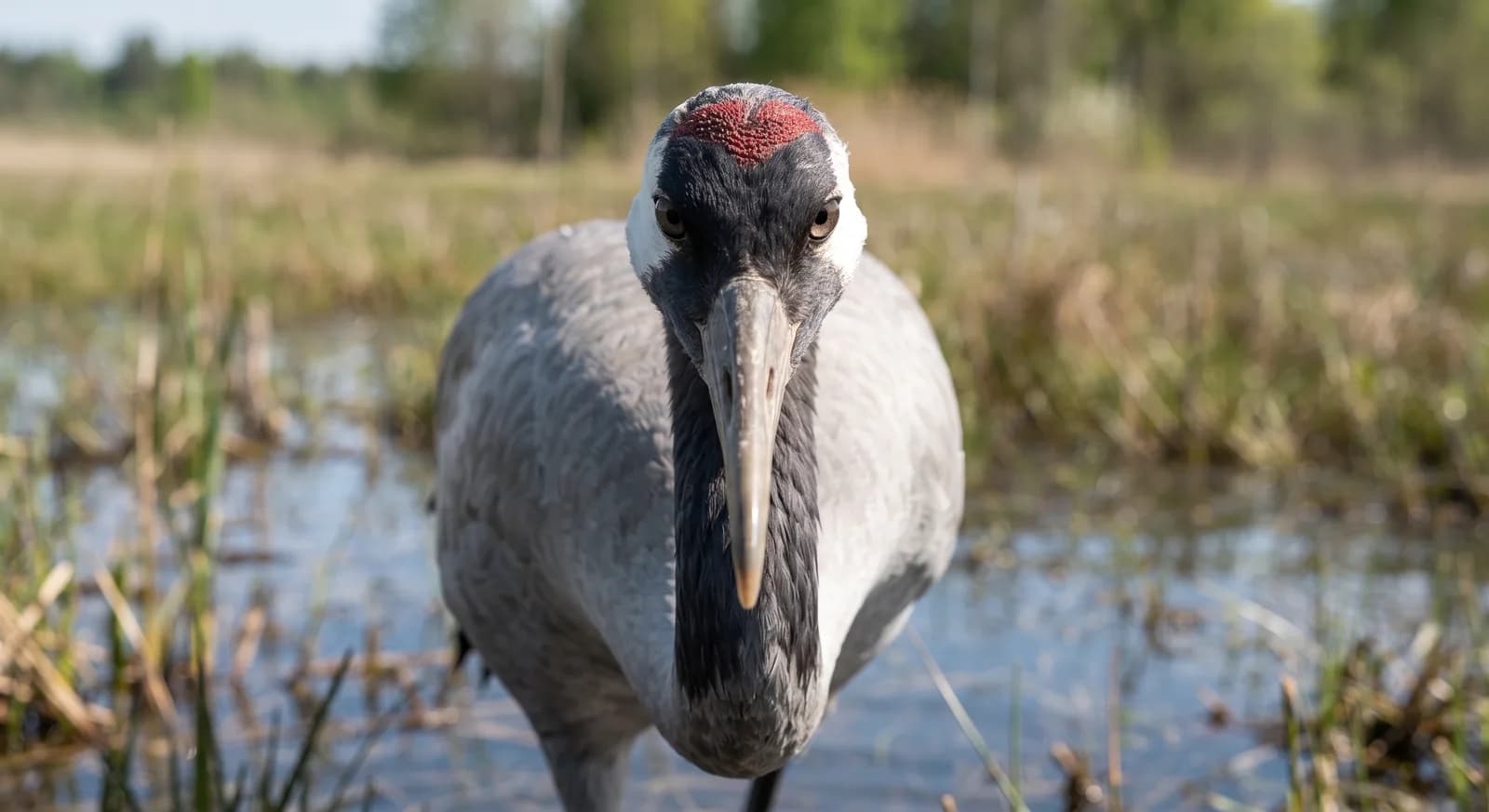
Common Crane
Grus grus
 Least Concern
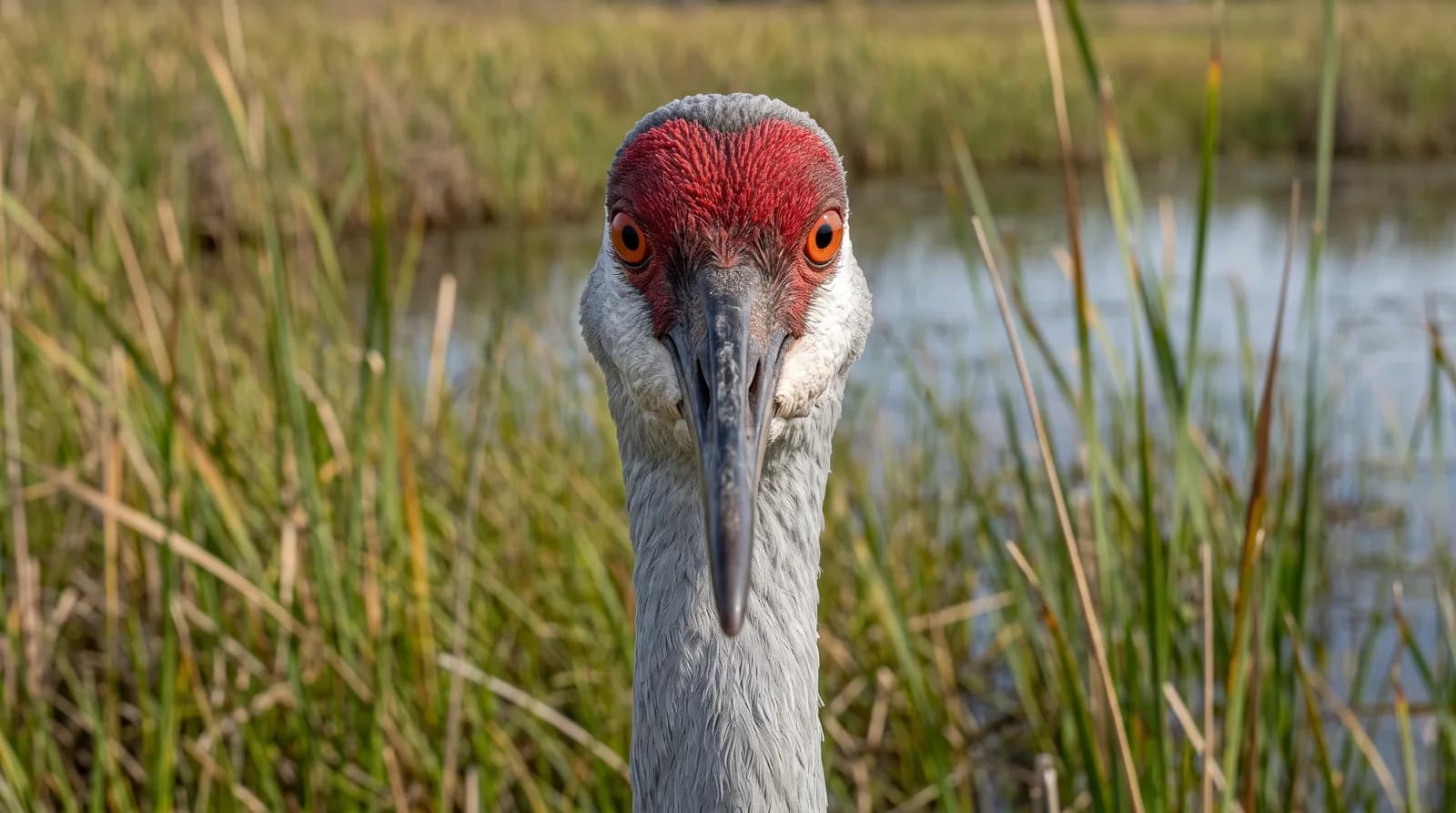
Sandhill Crane
Antigone canadensis
How to help
The red-crowned crane is classified as vulnerable. Organizations such as UICN, WWF y Wildlife Conservation Society work specifically on its conservation and that of its habitat; looking into their programs is a good starting point if you want to get involved.
It's documented in 4 real protected areas — part of why protecting these places matters for its conservation.
Keep exploring
Based on what we already know about red-crowned crane.
Comments
Share an experience, a fun fact or a tip for seeing the red-crowned crane.
Be the first to comment.