One of the 11 cranes on WAnimals
Birds · Gruiformes · Gruidae
Demoiselle Crane
Grus virgo
The species is abundant and widely distributed; it faces no significant short-term risk. See full glossary
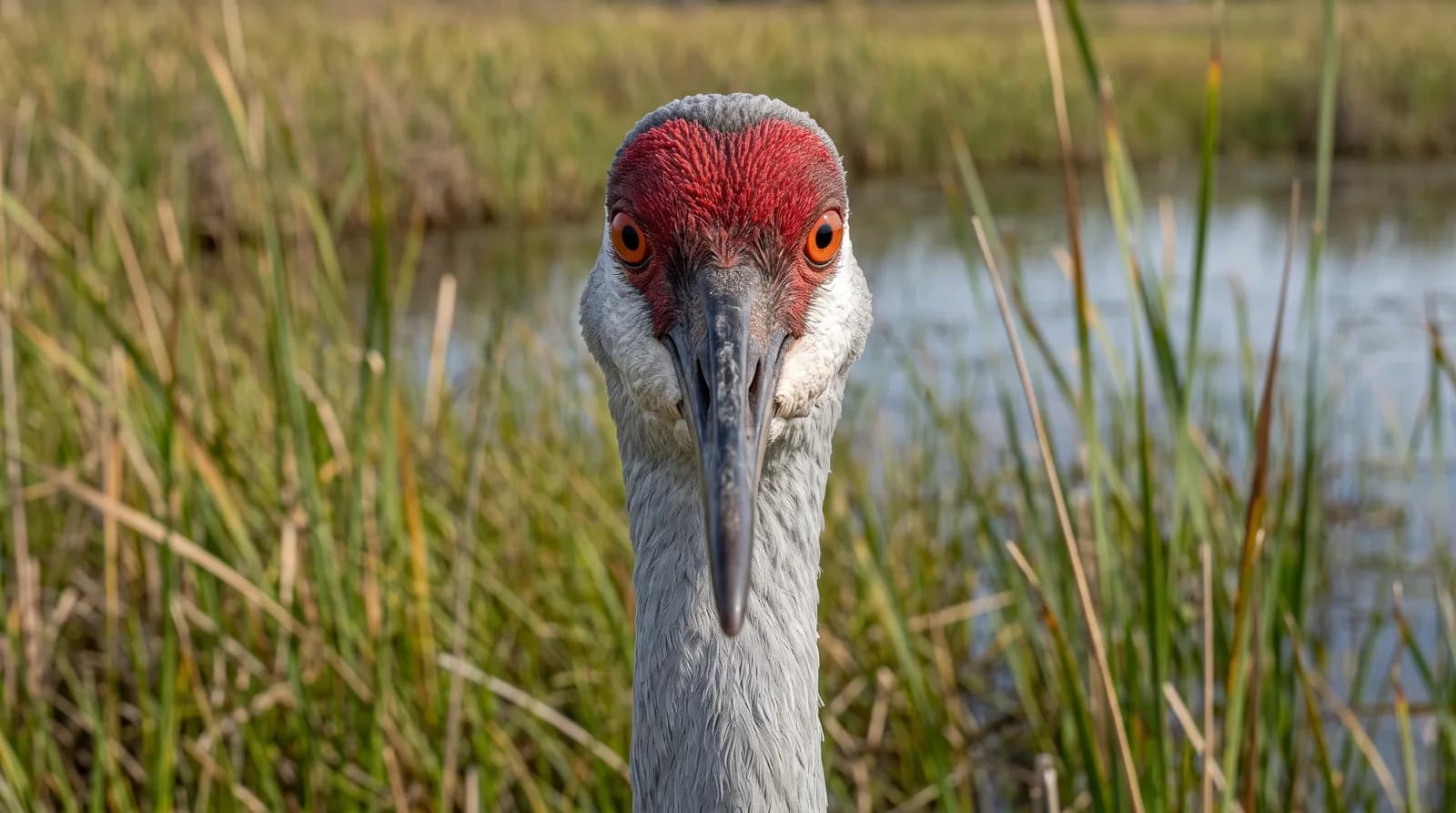
The demoiselle crane is the smallest and most slender of all the cranes, with tufts of white feathers behind the eyes and an elongated black breast. It breeds on the dry steppes of Eurasia and makes one of the most demanding migrations in the animal world: the Asian populations cross the Himalaya, climbing above 8,000 metres over Everest and Annapurna, to winter in India.
Weight
2 kg – 3 kg
Size
85 cm – 1 m
Lifespan
27 years
Diet
Omnivore
Combines animal and plant food depending on availability.
Activity
Diurnal
Active mainly during the day.
Sighting difficulty
Easy
Fun facts
- GeneralIt crosses the Himalaya on migration, flying above 7,000 m.
- It crosses the Himalaya on migration, climbing above 8,000 metres where the oxygen is a fraction of that at sea level: the flocks also have to contend with golden eagles waiting for them at the mountain passes.
- In the village of Khichan, in Rajasthan, the inhabitants have for decades fed thousands of demoiselle cranes every winter, a tradition that has made the village one of the largest wintering concentrations of the species.
Life cycle & biology
- Skeleton type
- Vertebrate - internal bony skeleton (bird)
- Habitat & environment
- Steppe, dry grassland and semi-desert of Eurasia; winters in the Indian subcontinent and the Sahel
- Sexual maturity
- 4 years
- Gestation / incubation
- 29 days of incubation
- Litter / clutch size
- 2 eggs
Sources consulted: https://es.wikipedia.org/wiki/Grus_virgo
Where to find it
See its range on the interactive mapWhere to watch it
Parques y spots de buceo donde se ha documentado esta especie — se muestran 10 de 21 documentados.
Related species
Other species in the catalogue with the most in common with Demoiselle Crane — same habitat, park, country, tags or family.
Wattled Crane
Bugeranus carunculatus
Sarus Crane
Antigone antigone
Red-crowned Crane
Grus japonensis
Black Crowned Crane
Balearica pavonina
Siberian Crane
Leucogeranus leucogeranus
 Least Concern
Sandhill Crane
Antigone canadensis
Keep exploring
Based on what we already know about demoiselle crane.
Comments
Share an experience, a fun fact or a tip for seeing the demoiselle crane.
Be the first to comment.