One of the 11 cranes on WAnimals
Birds · Gruiformes · Gruidae
Wattled Crane
Bugeranus carunculatus
It faces a high risk of extinction in the wild over the medium term. See full glossary
The wattled crane is the largest crane in Africa and the second tallest in the world, with a feathered wattle hanging beneath its chin. It depends entirely on the seasonal wetlands of the Okavango, the Zambezi and the Kafue: it synchronises its breeding with the flood pulse, and any dam or diversion that alters that cycle sinks its reproduction. It is the most threatened crane in mainland Africa.
Weight
6 kg – 9 kg
Size
1.5 m – 1.8 m
Lifespan
30 years
Diet
Omnivore
Combines animal and plant food depending on availability.
Activity
Diurnal
Active mainly during the day.
Social structure
In pairs
Usually lives in pairs, sometimes for life.
Sighting difficulty
Moderate
Fun facts
- It raises a single chick although it lays two eggs: the second works as insurance and the weaker chick rarely survives, which gives the species one of the lowest breeding rates of any crane.
- Its breeding calendar depends on the annual flood pulse: when a dam regulates the river and removes that seasonality, the species stops breeding even though the wetland still exists.
Life cycle & biology
- Skeleton type
- Vertebrate - internal bony skeleton (bird)
- Habitat & environment
- Floodplains, papyrus marshes and seasonal wetlands of sub-Saharan Africa
- Sexual maturity
- 4 years
- Gestation / incubation
- 36 days of incubation
- Litter / clutch size
- 2 eggs
Sources consulted: https://www.iucnredlist.org/ | https://animaldiversity.org/ | https://es.wikipedia.org/
Where to find it
See its range on the interactive mapWhere to watch it
Parques y spots de buceo donde se ha documentado esta especie — se muestran 10 de 26 documentados.
Related species
Other species in the catalogue with the most in common with Wattled Crane — same habitat, park, country, tags or family.
Black Crowned Crane
Balearica pavonina
Grey Crowned Crane
Balearica regulorum
Demoiselle Crane
Grus virgo
Southern Ground-Hornbill
Bucorvus leadbeateri
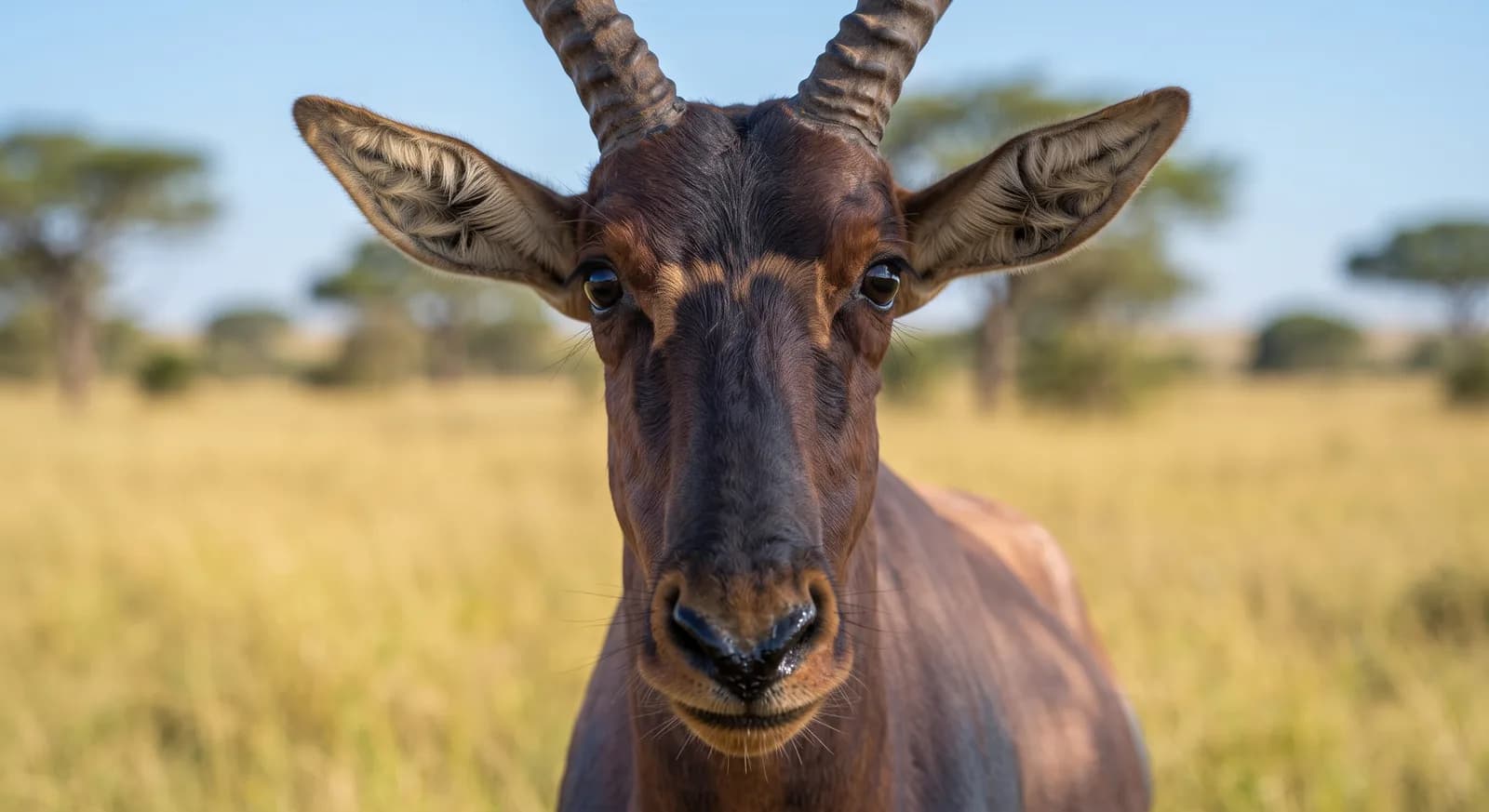 Vulnerable
Topi
Damaliscus lunatus
Shoebill
Balaeniceps rex
How to help
The wattled crane is classified as vulnerable. Organizations such as UICN, WWF y Wildlife Conservation Society work specifically on its conservation and that of its habitat; looking into their programs is a good starting point if you want to get involved.
It's documented in 10 real protected areas — part of why protecting these places matters for its conservation.
Keep exploring
Based on what we already know about wattled crane.
Comments
Share an experience, a fun fact or a tip for seeing the wattled crane.
Be the first to comment.