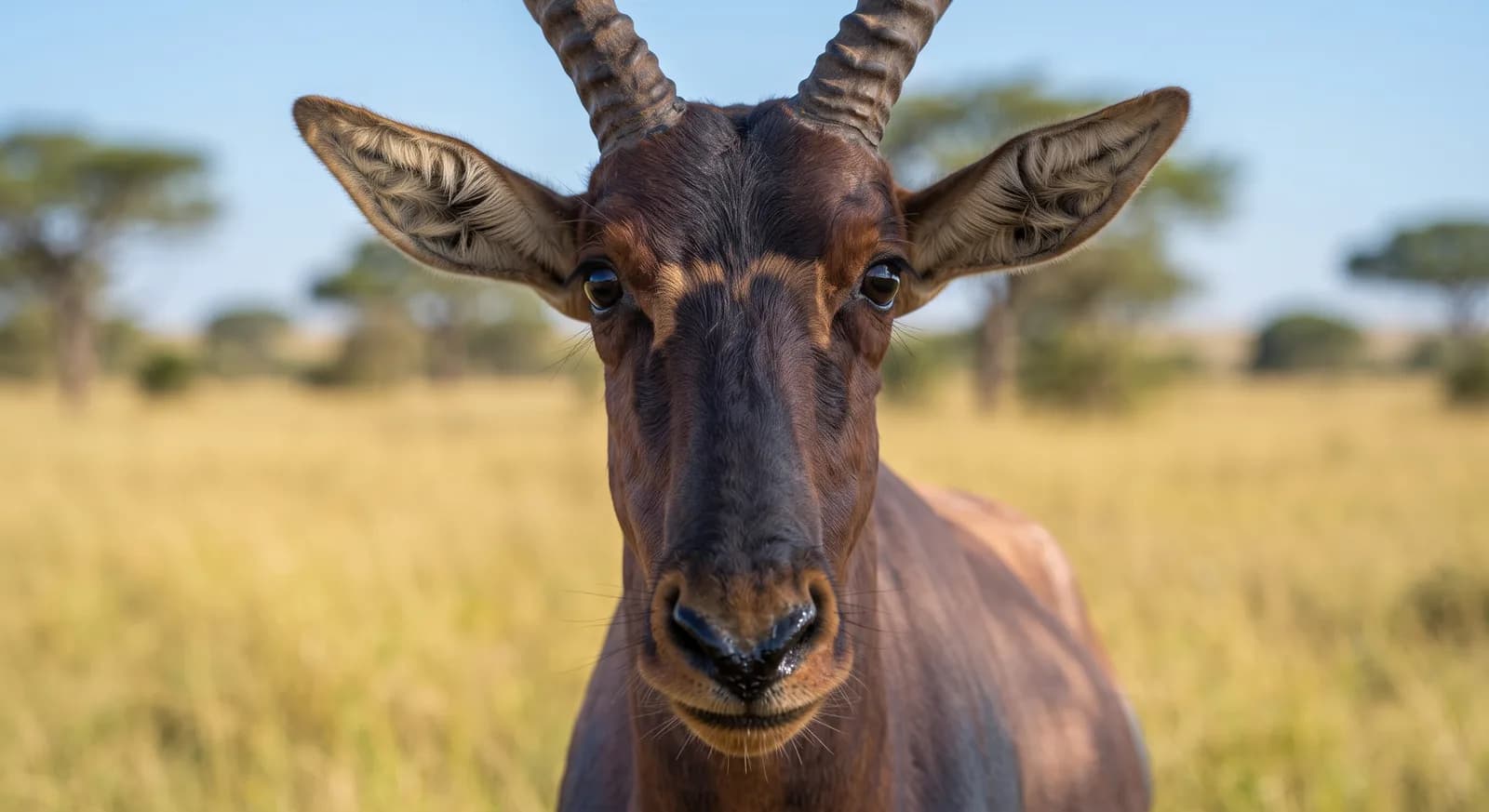
Mammals · Artiodactyla · Bovidae
Topi
Damaliscus lunatus
It faces a high risk of extinction in the wild over the medium term. See full glossary
It is one of the fastest and most enduring African antelopes, able to hold a cruising speed above that of most of its predators.
Weight
90 kg – 147 kg
Size
1 m – 1.3 m
Lifespan
15 years
Diet
Herbivore
Feeds mainly on plants.
Activity
Diurnal
Active mainly during the day.
Social structure
Herd
Lives in large groups as a strategy against predators.
Sighting difficulty
Moderate
Fun facts
- It is one of the fastest and most enduring African antelopes over distance.
- As many as 100 males may gather on courtship arenas — leks — during the rut.
- Only a few dominant males account for most of the matings.
Life cycle & biology
- Skeleton type
- Vertebrate - internal bony skeleton (mammal)
- Habitat & environment
- Savannah, floodplain grassland and open plains of eastern and southern Africa
- Birth weight
- 9.35 - 11.1 kg
- Size at birth
- Precocial, able to follow its mother soon after birth
- Sexual maturity
- Female: ~1 year and 9 months (~1.5-2 years) | Male: ~3 years
- Gestation / incubation
- 228-238 days (~7.5-8 months)
- Litter / clutch size
- 1 young per birth
- Lifespan in captivity
- Documented record of up to 35 years in captivity
Sources consulted: AnAge (genomics.senescence.info); African Wildlife Foundation; Animal Diversity Web; Britannica; World Species; Monaco Nature Encyclopedia; UCSD Placentation Database
Where to find it
See its range on the interactive mapWhere to watch it
Parks and dive sites where this species has been documented.
Related species
Other species in the catalogue with the most in common with Topi — same habitat, park, country, tags or family.
Bohor Reedbuck
Redunca redunca
Waterbuck
Kobus ellipsiprymnus
Klipspringer
Oreotragus oreotragus
Hartebeest
Alcelaphus buselaphus
Steenbok
Raphicerus campestris
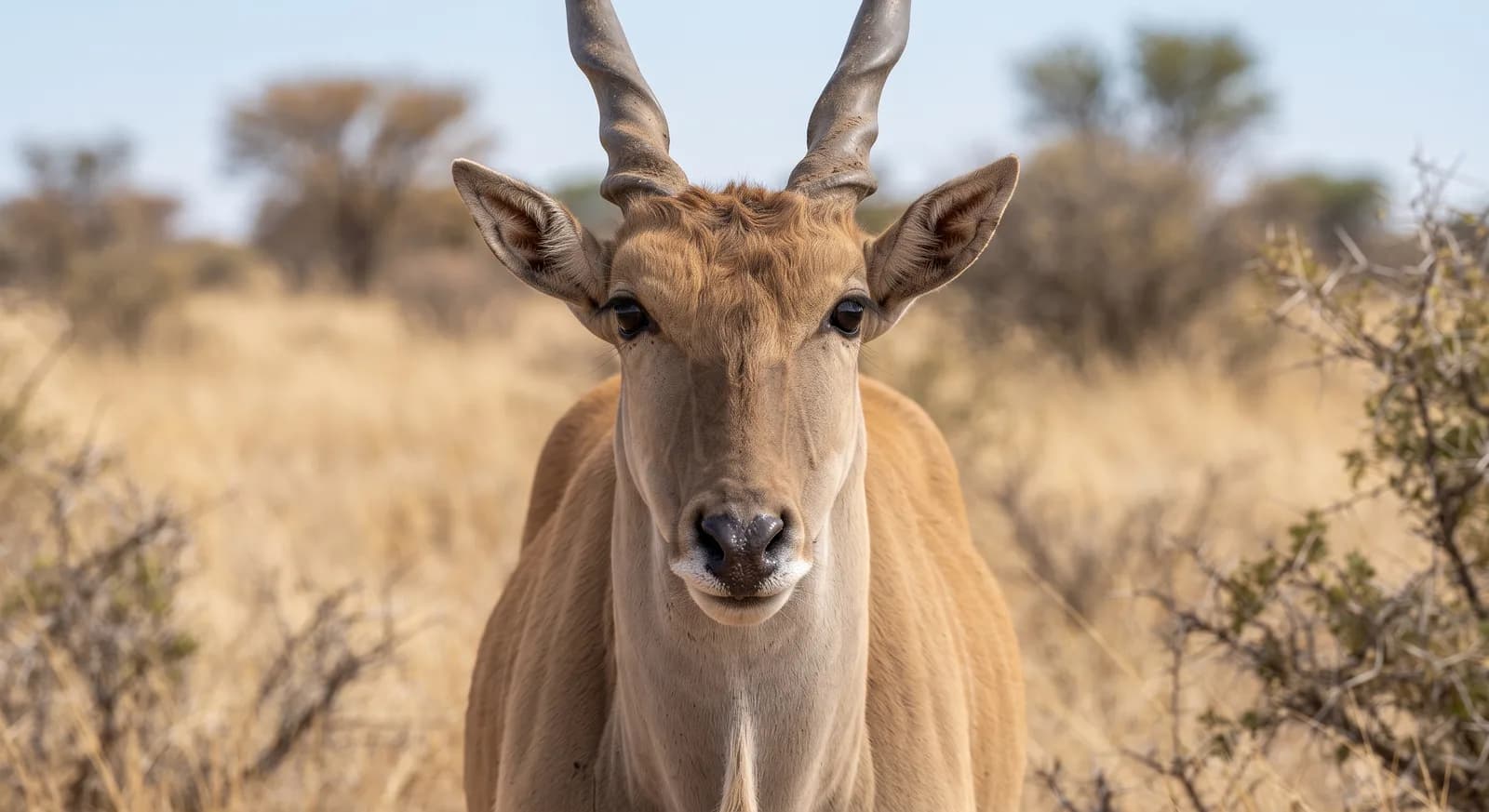 Least Concern
Common Eland
Taurotragus oryx
How to help
The topi is classified as vulnerable. Organizations such as UICN, WWF y Wildlife Conservation Society work specifically on its conservation and that of its habitat; looking into their programs is a good starting point if you want to get involved.
It's documented in 5 real protected areas — part of why protecting these places matters for its conservation.
Keep exploring
Based on what we already know about topi.
Comments
Share an experience, a fun fact or a tip for seeing the topi.
Be the first to comment.