One of the 11 cranes on WAnimals
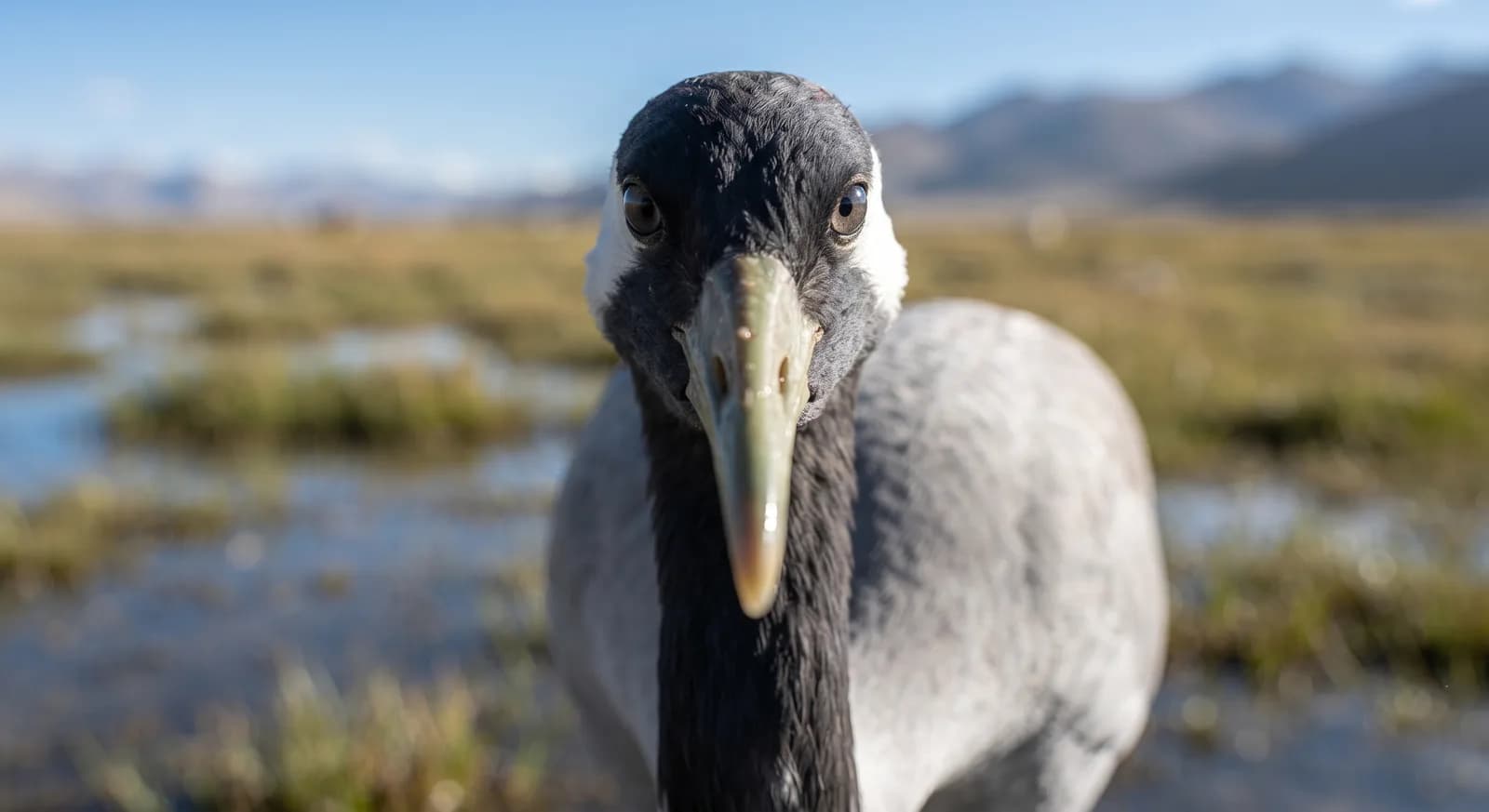
Birds · Gruiformes · Gruidae
Black-necked Crane
Grus nigricollis
It could become endangered in the near future if current threats go unchecked. See full glossary
The black-necked crane is the only crane in the world that lives and breeds high in the mountains throughout its cycle. It breeds on the peat bogs of the Tibetan plateau, above 3,000 metres, and comes down in winter to somewhat lower valleys in Tibet, Yunnan and Bhutan. It was the last crane species to be described by science, in 1876. Its recent recovery owes much to its sacred role in Tibetan and Bhutanese Buddhist culture.
Weight
5 kg – 7 kg
Size
1.2 m – 1.4 m
Lifespan
30 years
Diet
Omnivore
Combines animal and plant food depending on availability.
Activity
Diurnal
Active mainly during the day.
Social structure
In pairs
Usually lives in pairs, sometimes for life.
Sighting difficulty
Moderate
Estimated population
Around 10,000-11,000 individuals
Fun facts
- It was the last crane in the world to be described by science, in 1876, and the last whose eggs and nest were documented, as late as 1919.
- In Bhutan a festival is held every November to mark its arrival in the Phobjikha valley, and its sacred status in Tibetan Buddhism has protected it more effectively than many conservation laws.
Life cycle & biology
- Skeleton type
- Vertebrate - internal bony skeleton (bird)
- Habitat & environment
- High-altitude peat bogs and wetlands of the Tibetan plateau, between 2,900 and 4,900 metres
- Sexual maturity
- 4 years
- Gestation / incubation
- 32 days of incubation
- Litter / clutch size
- 2 eggs
Sources consulted: https://www.iucnredlist.org/ | https://animaldiversity.org/ | https://es.wikipedia.org/
Where to find it
See its range on the interactive mapWhere to watch it
Parks and dive sites where this species has been documented.
Related species
Other species in the catalogue with the most in common with Black-necked Crane — same habitat, park, country, tags or family.
Bearded Vulture
Gypaetus barbatus
Assamese Macaque
Macaca assamensis
Sarus Crane
Antigone antigone
Red-crowned Crane
Grus japonensis
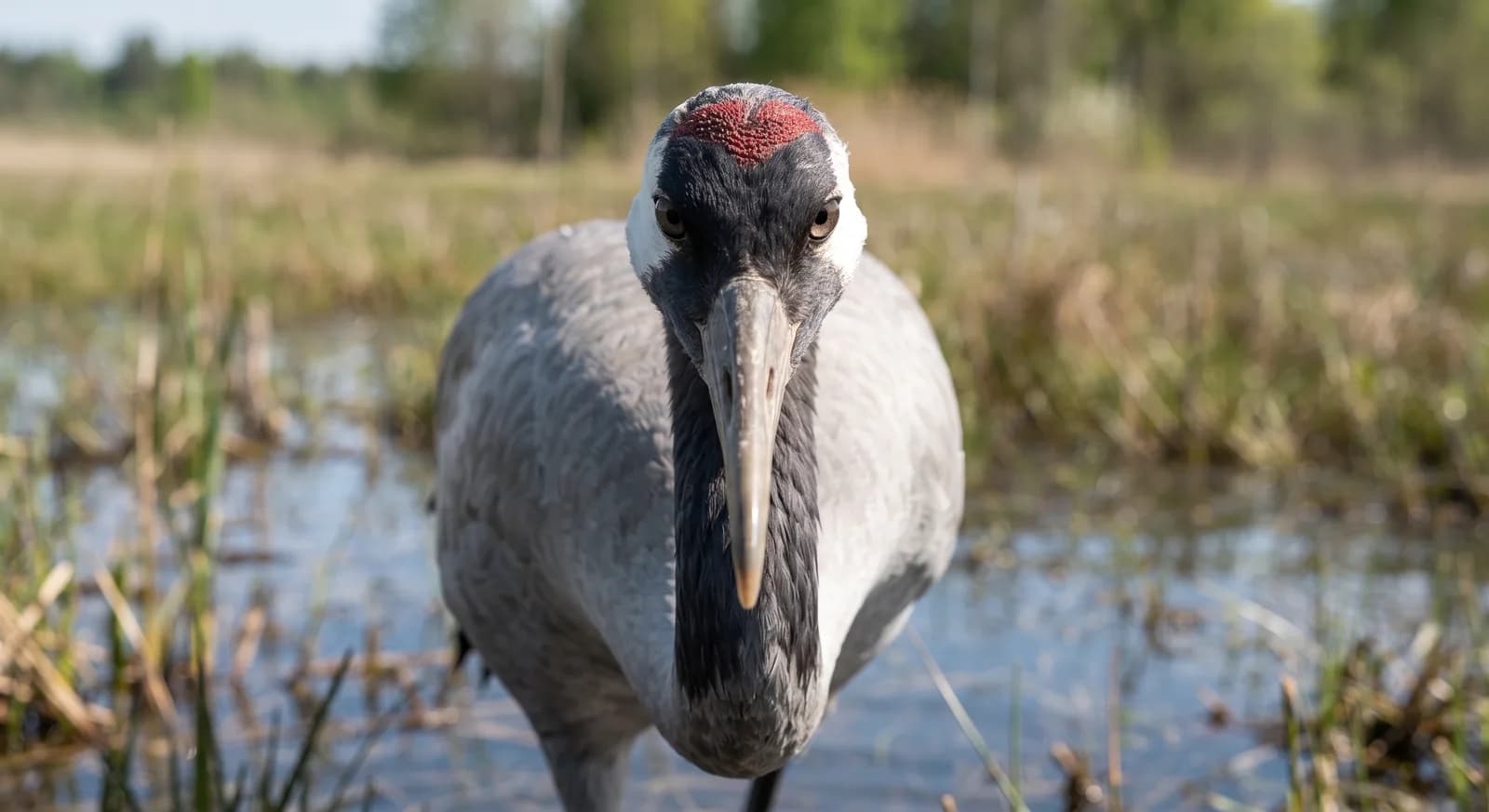 Least Concern
Common Crane
Grus grus
Siberian Crane
Leucogeranus leucogeranus
Keep exploring
Based on what we already know about black-necked crane.
Comments
Share an experience, a fun fact or a tip for seeing the black-necked crane.
Be the first to comment.