One of the 7 scorpions on WAnimals
Arachnids · Scorpiones · Buthidae
Bark Scorpion
Centruroides sculpturatus
It has not yet been assessed against the IUCN criteria. See full glossary
The Arizona bark scorpion is an arachnid belonging to the family Buthidae, of the order Scorpiones. It is one of the few scorpions whose venom is deadly to humans. This species was described by Ewing in 1928. The genus name Centruroides comes from the Greek words centr-, meaning "pointed", and uro, meaning "tail". The genus was originally called Centrurus but had to be changed to Centruroides because Centrurus had already been used for another animal. The ending -oides means "resembling" or "derived from". The specific name sculpturatus comes from the Latin word sculptūrātus, meaning "sculptured".
Size
5 cm – 8 cm
Diet
Carnivore
Feeds mainly on other animals.
Activity
Nocturnal
Active mainly at night.
Social structure
Solitary
Lives and hunts alone, joining others only to breed.
Sighting difficulty
Unknown
Fun facts
- Unlike almost all scorpions, it can climb walls and ceilings and turns up hanging upside down, which multiplies encounters inside houses.
- A specific antivenom exists that has cut mortality in the United States to almost nil.
- It glows brightly under ultraviolet light, and UV torches are the usual way of finding it at night in Arizona gardens.
- It is the most dangerous scorpion in North America, and the only one in the United States whose sting can be fatal.
- Its venom does not destroy tissue: it acts on the sodium channels of the nerves and causes extreme pain, described as electric shocks, along with numbness, blurred vision and uncontrolled muscle spasms. In small children it can compromise breathing.
- A specific antivenom has existed since 2011, the first approved by the FDA for scorpion stings, and it resolves the neurological symptoms in under an hour.
- Unlike other desert scorpions, it climbs: it goes up walls, furniture and tree trunks, and can hang upside down from the ceiling. That explains why it turns up inside houses and in shoes and towels.
- It is gregarious in winter: it gathers in communal shelters of dozens of individuals, something uncommon among scorpions.
- It fluoresces intensely under ultraviolet light, and in Arizona a night-time search with a UV torch is the usual method for locating them in homes.
Life cycle & biology
- Skeleton type
- Invertebrate - chitin exoskeleton (arachnid)
- Habitat & environment
- Sonoran Desert: under bark and stones and inside houses
Sources consulted: https://es.wikipedia.org/wiki/Centruroides_sculpturatus
Where to watch it
Parques y spots de buceo donde se ha documentado esta especie — se muestran 10 de 12 documentados.
Related species
Other species in the catalogue with the most in common with Bark Scorpion — same habitat, park, country, tags or family.
Great Horned Owl
Bubo virginianus
 Near Threatened
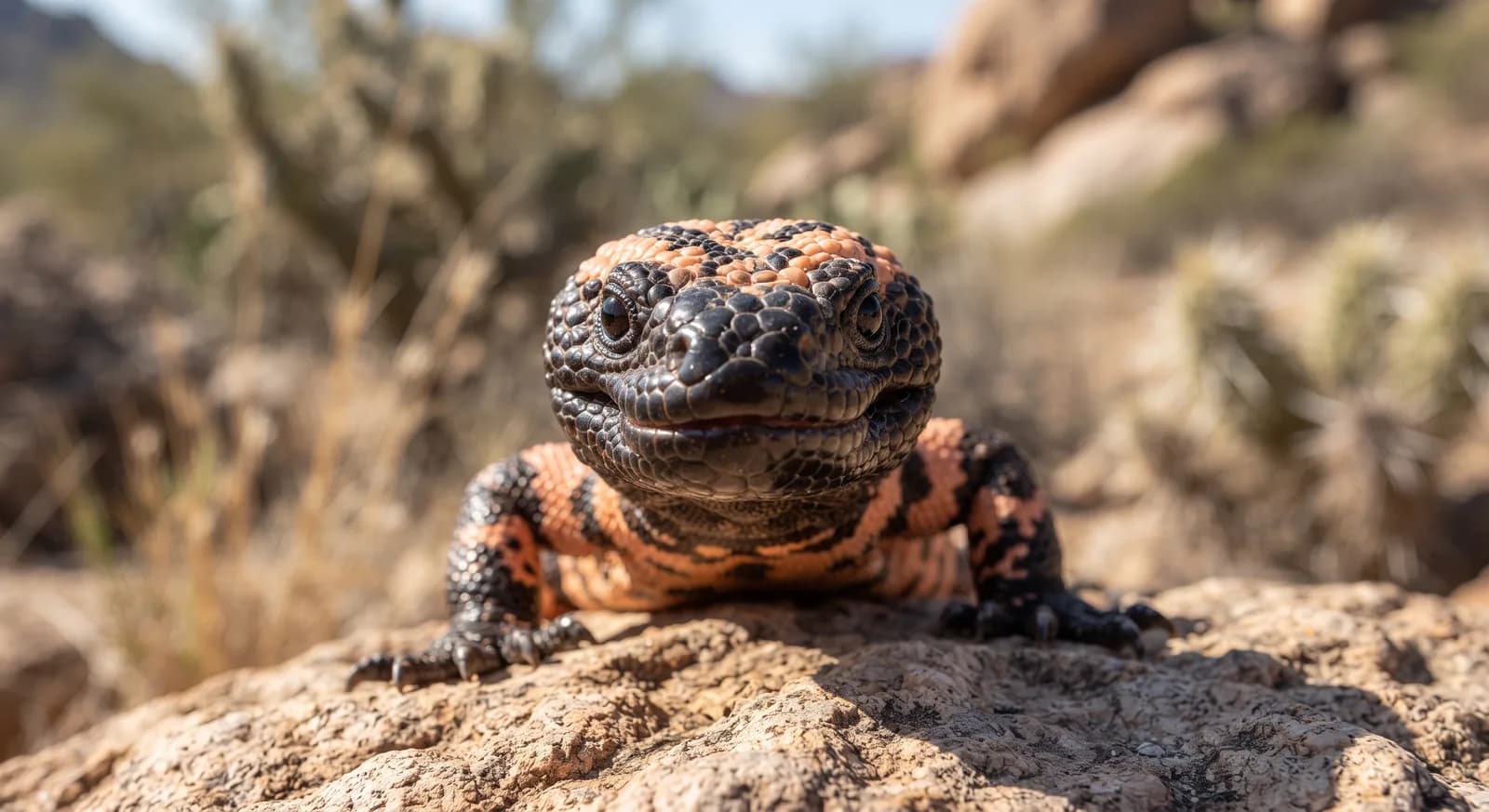
Gila Monster
Heloderma suspectum
Mexican Beaded Lizard
Heloderma horridum
Sonoran Desert Toad
Incilius alvarius
Pallipes Windscorpion
Eremobates pallipes
Keep exploring
Based on what we already know about bark scorpion.
Comments
Share an experience, a fun fact or a tip for seeing the bark scorpion.
Be the first to comment.