One of the 10 owls on WAnimals
Birds · Strigiformes · Strigidae
Great Horned Owl
Bubo virginianus
The species is abundant and widely distributed; it faces no significant short-term risk. See full glossary
It is one of the earliest-nesting birds in North America, laying weeks or even months before most other raptors, often in the depths of winter.
Weight
900 g – 2.5 kg
Size
45.7 cm – 63.5 cm
Lifespan
14 years
Diet
Carnivore
Feeds mainly on other animals.
Activity
Nocturnal
Active mainly at night.
Social structure
Solitary
Lives and hunts alone, joining others only to breed.
Sighting difficulty
Easy
Fun facts
- alimentaciónIt is one of the few regular natural predators of skunks: its relatively poor sense of smell lets it hunt them without suffering much from their chemical defence.
Life cycle & biology
- Skeleton type
- Vertebrate - pneumatised bony skeleton (bird)
- Habitat & environment
- A wide range of habitats across the Americas, from forest to desert to towns
- Birth weight
- 34.7 grams
- Size at birth
- Altricial, downy and with its eyes closed on hatching
- Sexual maturity
- 2 years
- Gestation / incubation
- 28-35 days
- Litter / clutch size
- 1 to 6 eggs per clutch (most commonly 2-3)
- Lifespan in captivity
- Documented record of up to 50 years in captivity
Sources consulted: AnAge (genomics.senescence.info); NHPBS NatureWorks; Zoo Idaho; Petdemy; US Forest Service FEIS; Animalia.bio; Animal Diversity Web; Audubon Field Guide; NPS Golden Spike
Where to find it
See its range on the interactive mapBest time: All year round; it calls mainly between December and February, at the start of its very early breeding season.
Where to watch it
Parques y spots de buceo donde se ha documentado esta especie — se muestran 10 de 108 documentados.
Related species
Other species in the catalogue with the most in common with Great Horned Owl — same habitat, park, country, tags or family.
Northern Hawk-Owl
Surnia ulula
Great Grey Owl
Strix nebulosa
Burrowing Owl
Athene cunicularia
Elf Owl
Micrathene whitneyi
 Least Concern
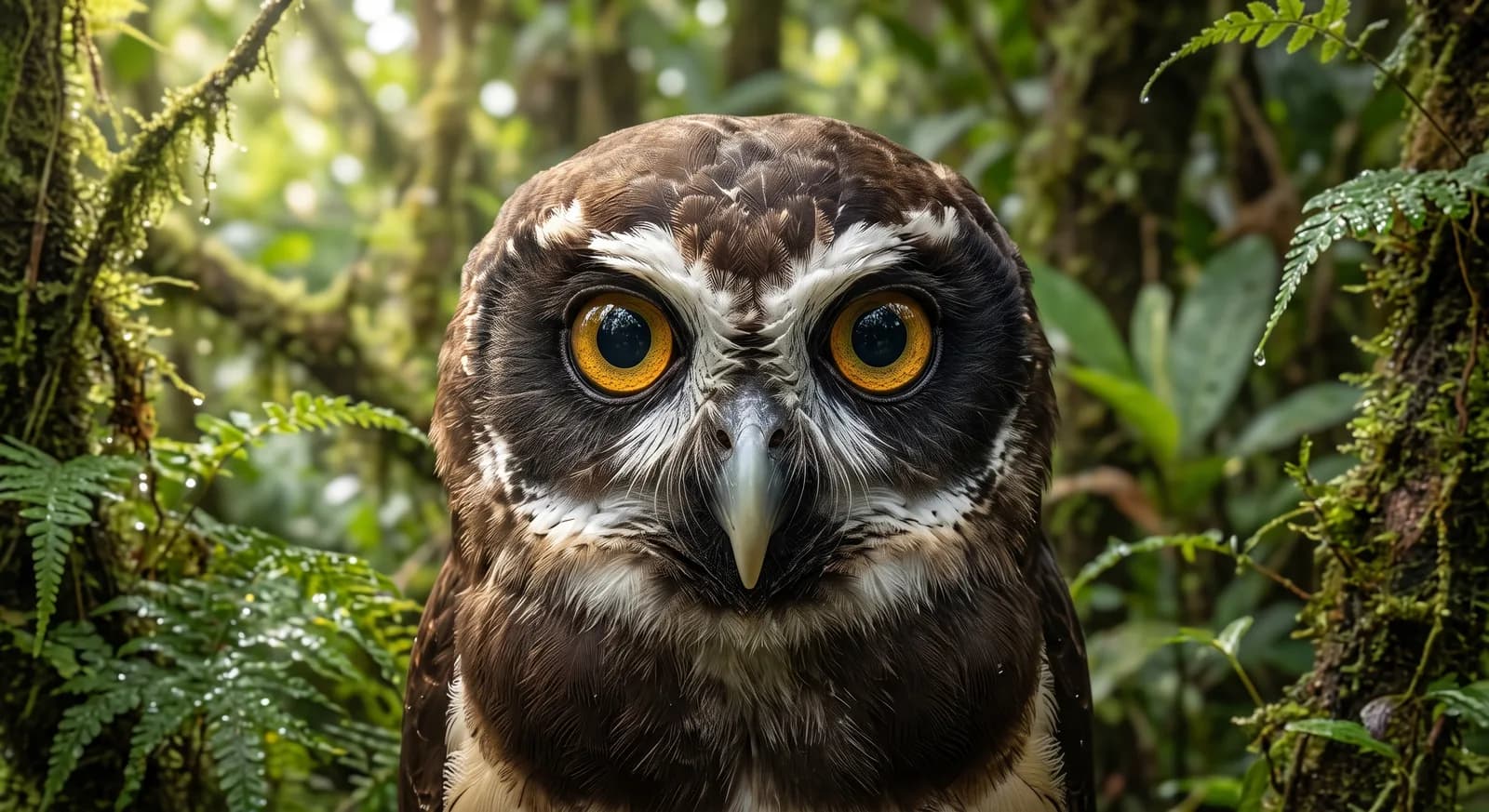
Spectacled Owl
Pulsatrix perspicillata
Short-eared Owl
Asio flammeus
Keep exploring
Based on what we already know about great horned owl.
Comments
Share an experience, a fun fact or a tip for seeing the great horned owl.
Be the first to comment.