One of the 10 owls on WAnimals
Birds · Strigiformes · Strigidae
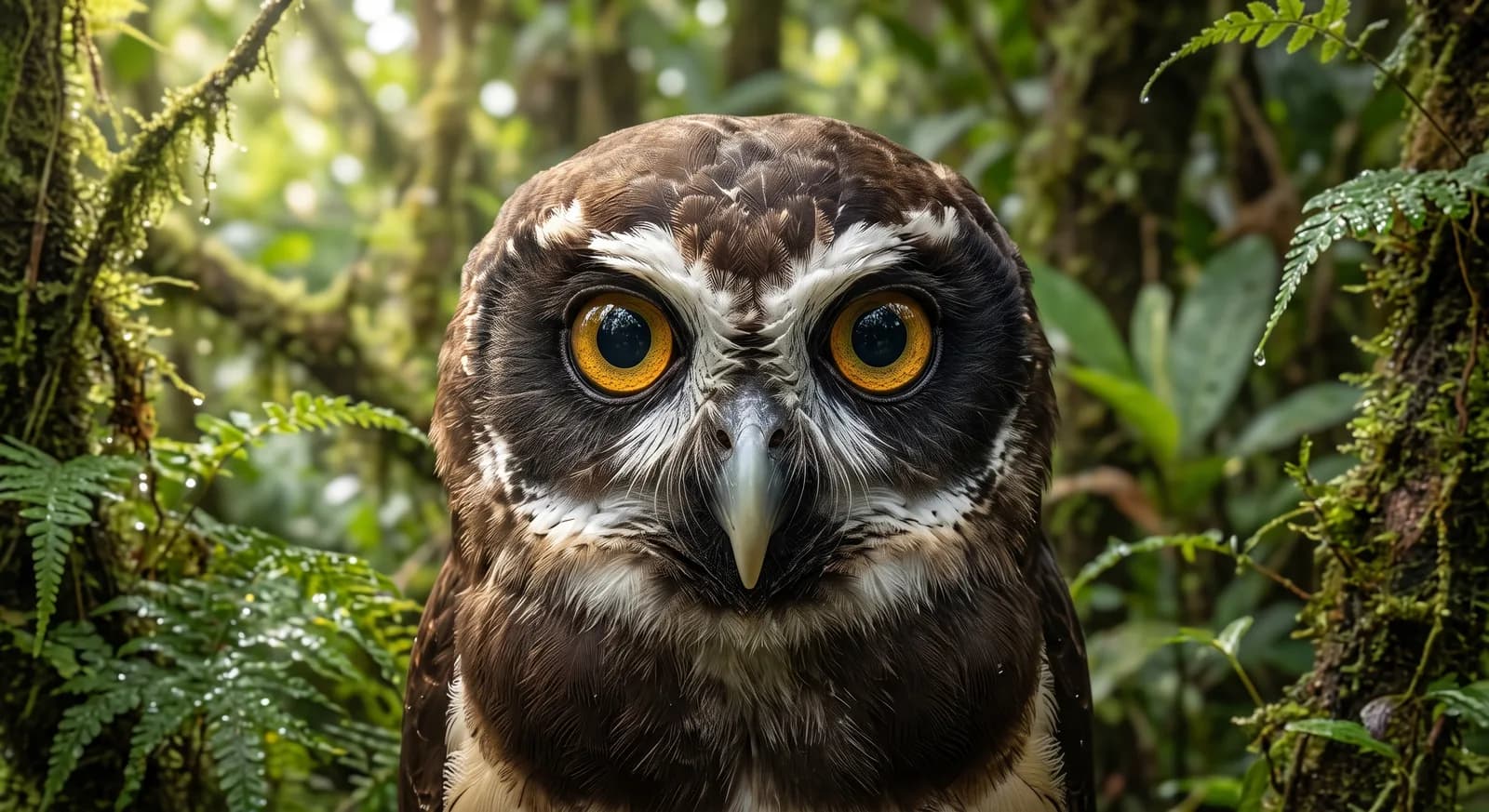
Spectacled Owl
Pulsatrix perspicillata
The species is abundant and widely distributed; it faces no significant short-term risk. See full glossary
Its name comes from the striking white 'spectacle' markings around its bright yellow eyes, which stand out sharply against its dark face.
Weight
453 g – 906 g
Size
43 cm – 46 cm
Lifespan
18 years
Diet
Carnivore
Feeds mainly on other animals.
Activity
Nocturnal
Active mainly at night.
Social structure
Solitary
Lives and hunts alone, joining others only to breed.
Sighting difficulty
Easy
Fun facts
- Its white 'spectacle' markings are what give the species its name.
- The colour pattern of the young is practically the reverse of the adults'.
- It eats bats, small mammals, birds and large insects.
Life cycle & biology
- Skeleton type
- Vertebrate - pneumatised bony skeleton (bird)
- Habitat & environment
- Lowland tropical rainforest of Mexico, Central America and much of South America, up to 1,600 m
- Birth weight
- Exact weight at hatching not found as a precise figure
- Size at birth
- Altricial at hatching
- Sexual maturity
- 3-5 years
- Gestation / incubation
- 36 days
- Litter / clutch size
- 1 to 2 eggs per clutch (though of two eggs, usually only one chick survives)
- Lifespan in captivity
- Documented record of up to 25-30 years in captivity
Sources consulted: AnAge (genomics.senescence.info); Animal Diversity Web; NAHF; Bright's Zoo; Animal Kingdom; Animalia.bio; The Owl Pages; Dallas World Aquarium
Where to find it
See its range on the interactive mapWhere to watch it
Parques y spots de buceo donde se ha documentado esta especie — se muestran 10 de 77 documentados.
Related species
Other species in the catalogue with the most in common with Spectacled Owl — same habitat, park, country, tags or family.
Great Horned Owl
Bubo virginianus
Elf Owl
Micrathene whitneyi
Band-bellied Owl
Pulsatrix melanota
Water Opossum
Chironectes minimus
 Least Concern
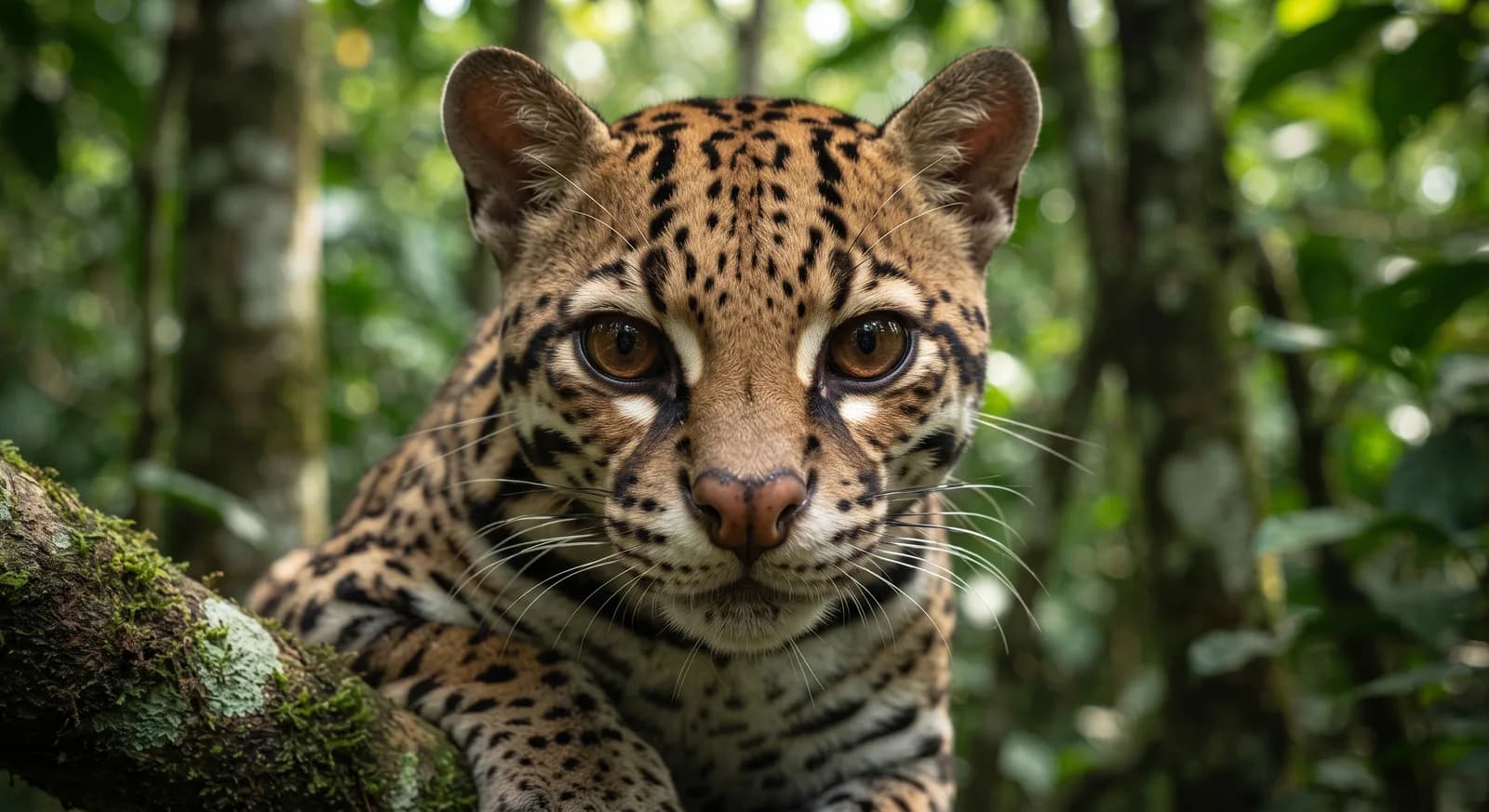
Ocelot
Leopardus pardalis
 Least Concern
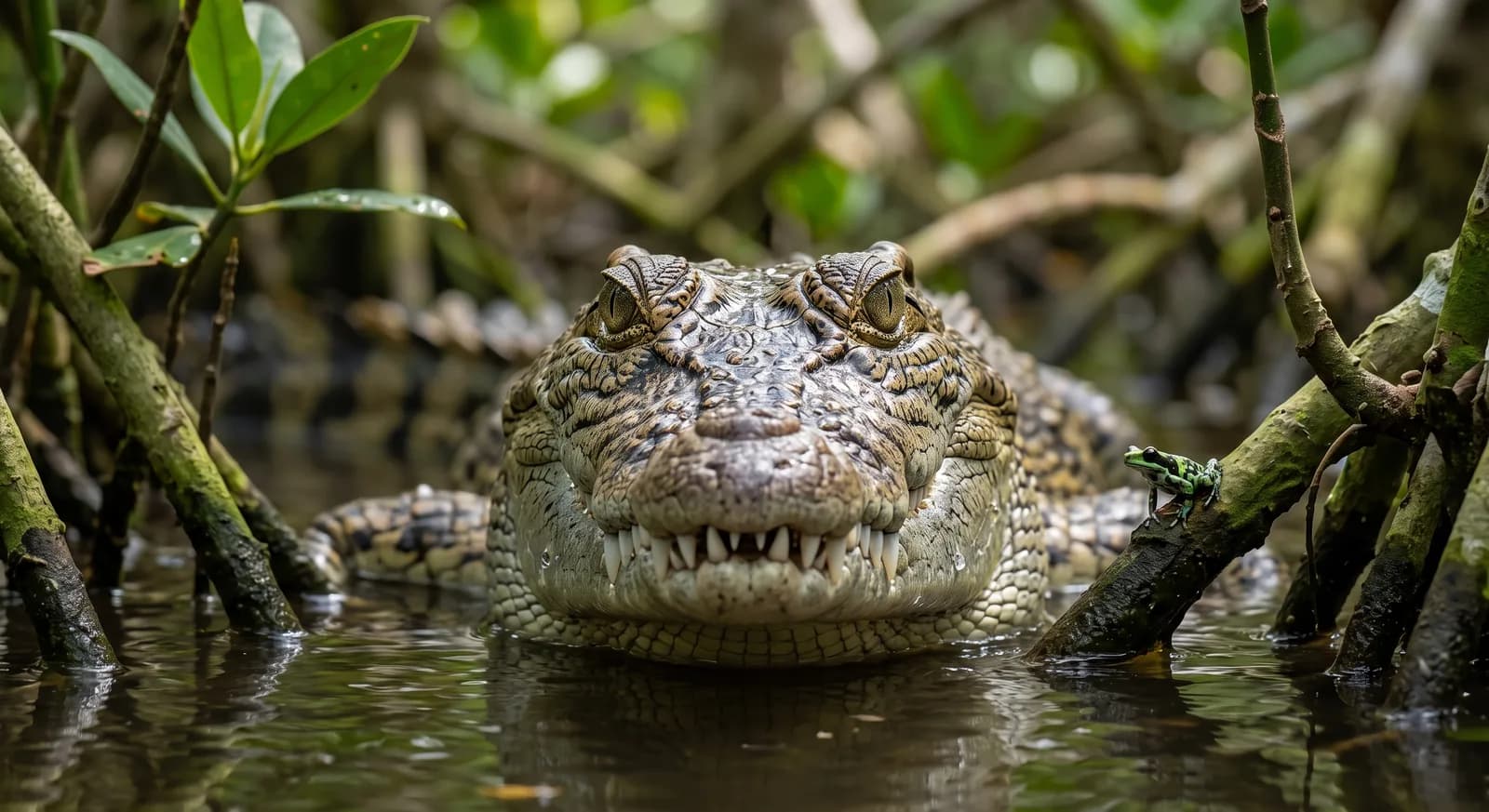
Morelet's Crocodile
Crocodylus moreletii
Keep exploring
Based on what we already know about spectacled owl.
Comments
Share an experience, a fun fact or a tip for seeing the spectacled owl.
Be the first to comment.