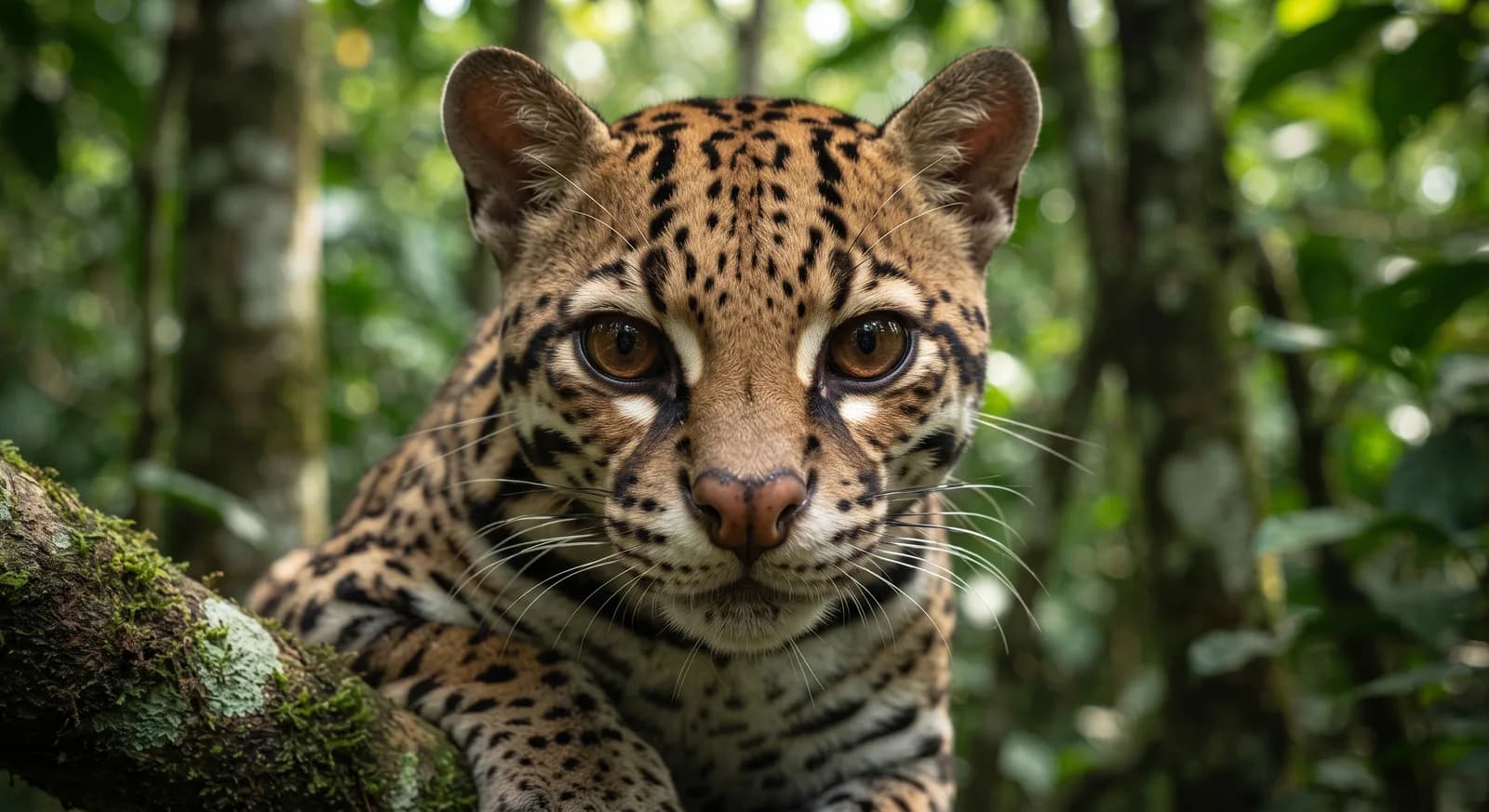
Mammals · Carnivora · Felidae
Ocelot
Leopardus pardalis
The species is abundant and widely distributed; it faces no significant short-term risk. See full glossary
It was one of the cats most heavily exploited by the twentieth-century fur trade — Brazil alone exported some 80,000 skins a year.
Weight
7 kg – 15.5 kg
Size
40 cm – 50 cm
Lifespan
10 years
Diet
Carnivore
Feeds mainly on other animals.
Activity
Nocturnal
Active mainly at night.
Social structure
Solitary
Lives and hunts alone, joining others only to breed.
Sighting difficulty
Easy
Fun facts
- The fur trade is now banned, which has allowed the population to recover somewhat.
- It feeds on small mammals such as rodents, along with birds, reptiles and amphibians.
- It lives in rainforest, thorn scrub, mangroves and dense secondary forest from the south-western United States to Argentina.
Life cycle & biology
- Skeleton type
- Vertebrate - internal bony skeleton (mammal)
- Habitat & environment
- Rainforest, thorn scrub, mangroves and dense secondary forest from the south-western United States to Argentina
- Birth weight
- Born blind and helpless
- Size at birth
- Born blind and helpless
- Gestation / incubation
- 70-85 days
- Litter / clutch size
- 1 to 3 young per litter (most commonly 1)
Sources consulted: A-Z Animals; Pró-Carnívoros; Wikipedia (Ocelot); PMC (Trypanosoma infections Pantanal study, comparative reference)
Where to find it
See its range on the interactive mapWhere to watch it
Parques y spots de buceo donde se ha documentado esta especie — se muestran 10 de 55 documentados.
Related species
Other species in the catalogue with the most in common with Ocelot — same habitat, park, country, tags or family.
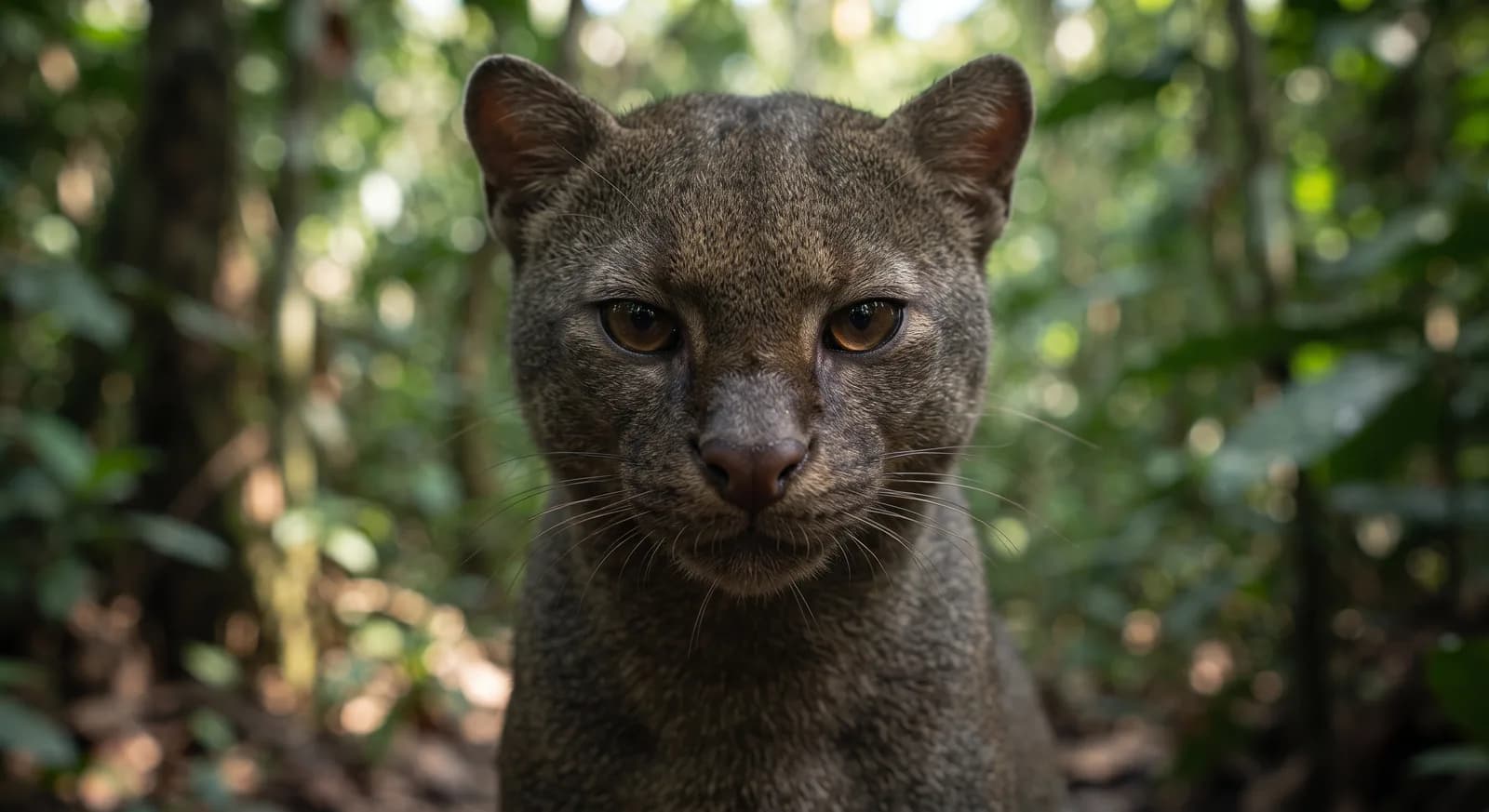 Least Concern
Jaguarundi
Herpailurus yagouaroundi
Margay
Leopardus wiedii
Geoffroy's Cat
Leopardus geoffroyi
Northern Tiger Cat
Leopardus tigrinus
 Least Concern
Puma
Puma concolor
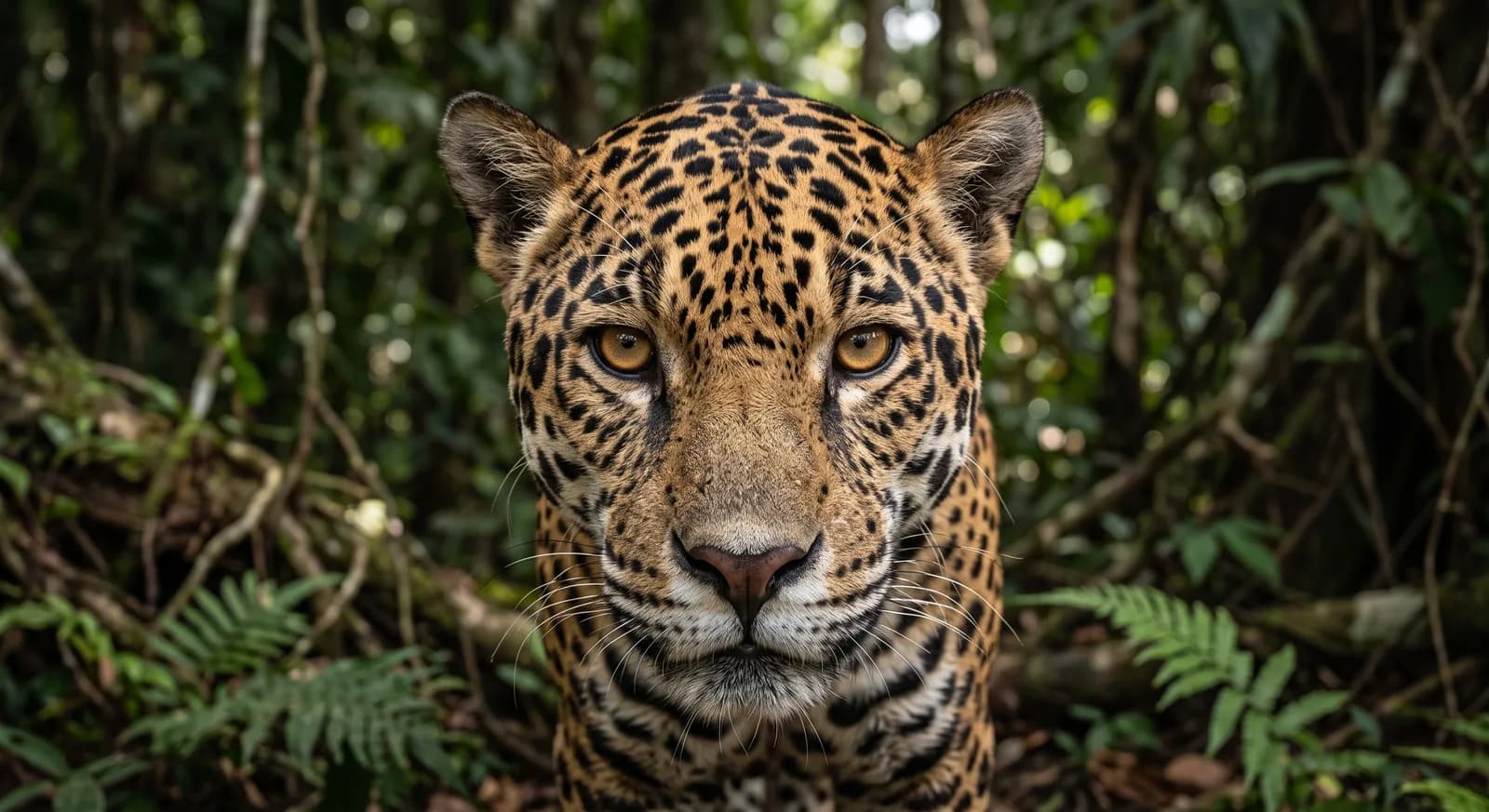 Near Threatened
Jaguar
Panthera onca
Keep exploring
Based on what we already know about ocelot.
Comments
Share an experience, a fun fact or a tip for seeing the ocelot.
Be the first to comment.