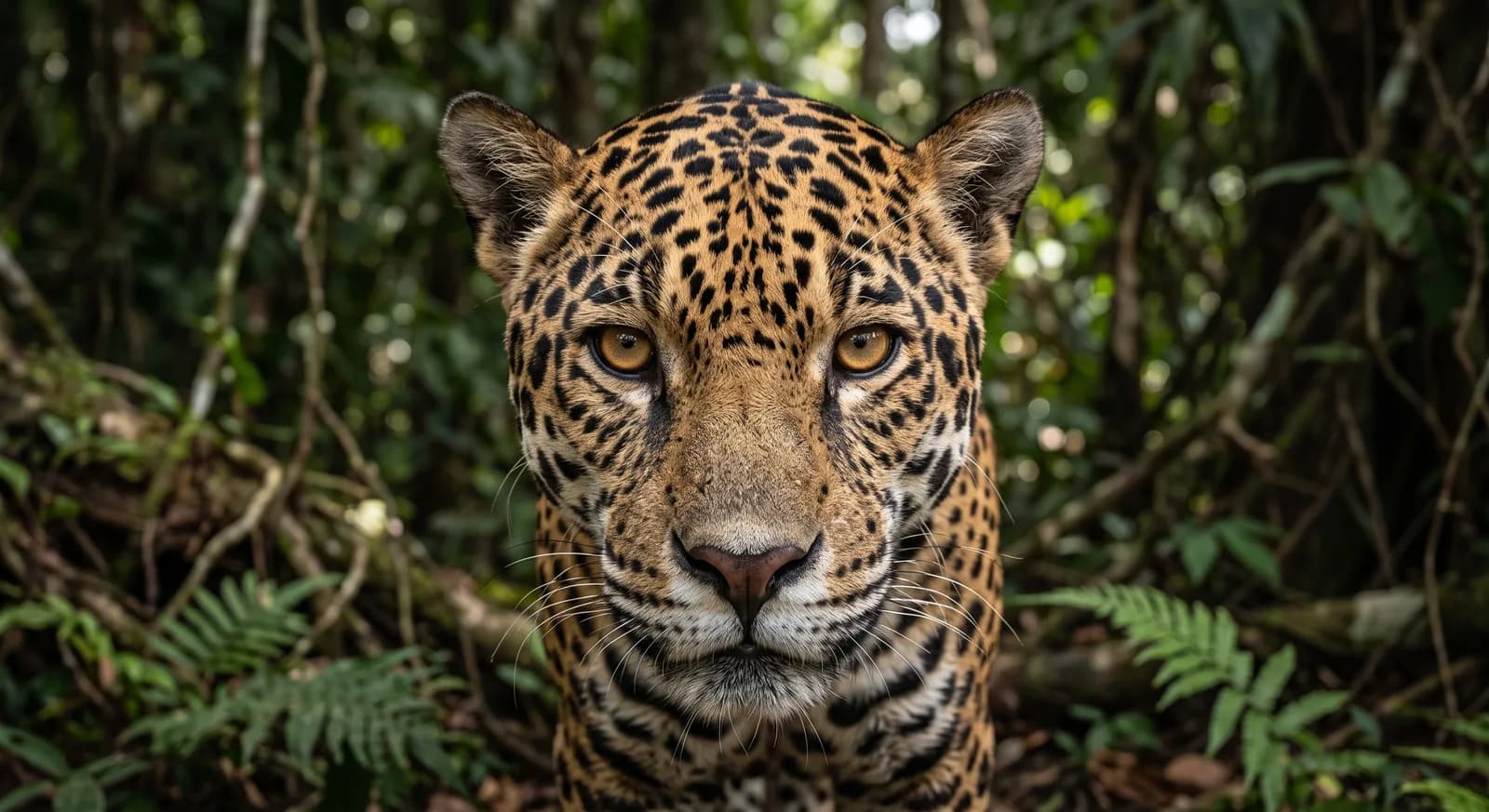
Mammals · Carnivora · Felidae
Jaguar
Panthera onca
It could become endangered in the near future if current threats go unchecked. See full glossary
The largest cat in the Americas, with a bite powerful enough to pierce the shell of a turtle.
Weight
56 kg – 96 kg
Size
1.7 m – 2.4 m
Lifespan
15 years
Diet
Carnivore
Feeds mainly on other animals.
Activity
Nocturnal
Active mainly at night.
Social structure
Solitary
Lives and hunts alone, joining others only to breed.
Sighting difficulty
Moderate
Estimated population
Some 173,000 animals across its whole range (95% confidence interval: 138,000-208,000), of which around 163,000 are in South America and 10,000 in North America; most are concentrated in the Amazon basin
Fun facts
- It is one of the few cats that enjoys water.
- Its name comes from an indigenous word meaning 'he who kills with one leap'.
- It kills its prey by biting straight through the skull.
Life cycle & biology
- Skeleton type
- Vertebrate - internal bony skeleton (mammal)
- Habitat & environment
- Humid tropical rainforest, swamps and dense woodland of Central and South America
- Birth weight
- 700 - 900 grams (some sources give ~820 g as a reference)
- Size at birth
- Blind at birth, with the eyes opening at around 2 weeks
- Sexual maturity
- Female: 2 years | Male: 3-4 years
- Gestation / incubation
- 91-111 days (average ~99-101 days)
- Litter / clutch size
- 1 to 4 young per litter (most commonly 2)
- Lifespan in captivity
- Documented record of 28 years in captivity
Sources consulted: AnAge (genomics.senescence.info); U.S. Fish & Wildlife Service; JungleDragon; Animal Diversity Web; SDZWA Library Fact Sheet; BioDB; Fishi-pedia; Quigley et al. 2017, IUCN Red List e.T15953A123791436: pérdida estimada del 20-25 % de individuos maduros en tres generaciones (21 años) y del 20 % del área de distribución entre 2002 y 2015 || Jędrzejewski et al. 2018; San Diego Zoo Wildlife Alliance Library
Where to find it
See its range on the interactive mapBest time: June to October in the Brazilian Pantanal
Where to watch it
Parques y spots de buceo donde se ha documentado esta especie — se muestran 10 de 58 documentados.
Related species
Other species in the catalogue with the most in common with Jaguar — same habitat, park, country, tags or family.
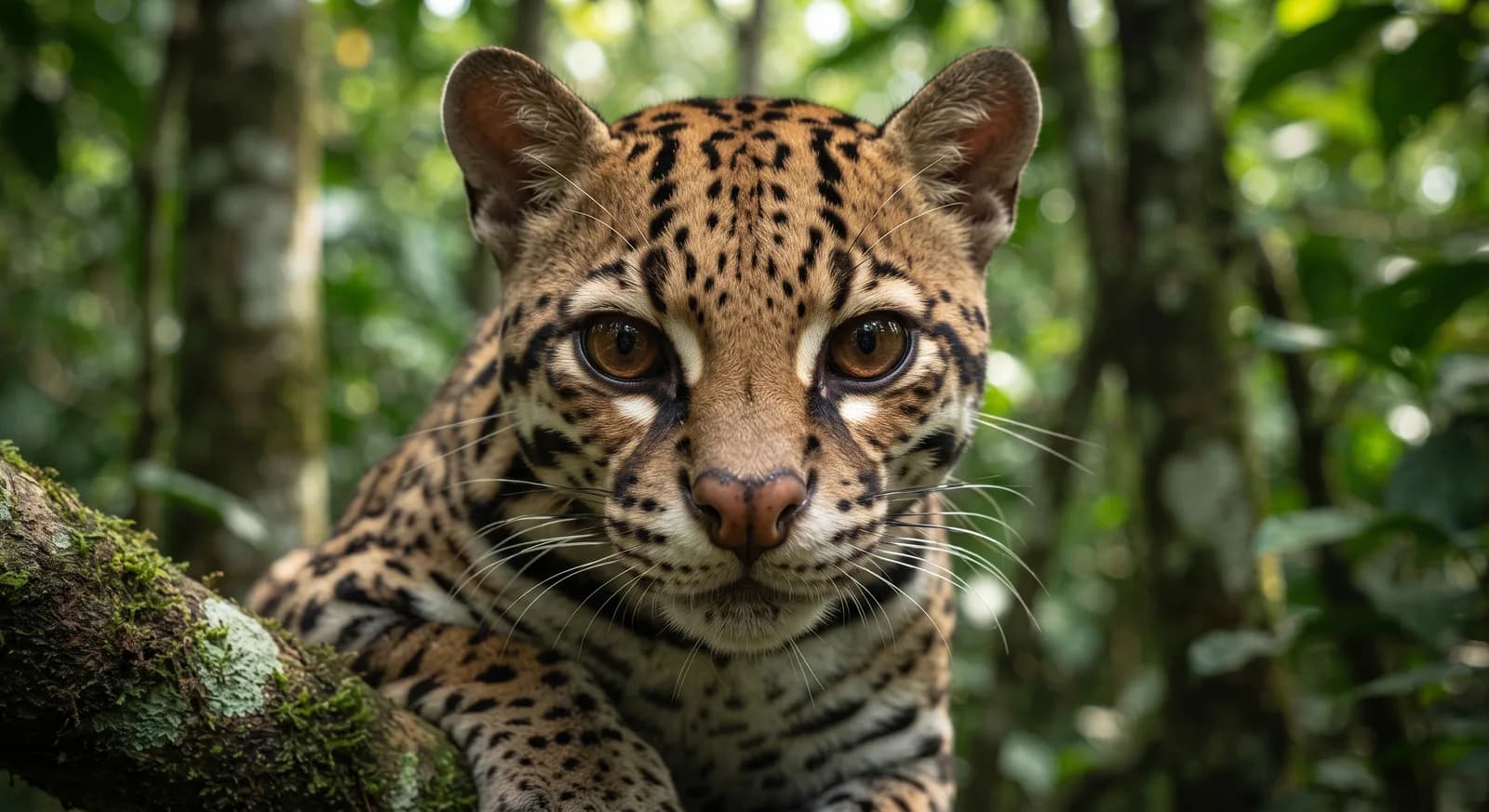
Margay
Leopardus wiedii
Northern Tiger Cat
Leopardus tigrinus
 Least Concern
Ocelot
Leopardus pardalis
 Least Concern
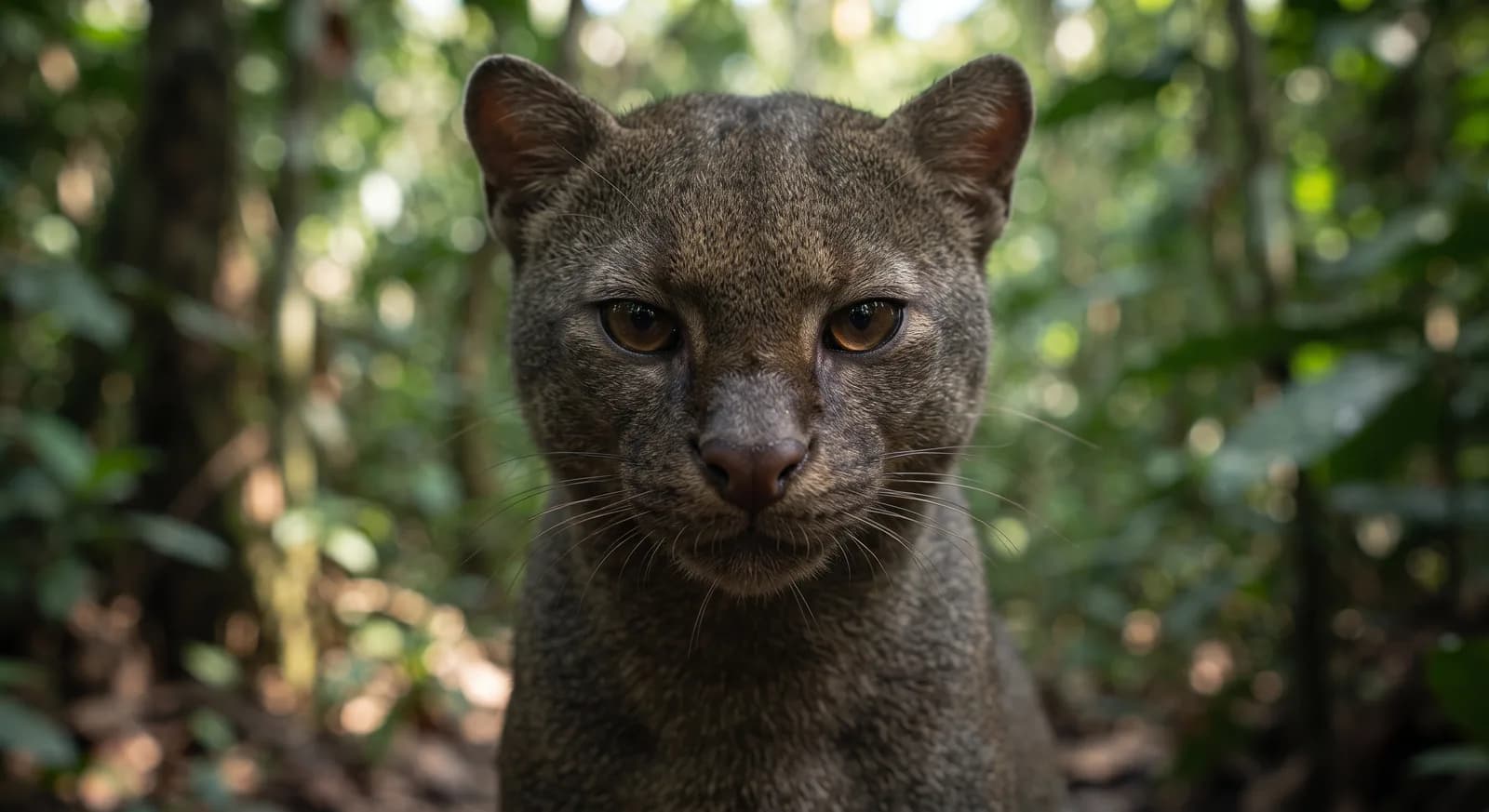
Jaguarundi
Herpailurus yagouaroundi
Geoffroy's Cat
Leopardus geoffroyi
 Least Concern
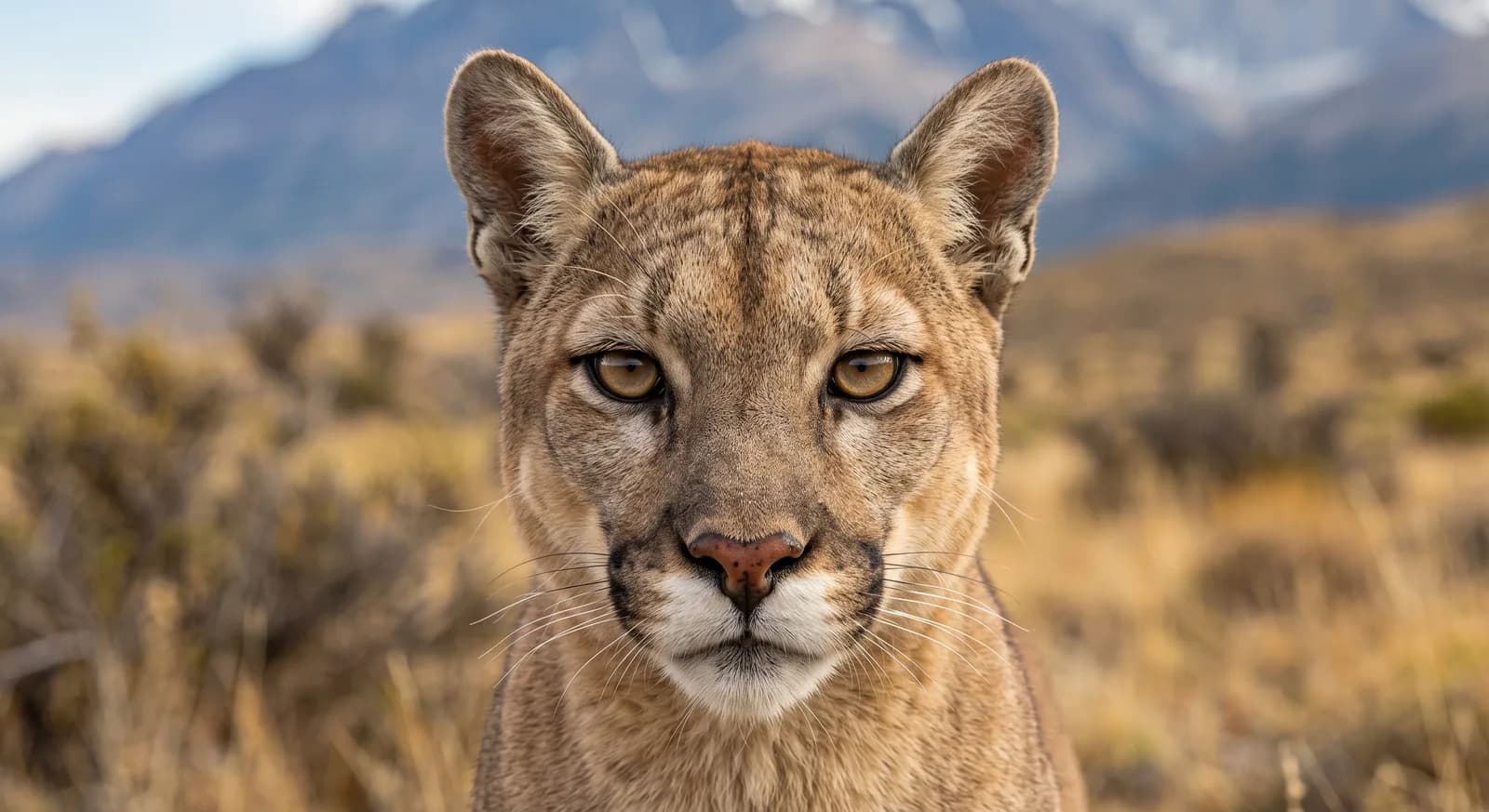
Puma
Puma concolor
Keep exploring
Based on what we already know about jaguar.
Comments
Share an experience, a fun fact or a tip for seeing the jaguar.
Be the first to comment.