One of the 18 monkeys on WAnimals
Mammals · Primates · Atelidae
Peruvian Yellow-tailed Woolly Monkey
Lagothrix flavicauda
It faces an extremely high risk of imminent extinction in the wild. See full glossary
The Peruvian yellow-tailed woolly monkey is one of the most threatened primates in the world and a strict Peruvian endemic: it lives only in the cloud forests of San Martín and Amazonas, on the eastern slope of the Andes. It is a large, robust monkey with a dense chestnut coat adapted to the cold and damp of the mountains, and a yellow tuft on the underside of its prehensile tail. It feeds on fruit, leaves and flowers. Agricultural settlement of its valleys has drastically reduced its habitat.
Weight
7 kg – 10 kg
Size
50 cm – 60 cm
Lifespan
25 years
Diet
Omnivore
Combines animal and plant food depending on availability.
Activity
Diurnal
Active mainly during the day.
Sighting difficulty
Very hard
Fun facts
- It was lost to science for more than a century: Alexander von Humboldt mentioned it in 1802, it was described in 1812, and it was not seen alive again until 1974.
- It is one of the few primates adapted to live permanently in montane cloud forest, where the nights are cold and the mist is almost constant.
Life cycle & biology
- Skeleton type
- Vertebrate - internal bony skeleton (mammal)
- Habitat & environment
- Cloud forest of the northern Peruvian Andes, between 1,500 and 2,700 metres
- Gestation / incubation
- 7.5 months
- Litter / clutch size
- 1
Sources consulted: https://es.wikipedia.org/wiki/Oreonax_flavicauda
Where to watch it
Parks and dive sites where this species has been documented.
Related species
Other species in the catalogue with the most in common with Peruvian Yellow-tailed Woolly Monkey — same habitat, park, country, tags or family.
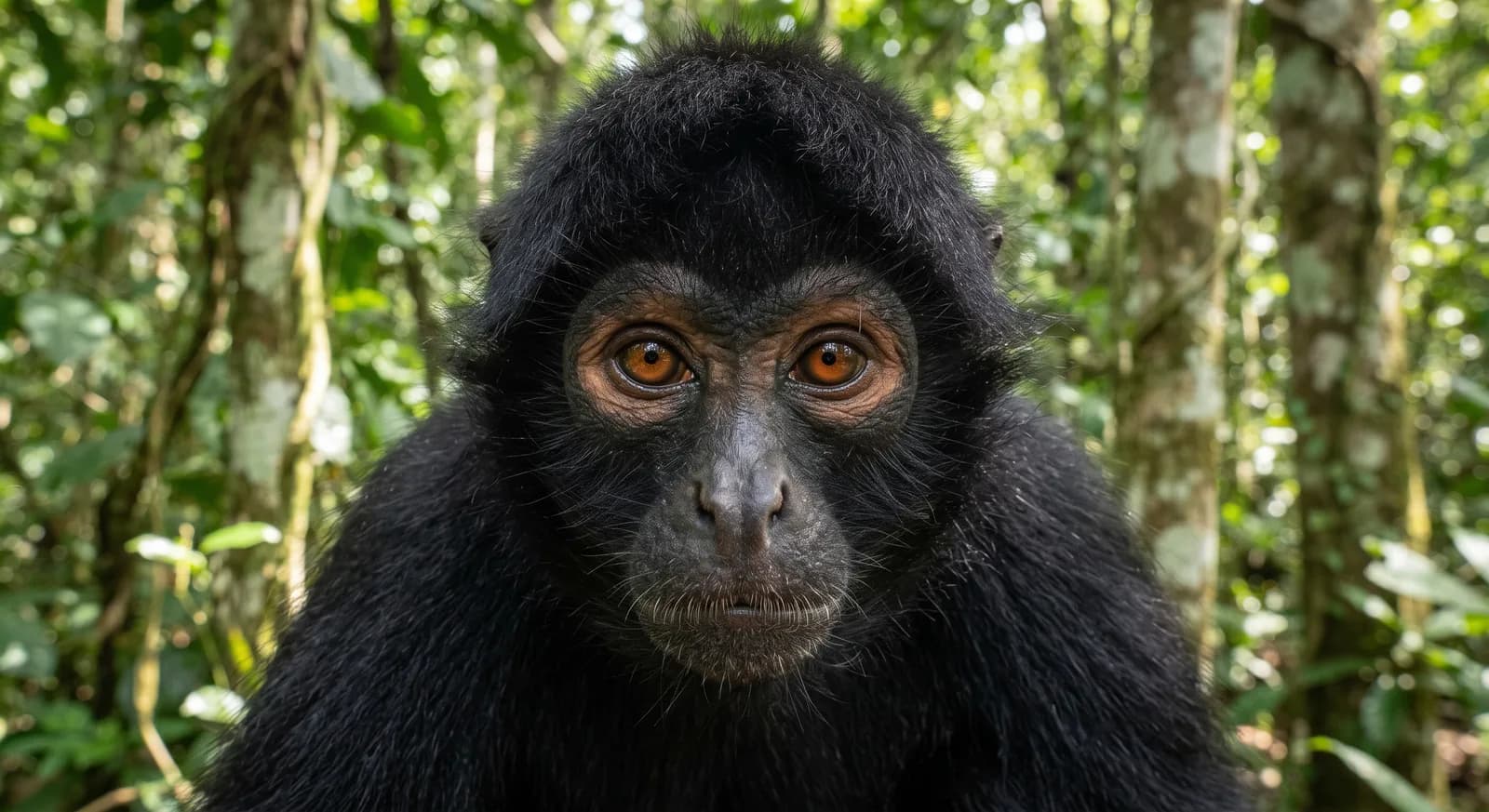
Black Spider Monkey
Ateles chamek
Common Woolly Monkey
Lagothrix lagothricha
 Vulnerable
Red-faced Black Spider Monkey
Ateles paniscus
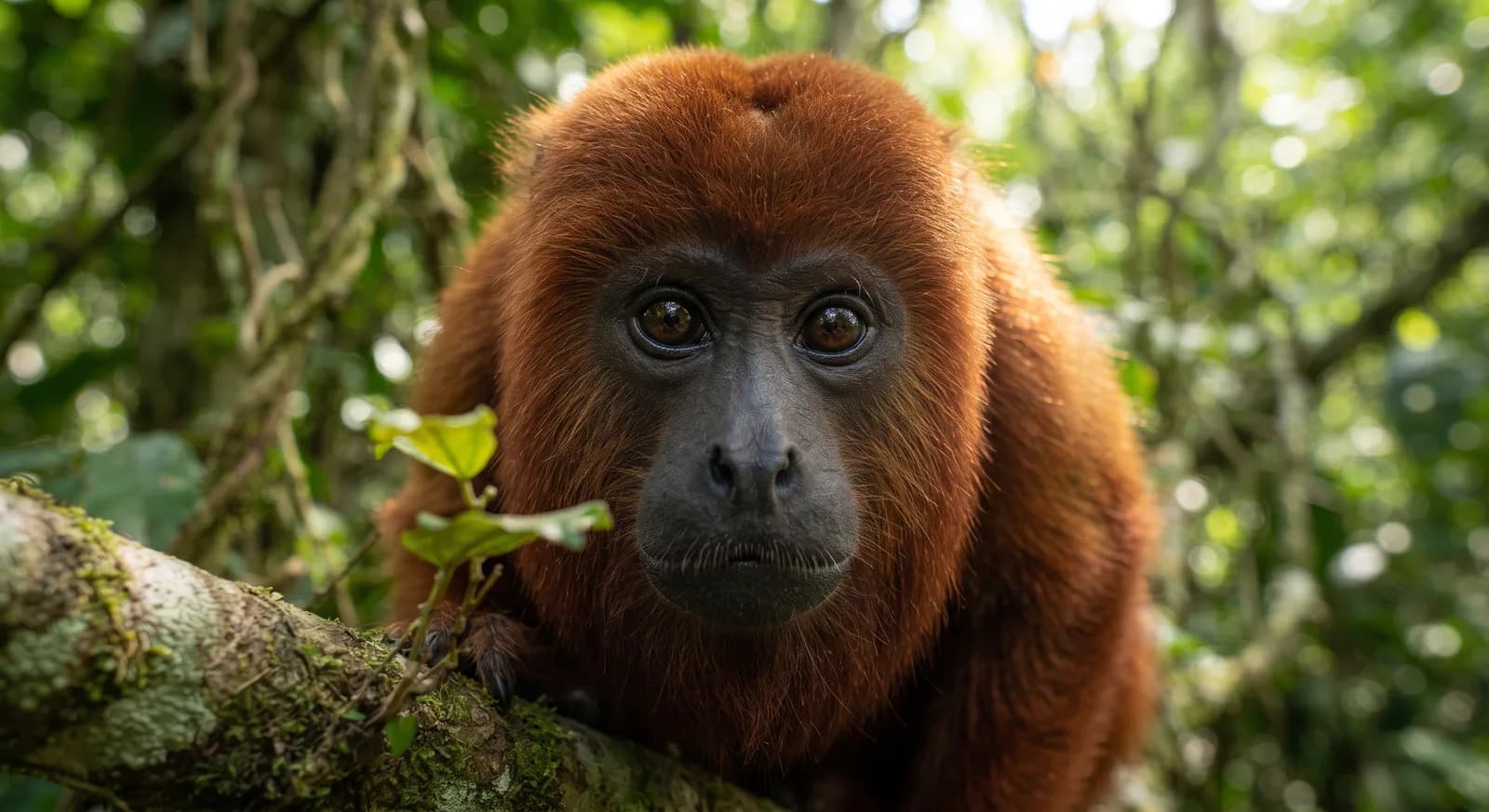 Least Concern
Colombian Red Howler Monkey
Alouatta seniculus
Hoffmann's Two-toed Sloth
Choloepus hoffmanni
Southern Mountain Viscacha
Lagidium viscacia
How to help
The peruvian yellow-tailed woolly monkey is classified as critically endangered. Organizations such as UICN, WWF y Wildlife Conservation Society work specifically on its conservation and that of its habitat; looking into their programs is a good starting point if you want to get involved.
It's documented in 3 real protected areas — part of why protecting these places matters for its conservation.
Keep exploring
Based on what we already know about peruvian yellow-tailed woolly monkey.
Comments
Share an experience, a fun fact or a tip for seeing the peruvian yellow-tailed woolly monkey.
Be the first to comment.