One of the 18 monkeys on WAnimals
Mammals · Primates · Atelidae
Black Spider Monkey
Ateles chamek
It faces a very high risk of extinction in the wild in the near future. See full glossary
The black spider monkey — known in Spanish as mono araña negro peruano or maquisapa — is a large, entirely black primate of the western Amazon, with extremely long arms and a prehensile tail that it uses as a fifth limb. It lives in fission-fusion societies: the large group splits each day into subgroups that search for ripe fruit separately. Its reproduction is extremely slow, with one infant every three or four years, which makes it exceedingly vulnerable to hunting. It is one of the first primates to disappear from a hunted forest.
Weight
7 kg – 11 kg
Size
40 cm – 60 cm
Lifespan
30 years
Diet
Herbivore
Feeds mainly on plants.
Activity
Diurnal
Active mainly during the day.
Social structure
Herd
Lives in large groups as a strategy against predators.
Sighting difficulty
Hard
Fun facts
- It is one of the best indicators of the health of an Amazonian forest: because of its size, its slow reproduction and its dependence on the fruit of large trees, it is the first species to disappear when hunting or selective logging arrives.
- It has no thumb, like all spider monkeys: its hands work as hooks and all fine manipulation is done with the tail, whose bare tip has dermal ridges like a fingerprint.
Life cycle & biology
- Skeleton type
- Vertebrate - internal bony skeleton (mammal)
- Habitat & environment
- High canopy of primary rainforest in the western and south-western Amazon
- Size at birth
- Born with its eyes open, clinging to its mother's fur from the first day
- Sexual maturity
- 4.4 years
- Gestation / incubation
- 6.7 months
- Litter / clutch size
- 1
Sources consulted: https://es.wikipedia.org/wiki/Ateles_chamek
Where to find it
See its range on the interactive mapBest time: All year in the Amazon of Peru, Bolivia and Brazil, by day; it moves through the high canopy and gives itself away by the branches it sets swaying.
Where to watch it
Parks and dive sites where this species has been documented.
Related species
Other species in the catalogue with the most in common with Black Spider Monkey — same habitat, park, country, tags or family.
Common Woolly Monkey
Lagothrix lagothricha
Peruvian Yellow-tailed Woolly Monkey
Lagothrix flavicauda
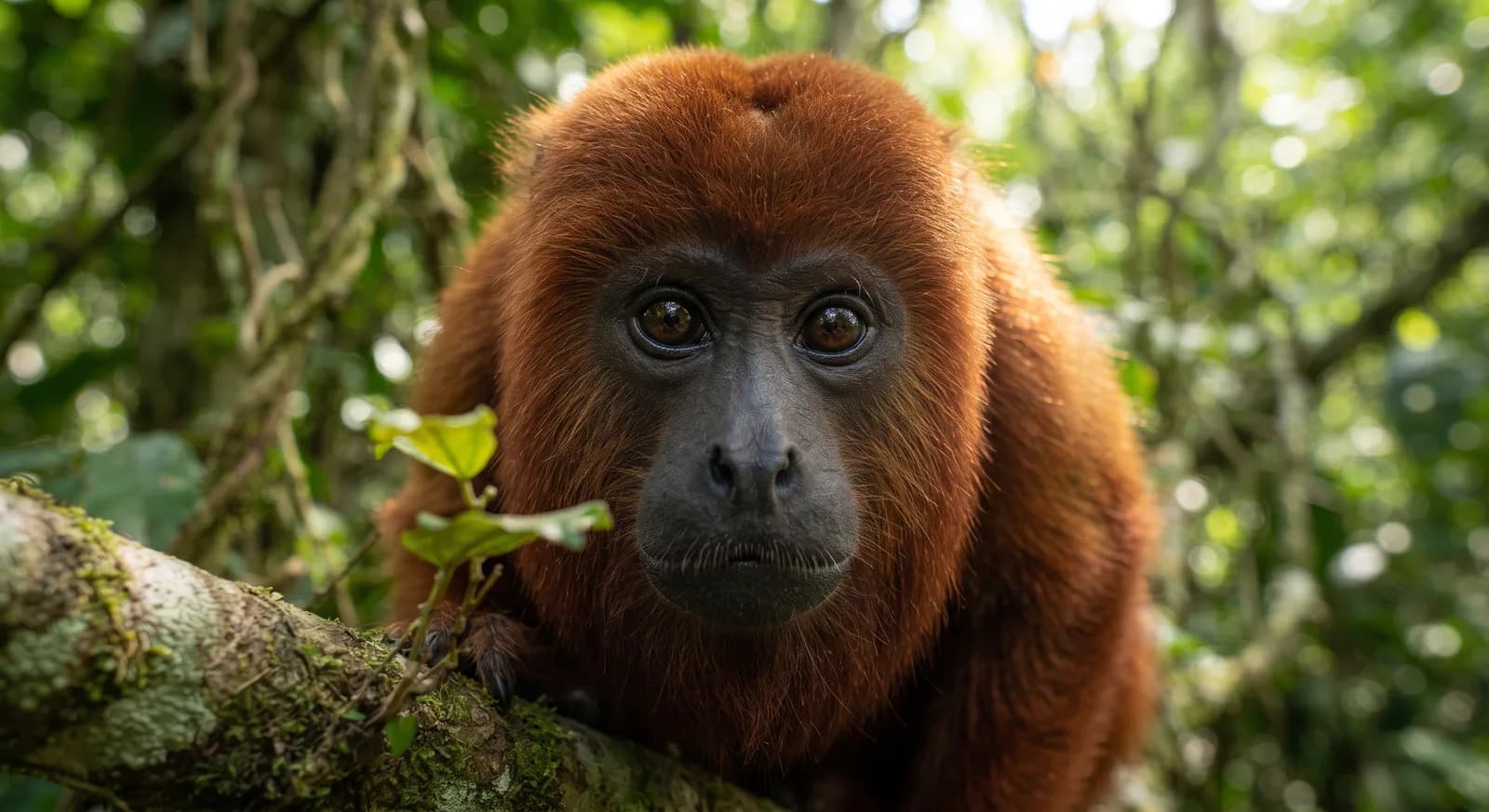 Least Concern
Colombian Red Howler Monkey
Alouatta seniculus
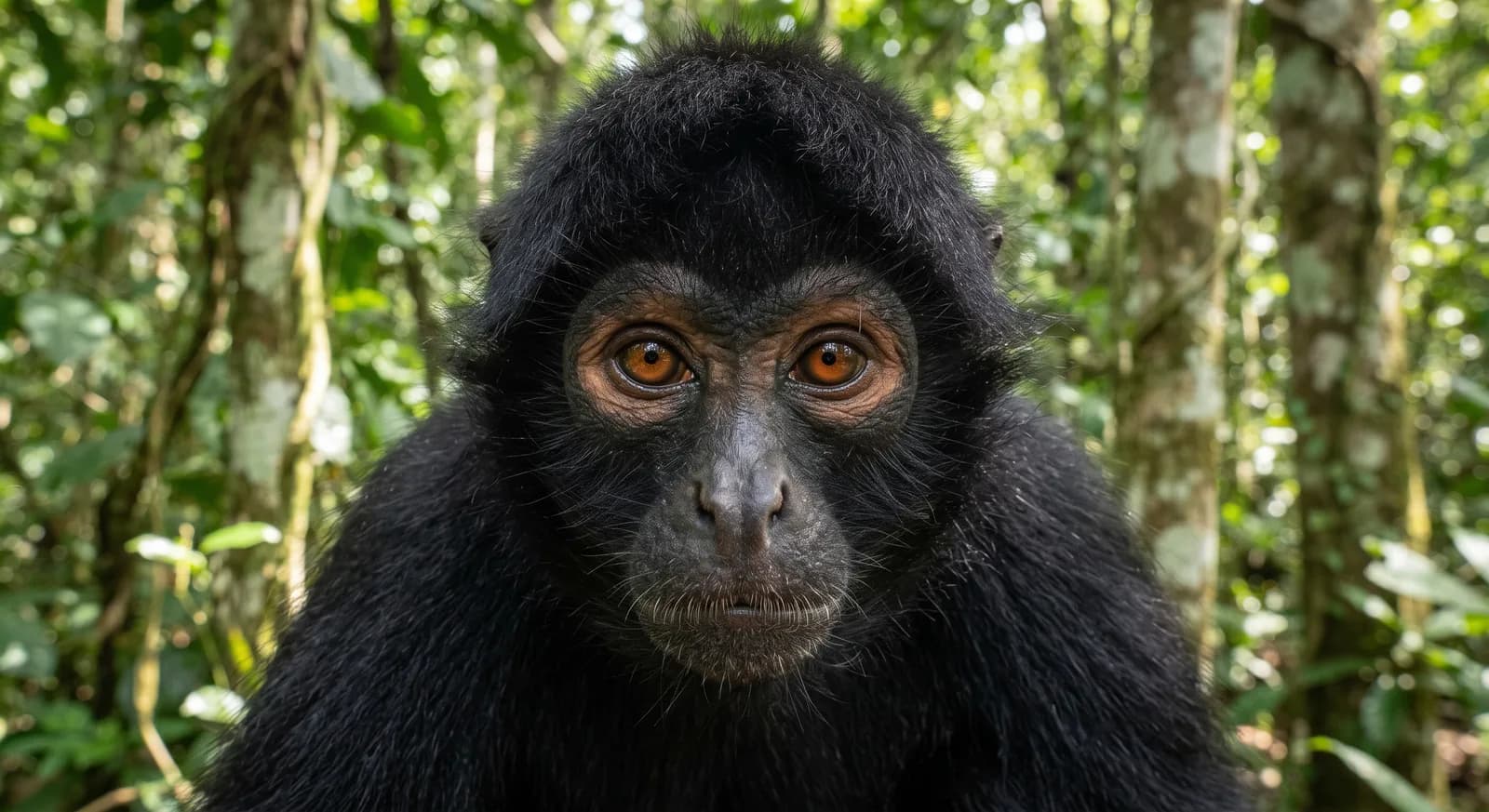 Vulnerable
Red-faced Black Spider Monkey
Ateles paniscus
Southern Muriqui
Brachyteles arachnoides
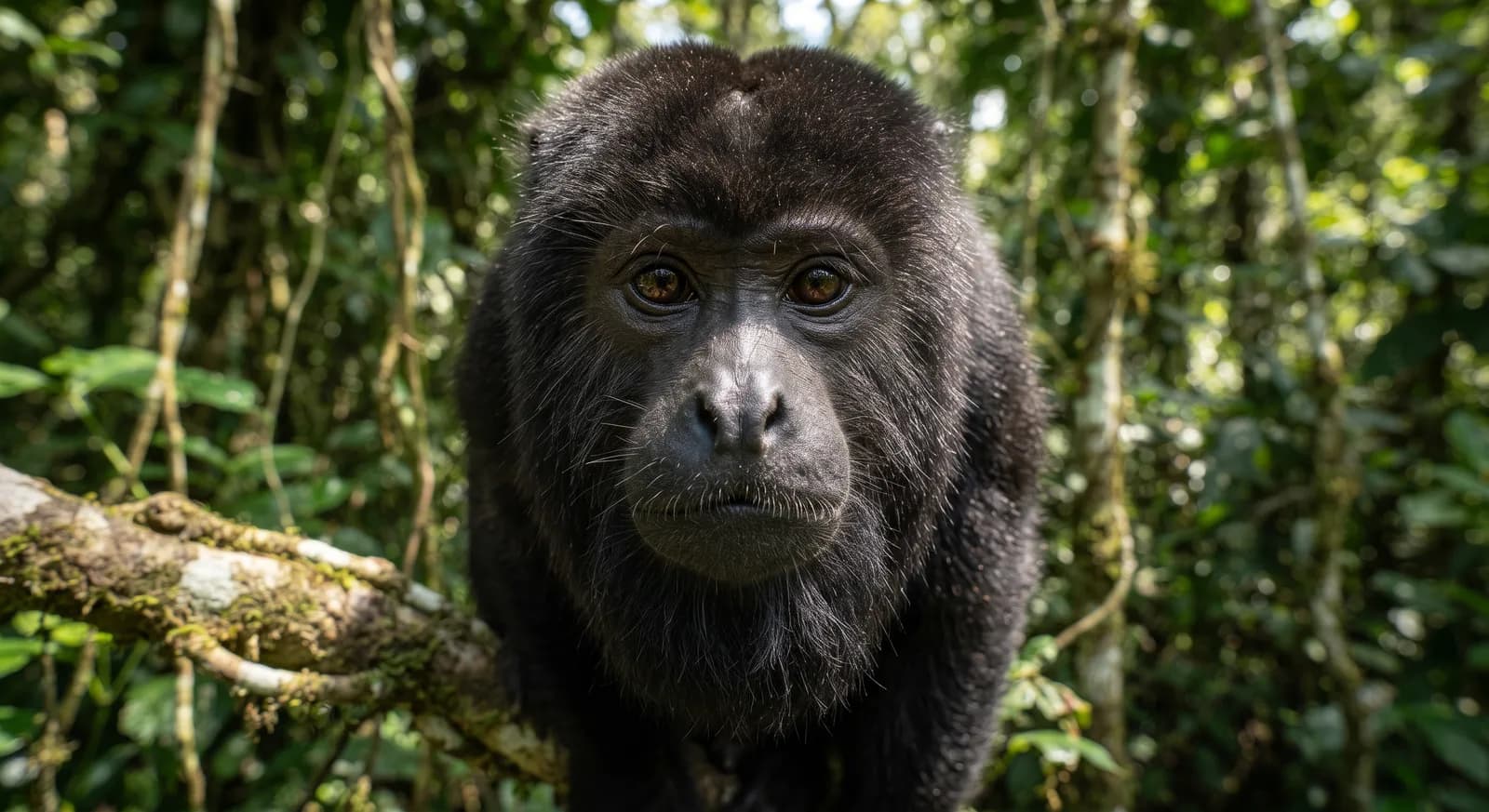 Least Concern
Black and Gold Howler Monkey
Alouatta caraya
How to help
The black spider monkey is classified as endangered. Organizations such as UICN, WWF y Wildlife Conservation Society work specifically on its conservation and that of its habitat; looking into their programs is a good starting point if you want to get involved.
It's documented in 8 real protected areas — part of why protecting these places matters for its conservation.
Keep exploring
Based on what we already know about black spider monkey.
Comments
Share an experience, a fun fact or a tip for seeing the black spider monkey.
Be the first to comment.