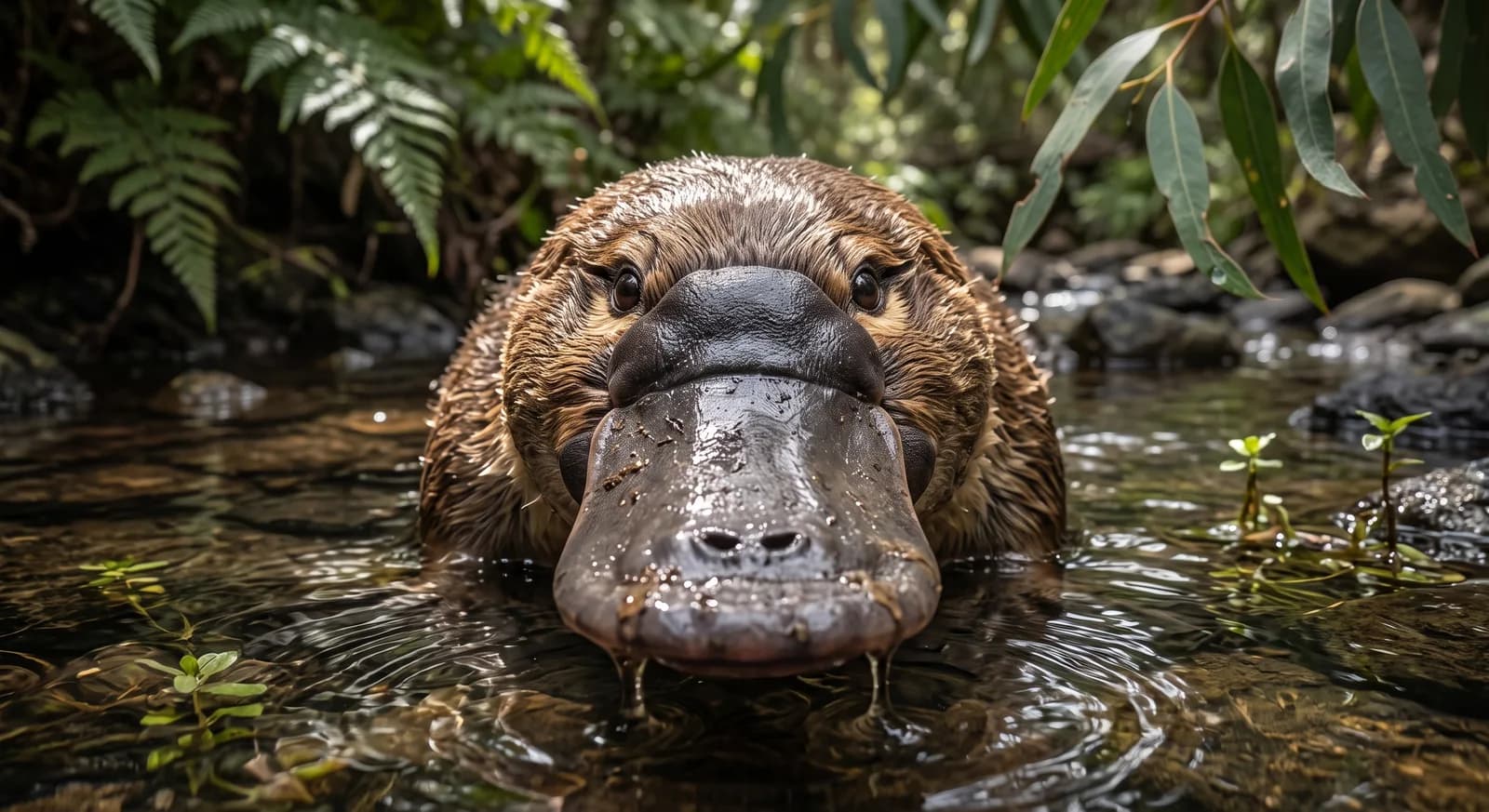
Mammals · Monotremata · Ornithorhynchidae
Platypus
Ornithorhynchus anatinus
It could become endangered in the near future if current threats go unchecked. See full glossary
One of the few mammals that lay eggs, it combines a duck's bill, a beaver's tail and webbed feet in an evolutionary mixture found nowhere else.
Weight
700 g – 2.4 kg
Size
30 cm – 45 cm
Lifespan
12 years
Diet
Carnivore
Feeds mainly on other animals.
Activity
Nocturnal
Active mainly at night.
Social structure
Solitary
Lives and hunts alone, joining others only to breed.
Sighting difficulty
Moderate
Estimated population
No reliable figure: the IUCN assessment works with a best estimate of some 50,000 animals and other sources give a range of 30,000 to 300,000. It is a nocturnal, semi-aquatic and elusive species with very low recapture rates, which makes it very hard to survey
Fun facts
- It is one of the few venomous mammals: males carry venomous spurs.
- It detects its prey by electroreception.
- It has no stomach: food passes straight to the intestine.
Life cycle & biology
- Skeleton type
- Vertebrate - internal bony skeleton (monotreme mammal, egg-laying)
- Habitat & environment
- Rivers, pools and streams of the wetter parts of eastern Australia and Tasmania
- Birth weight
- Tiny and undeveloped when the egg hatches, putting on as much as 20 times its weight in its first 14 weeks
- Size at birth
- Tiny and undeveloped at hatching
- Sexual maturity
- ~2 years (though many females do not breed until 4)
- Gestation / incubation
- ~21-27 days of gestation followed by 10-11 days of egg incubation
- Litter / clutch size
- 1 to 3 eggs per clutch (most commonly 2)
- Lifespan in captivity
- Documented record of up to 22.6-30 years
Sources consulted: Australian Platypus Conservancy; AnAge (genomics.senescence.info); Animal Diversity Web; Britannica; EBSCO Research Starters; PBS Nature (Platypus Fact Sheet); SDZWA Fact Sheet (Platypus); Woinarski y Burbidge 2016, IUCN Red List: pasó de Preocupación menor a Casi amenazado por declives y extinciones locales observados; se proyecta una reducción de en torno al 30 % en tres generaciones (unos 21 años) || IUCN Red List, evaluación de Ornithorhynchus anatinus (2016); Bino et al. 2019, Biological Conservation || Bino et al. 2019, Biological Conservation; IUCN Red List
Where to find it
See its range on the interactive mapBest time: At dawn and dusk all year round, in the rivers and streams of eastern Australia and Tasmania; those hours of half-light are when it comes out to feed
Where to watch it
Parques y spots de buceo donde se ha documentado esta especie — se muestran 10 de 20 documentados.
Related species
Other species in the catalogue with the most in common with Platypus — same habitat, park, country, tags or family.
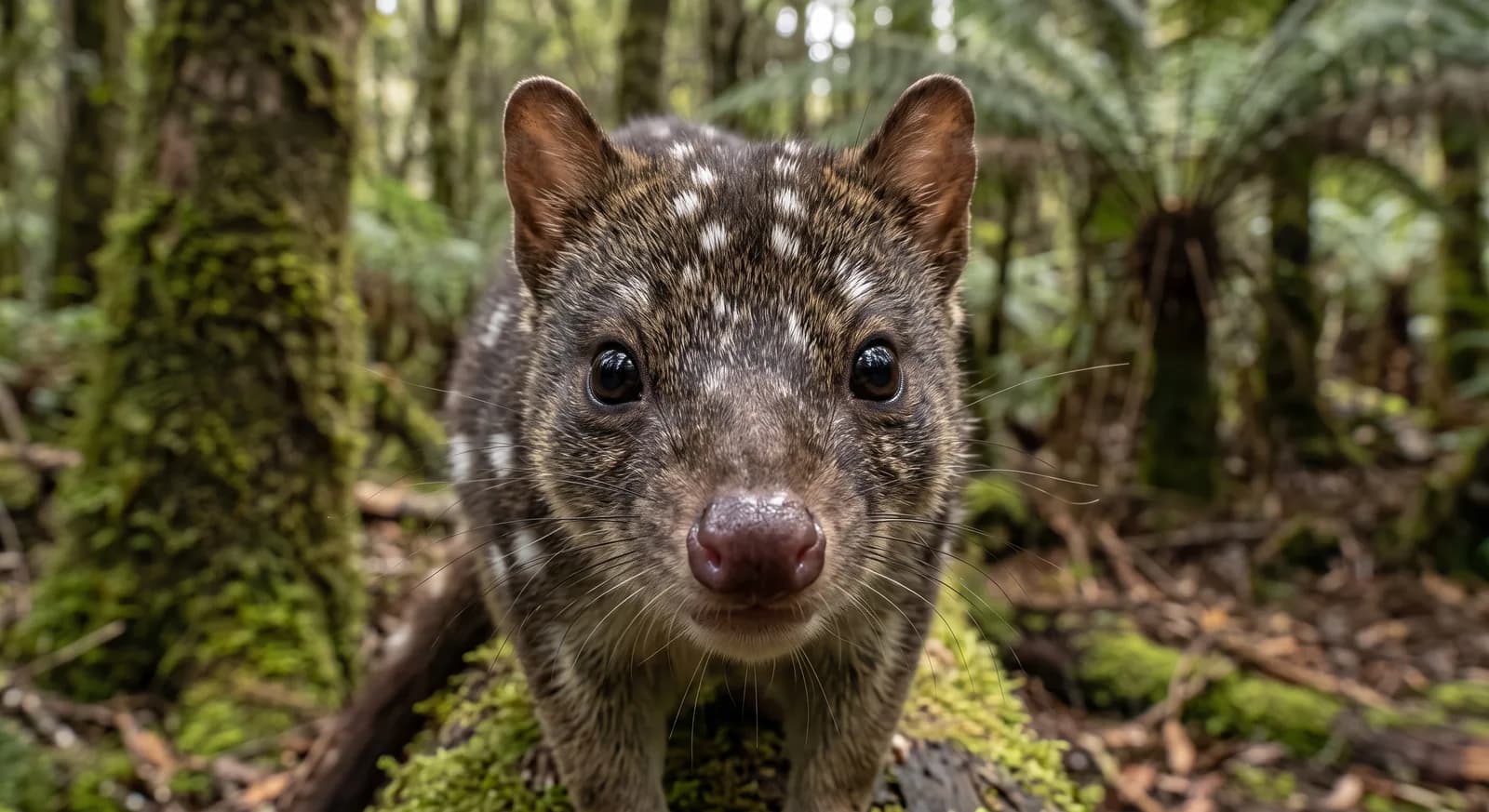 Near Threatened
Spotted-tailed Quoll
Dasyurus maculatus
Lumholtz's Tree Kangaroo
Dendrolagus lumholtzi
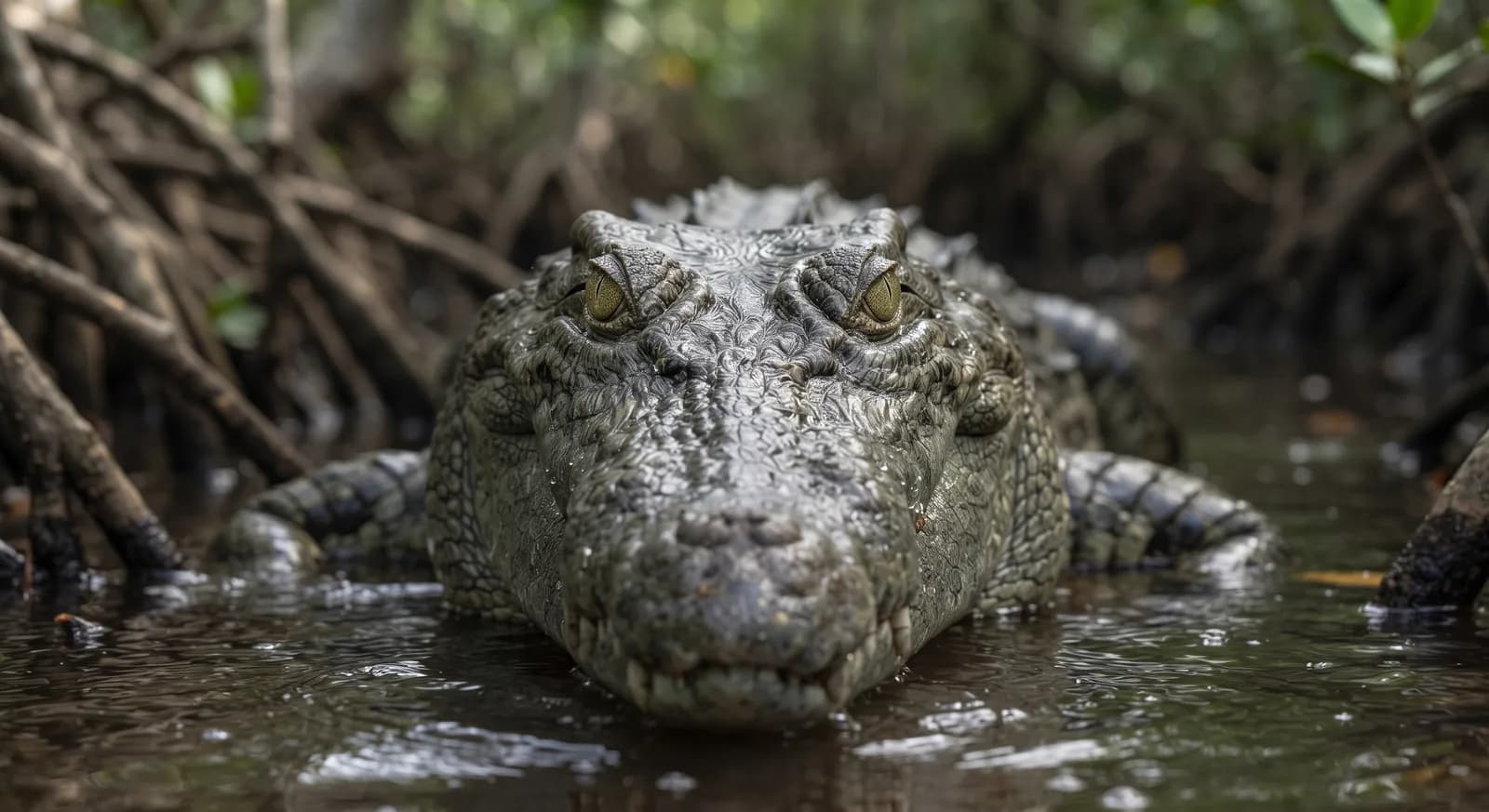 Least Concern
Saltwater Crocodile
Crocodylus porosus
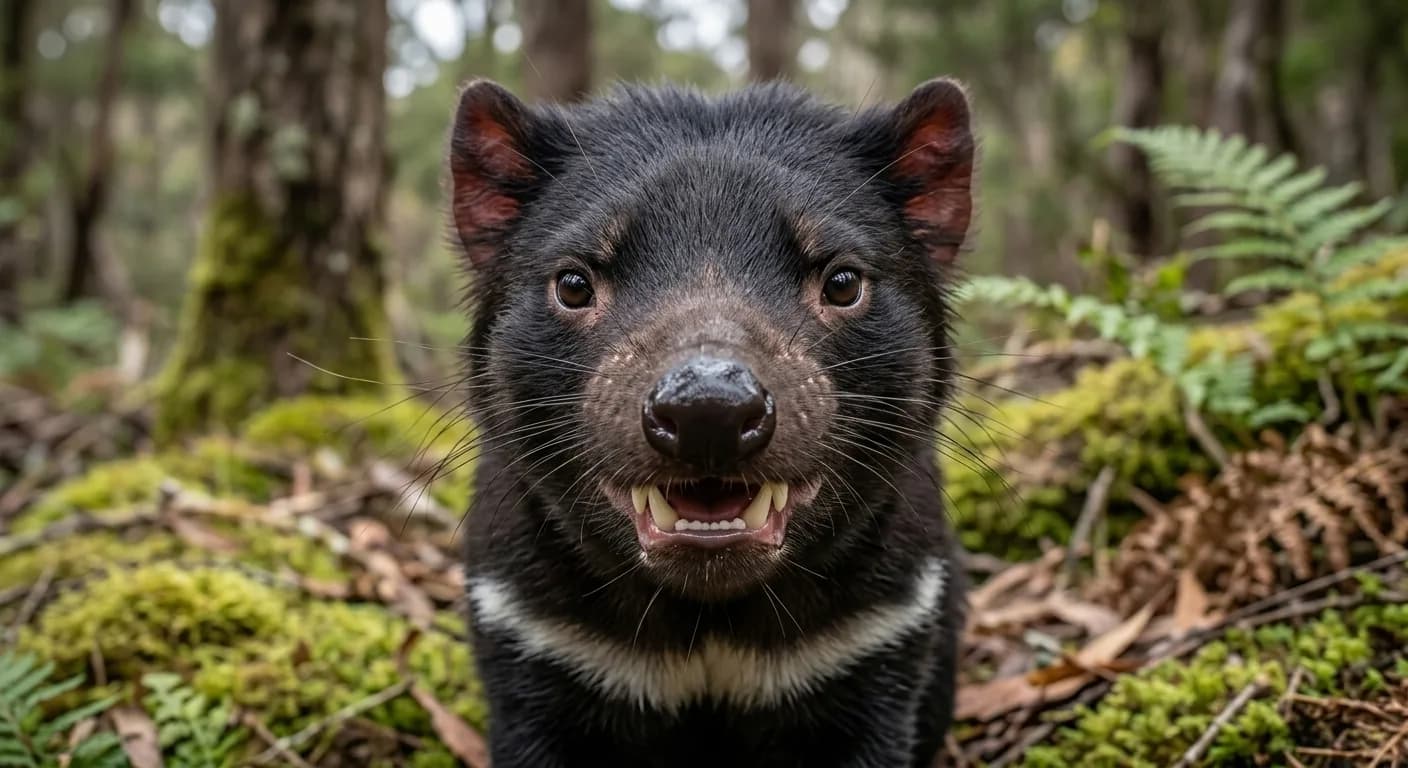 Endangered
Tasmanian Devil
Sarcophilus harrisii
Keep exploring
Based on what we already know about platypus.
Comments
Share an experience, a fun fact or a tip for seeing the platypus.
Be the first to comment.