One of the 5 oystercatchers on WAnimals
Birds · Charadriiformes · Haematopodidae
African Oystercatcher
Haematopus moquini
The species is abundant and widely distributed; it faces no significant short-term risk. See full glossary
A large, noisy wader with entirely black plumage, red legs and a broad, strong red bill. Both sexes are alike, although females are larger and slightly longer-billed. Juveniles have soft grey plumage and do not acquire the characteristic red legs and bill until after fledging.
Weight
699 g on average
Diet
Carnivore
Feeds mainly on other animals.
Activity
Diurnal
Active mainly during the day.
Social structure
In pairs
Usually lives in pairs, sometimes for life.
Sighting difficulty
Easy
Estimated population
More than 6,000 adults
Fun facts
- Its scientific name honours Alfred Moquin-Tandon, the French naturalist who found and named the species before Bonaparte, who ended up signing the valid description.
- It is one of very few seabirds in southern Africa that breeds on the mainland and not only on islands.
- Young birds take months to develop the red of the bill and legs: until then they are grey and inconspicuous.
Life cycle & biology
- Skeleton type
- Vertebrate - internal bony skeleton (bird)
- Habitat & environment
- Mainland coasts and nearby islands of southern Africa, in Namibia and South Africa, where it feeds in the intertidal zone
- Size at birth
- Precocial chicks, which leave the nest a day or two after hatching and fly at around six weeks
- Sexual maturity
- 3 years
- Gestation / incubation
- 27-39 days of incubation, shared by both parents
- Litter / clutch size
- 1-3 eggs, averaging 1.8
Sources consulted: IUCN Red List; Wikipedia (African oystercatcher); Hockey 2005; Bonaparte 1856
Where to find it
See its range on the interactive mapBest time: It breeds between November and April on the coasts of southern Africa
Where to watch it
Parques y spots de buceo donde se ha documentado esta especie — se muestran 10 de 14 documentados.
Related species
Other species in the catalogue with the most in common with African Oystercatcher — same habitat, park, country, tags or family.
 Least Concern
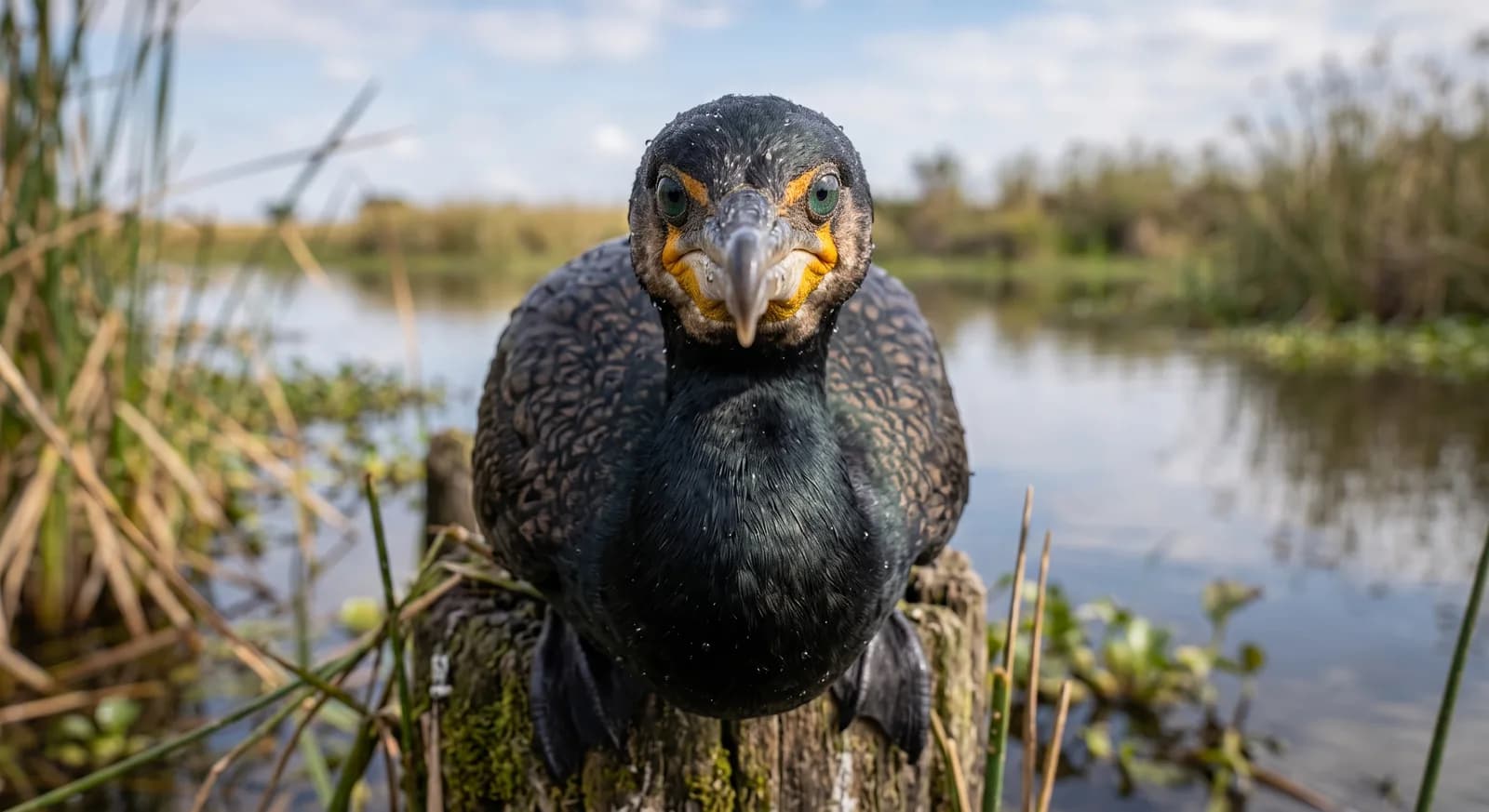
Long-tailed Cormorant
Microcarbo africanus
African Penguin
Spheniscus demersus
Spotted Seahorse
Hippocampus kuda
White-spotted Puffer
Arothron hispidus
Clown Triggerfish
Balistoides conspicillum
Dorab Wolf Herring
Chirocentrus dorab
Keep exploring
Based on what we already know about african oystercatcher.
Comments
Share an experience, a fun fact or a tip for seeing the african oystercatcher.
Be the first to comment.