One of the 11 rats on WAnimals
Mammals · Rodentia · Spalacidae
Giant Mole Rat
Spalax giganteus
It faces a high risk of extinction in the wild over the medium term. See full glossary
The giant mole rat is the largest of the spalacids, burrowing rodents of eastern Europe and western Asia completely adapted to life underground. It has no external ears and no visible tail, and its tiny eyes are covered by skin: it is functionally blind. It digs with its incisors rather than its feet, and pushes the soil away with its head, forming mounds at the surface. It feeds on roots, bulbs and tubers, which it stores in underground chambers. Its populations are retreating as the steppe is ploughed up.
Weight
700 g – 1 kg
Size
25 cm – 35 cm
Lifespan
5 years
Diet
Herbivore
Feeds mainly on plants.
Activity
Irregular activity
Active at irregular times, by day or night depending on circumstances.
Social structure
Solitary
Lives and hunts alone, joining others only to breed.
Sighting difficulty
Moderate
Fun facts
- It is completely blind: its vestigial eyes, buried under the skin, no longer form images but retain the ability to detect light cycles and set its biological clock.
- It navigates underground using the Earth's magnetic field, an ability demonstrated experimentally in the spalacids and very uncommon among mammals.
Life cycle & biology
- Skeleton type
- Vertebrate - internal bony skeleton (mammal)
- Habitat & environment
- Sandy and clay steppe and semi-desert of the northern Caucasus and western Kazakhstan
- Litter / clutch size
- 3
Sources consulted: https://es.wikipedia.org/wiki/Spalax_giganteus
Where to watch it
Parks and dive sites where this species has been documented.
Related species
Other species in the catalogue with the most in common with Giant Mole Rat — same habitat, park, country, tags or family.
 Vulnerable
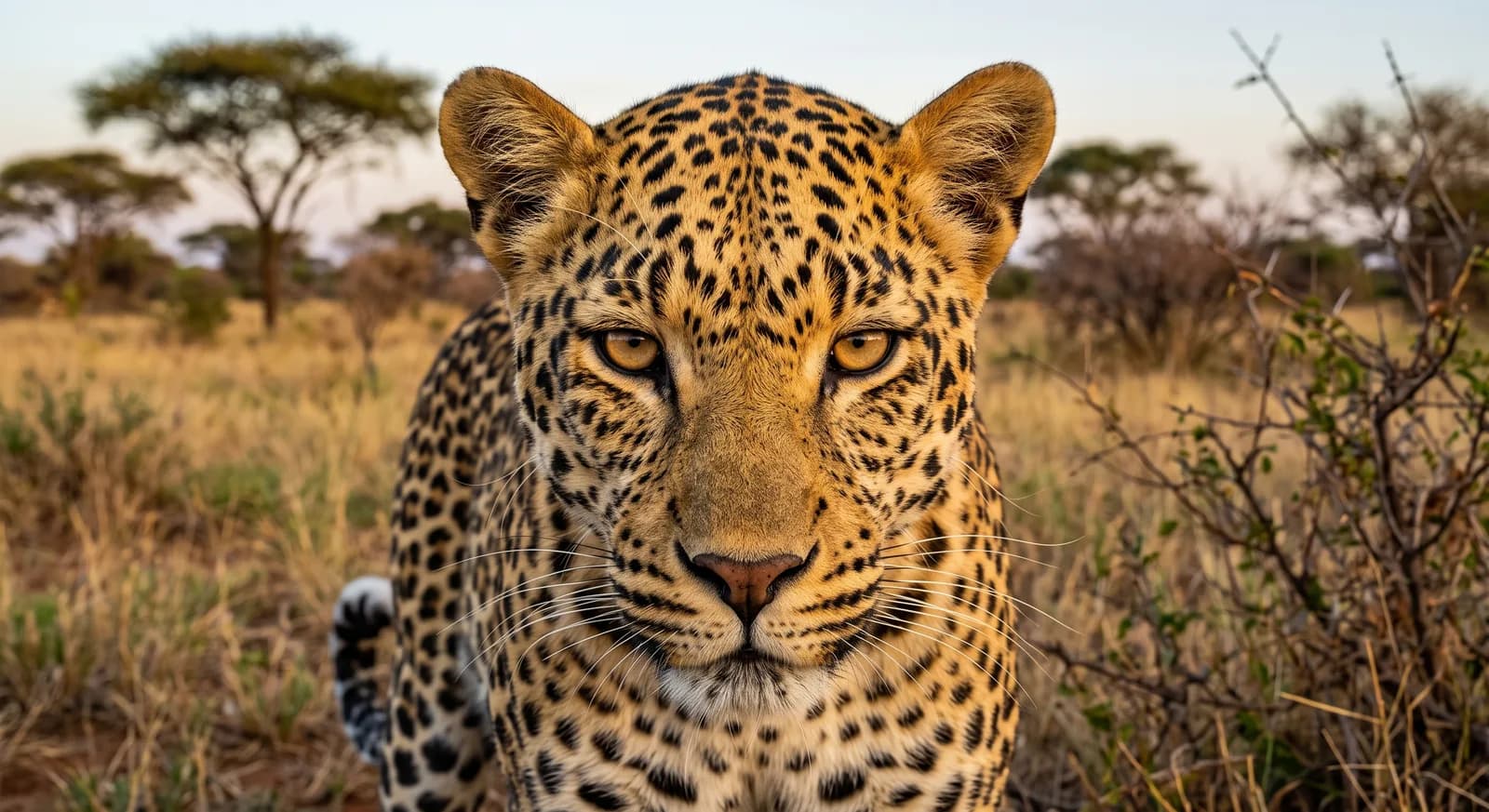
Leopard
Panthera pardus
Bush Hyrax
Heterohyrax brucei
Klipspringer
Oreotragus oreotragus
Wattled Crane
Bugeranus carunculatus
African Golden Wolf
Canis anthus
Steppe Tortoise
Testudo horsfieldii
How to help
The giant mole rat is classified as vulnerable. Organizations such as UICN, WWF y Wildlife Conservation Society work specifically on its conservation and that of its habitat; looking into their programs is a good starting point if you want to get involved.
It's documented in 1 real protected area — part of why protecting these places matters for its conservation.
Keep exploring
Based on what we already know about giant mole rat.
Comments
Share an experience, a fun fact or a tip for seeing the giant mole rat.
Be the first to comment.