One of the 3 hairy-nosed wombats on WAnimals
Mammals · Diprotodontia · Vombatidae
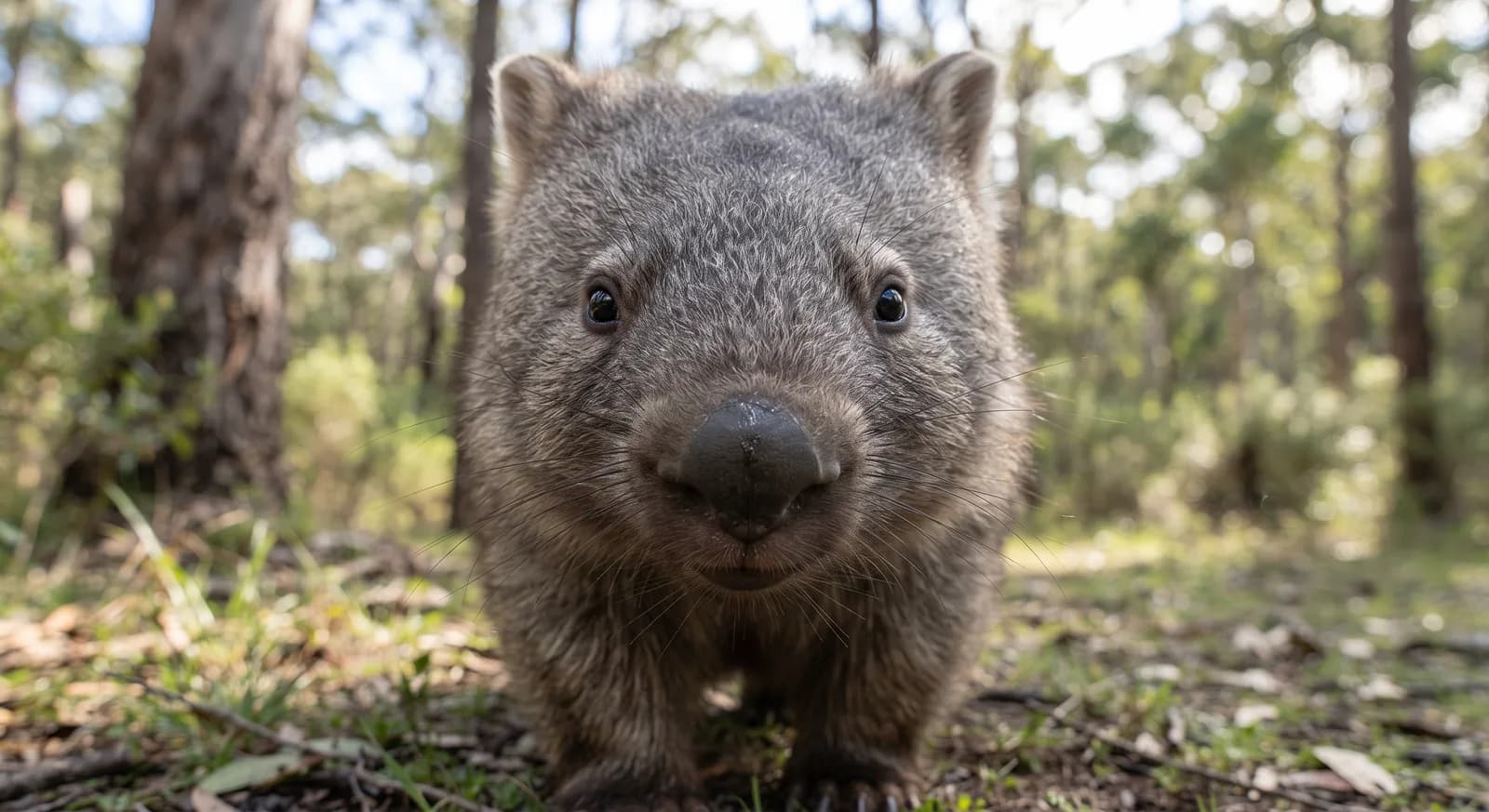
Southern Hairy-nosed Wombat
Lasiorhinus latifrons
It could become endangered in the near future if current threats go unchecked. See full glossary
It is the official animal emblem of the state of South Australia, and several captive animals have reached exceptional ages of over 30 years, well beyond the 14 to 15 typical in the wild.
Weight
19 kg – 32 kg
Size
77 cm – 93 cm
Lifespan
15 years
Diet
Herbivore
Feeds mainly on plants.
Activity
Nocturnal
Active mainly at night.
Social structure
Solitary
Lives and hunts alone, joining others only to breed.
Sighting difficulty
Moderate
Fun facts
- It is the official animal emblem of South Australia.
- Its teeth grow continuously throughout its life.
- It goes long spells without drinking, living on hardy grasses and shrubs.
Life cycle & biology
- Skeleton type
- Vertebrate - internal bony skeleton (marsupial mammal)
- Habitat & environment
- Semi-arid and arid grassland and scrub of southern Australia, on firm soil suited to digging extensive burrows
- Birth weight
- 0.5 grams
- Size at birth
- Extremely undeveloped at birth, finishing its development in the pouch over some 6 months
- Sexual maturity
- 3 years (both sexes)
- Gestation / incubation
- 21-22 days
- Litter / clutch size
- 1 young, with roughly a year between births
- Lifespan in captivity
- Documented record of up to 30-34 years in captivity
Sources consulted: AnAge (genomics.senescence.info); Billabong Sanctuary; ResearchGate (growth development study); JungleDragon; Animal Diversity Web; Journal of Mammalogy (age cohort sexual dimorphism study); The Animal Facts; Wikipedia (Southern hairy-nosed wombat)
Where to find it
See its range on the interactive mapBest time: All year round in southern Australia, at dusk; in summer it comes out only at night, once the temperature drops.
Where to watch it
Parks and dive sites where this species has been documented.
Related species
Other species in the catalogue with the most in common with Southern Hairy-nosed Wombat — same habitat, park, country, tags or family.
Yellow-footed Rock Wallaby
Petrogale xanthopus
 Least Concern
Bare-nosed Wombat
Vombatus ursinus
Northern Hairy-nosed Wombat
Lasiorhinus krefftii
Red Kangaroo
Osphranter rufus
Western Gray Kangaroo
Macropus fuliginosus
Red-necked Wallaby
Notamacropus rufogriseus
Keep exploring
Based on what we already know about southern hairy-nosed wombat.
Comments
Share an experience, a fun fact or a tip for seeing the southern hairy-nosed wombat.
Be the first to comment.