Shirakami-Sanchi
Japan · East AsiaThe largest virgin beech forest left in East Asia, a roadless territory in the mountains of northern Honshu.
Area
169 km²
Declared in
1993
Region
East Asia
Climate
Tropical, Templado, Polar / frío
Best time
March to May
Highlight
Roadless primeval forest of Fagus crenata
Shirakami-Sanchi is the collective name of a mountainous region straddling the prefectures of Aomori and Akita, in the north of the Tohoku region, with altitudes running from some 100-200 metres to 1,243-1,250. The whole covers some 130,000 hectares, but the property inscribed by UNESCO is the roughly 17,000 central hectares, the part that has remained intact, plus a buffer zone of some 6,800 hectares. Three quarters of the territory lies in Aomori.
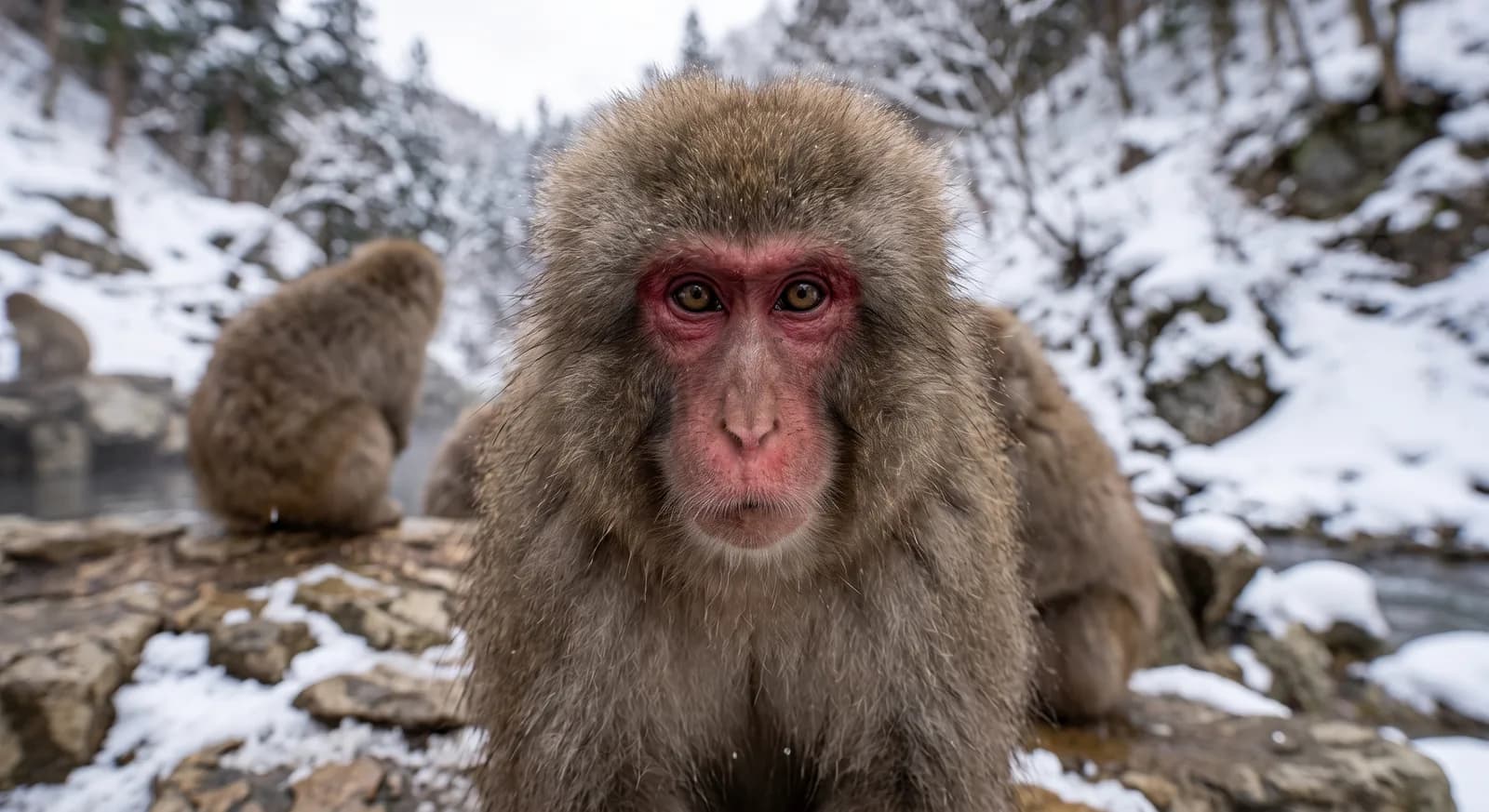
Its value is the beech forest. Shirakami preserves the largest virgin remnant of cool temperate Siebold's beech forest (Fagus crenata) in East Asia, a remnant of the stands that covered the hills and slopes of northern Japan from between eight and twelve thousand years ago. It is a pure forest, without roads or paths in its core, whose appearance changes radically with the seasons and which works as a sponge: the leaf litter stores and filters rain and snow, and from there comes the water of the surrounding villages. More than 500 plant species have been recorded, many of them characteristic of Japan. Among the fauna stand out the Japanese black bear, the serow, the Japanese macaque and 87 bird species, including the black woodpecker and the golden eagle.
It was inscribed in December 1993, at the same session as Yakushima, Himeji Castle and the Buddhist monuments of Horyu-ji: Japan's first properties on the List. Its subsequent history illustrates a tension common in natural heritage management. The matagi, the traditional hunters and gatherers of these mountains, took part in drafting the original management plan, but after inscription the Forestry Agency abruptly applied a policy of zero access to the beech forest core, and in 2004 hunting was prohibited when the area was declared a national wildlife protection zone. Later studies conclude that Shirakami is a successful case of ecological preservation and of public participation in planning, but that it has come with the marginalisation of the few traditional users who remained. The 2013 management plan also warns that global warming could reduce the area suitable for beech.
Location
See on the interactive map10 species documented in Shirakami-Sanchi
Endemic to Japan:Macaco japonés,Serow japonés
Águila azor montañesa
Nisaetus nipalensis
Anteojitos japonés
Zosterops japonicus
 Least Concern
Macaco japonés
Macaca fuscata
Pato mandarín
Aix galericulata
Perro mapache
Nyctereutes procyonoides
Ruiseñor japonés
Larvivora akahige
Salamandra de bosque japonesa
Hynobius nigrescens
Serow japonés
Capricornis crispus
Tejón japonés
Meles anakuma
Tritón de vientre de fuego japonés
Cynops pyrrhogaster
Flora and ecosystems
Ecosystems found in Japan, where Shirakami-Sanchi lies.
Experiences in this park
Similar parks
Which other parks are like this one?
Keep exploring
Based on what we already know about Shirakami-Sanchi.
Your rating
How many stars would you give Shirakami-Sanchi?
Comments
Share your experience visiting Shirakami-Sanchi, or a tip for other travellers.
Be the first to comment.