 Endangered
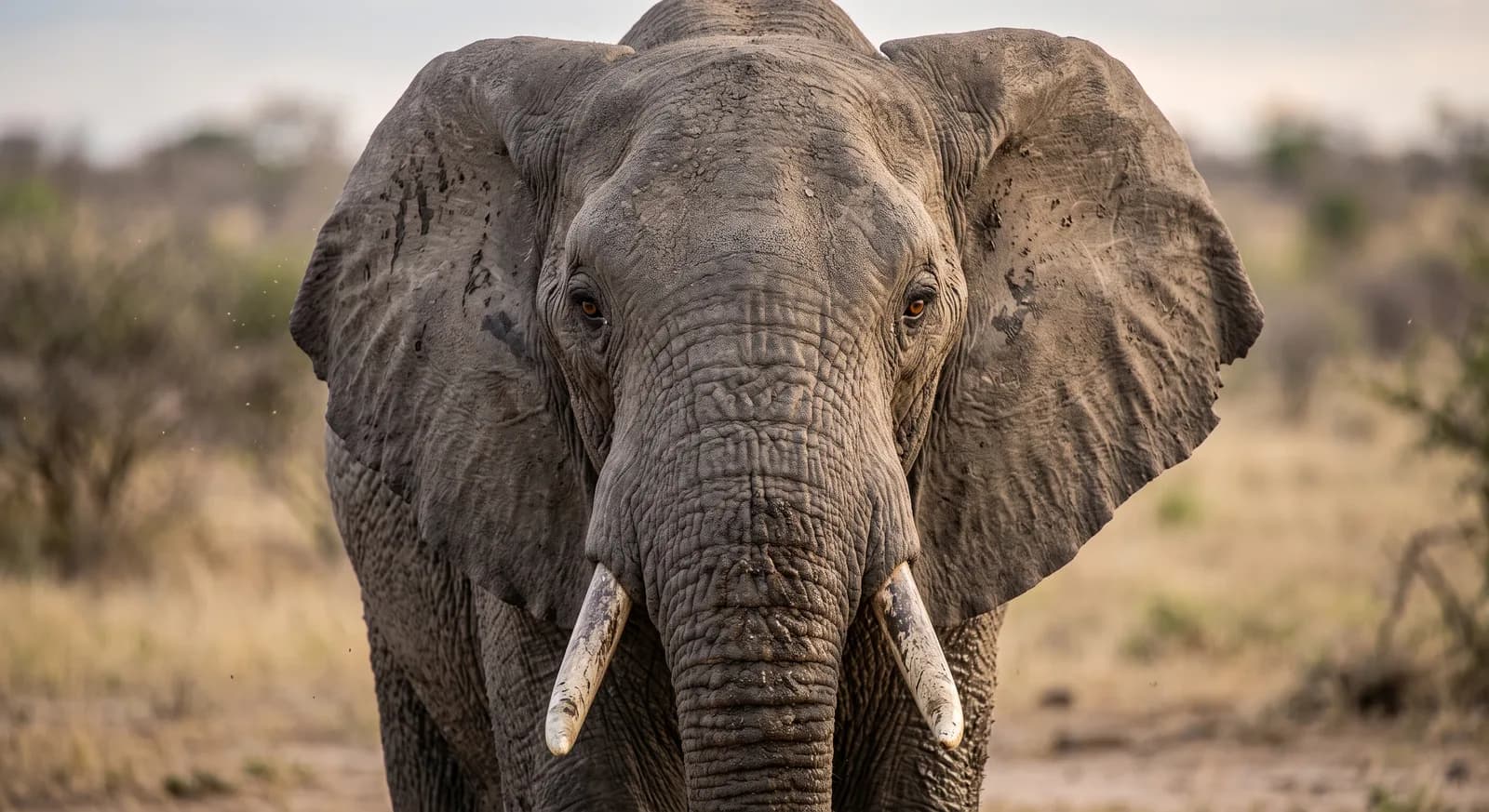
African Savanna Elephant
Loxodonta africana
The largest sheet of falling water in the world, shared between Zimbabwe and Zambia and more than a kilometre and a half wide.
Area
23 km²
Designated in
1952
Region
Southern Africa
The Zambezi falls and their basalt gorge
Victoria Falls, Mosi-oa-Tunya in the Tonga language — the smoke that thunders — were inscribed on the World Heritage List in 1989 as a transboundary property between Zimbabwe and Zambia. The Zimbabwean national park, declared in 1952, covers some 23 km².
The Zambezi plunges here through a fracture in the basalt plateau, forming a curtain of water more than a kilometre and a half wide and around a hundred metres high, reckoned the largest sheet of falling water in the world for its combination of width and height. The flow varies enormously between seasons, from a trickle in October to more than nine thousand cubic metres per second in April.
The geology explains the whole: the river has cut successively along the fractures in the basalt over hundreds of thousands of years, and the result is a series of zigzag gorges downstream, each of them an abandoned earlier waterfall. The cloud of spray that rises, visible for kilometres, sustains beside the rim a rainforest, permanently watered by that spray, that would not exist in an otherwise dry climate. The Taita falcon and the swifts of the falls nest on the gorge walls.
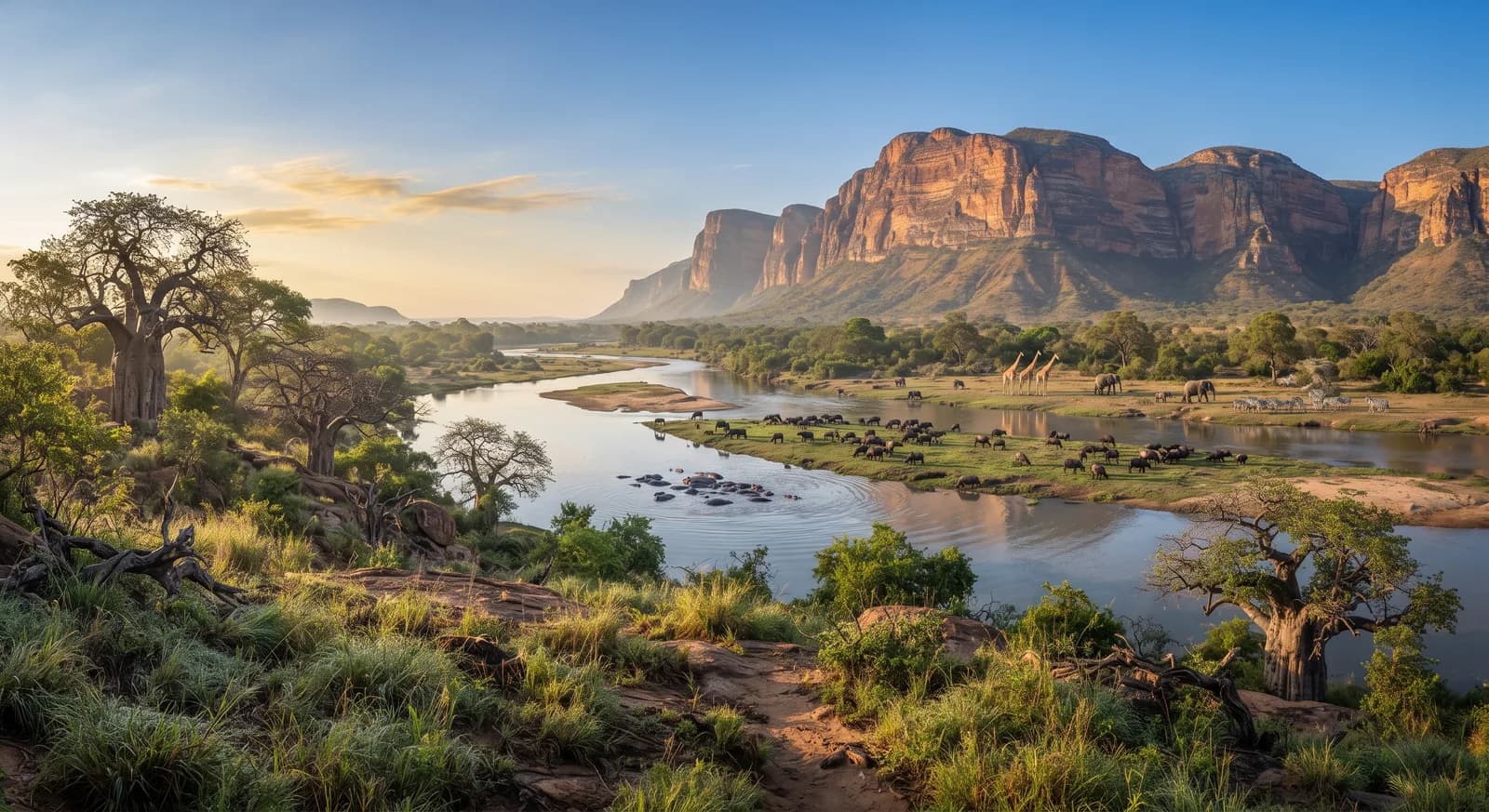
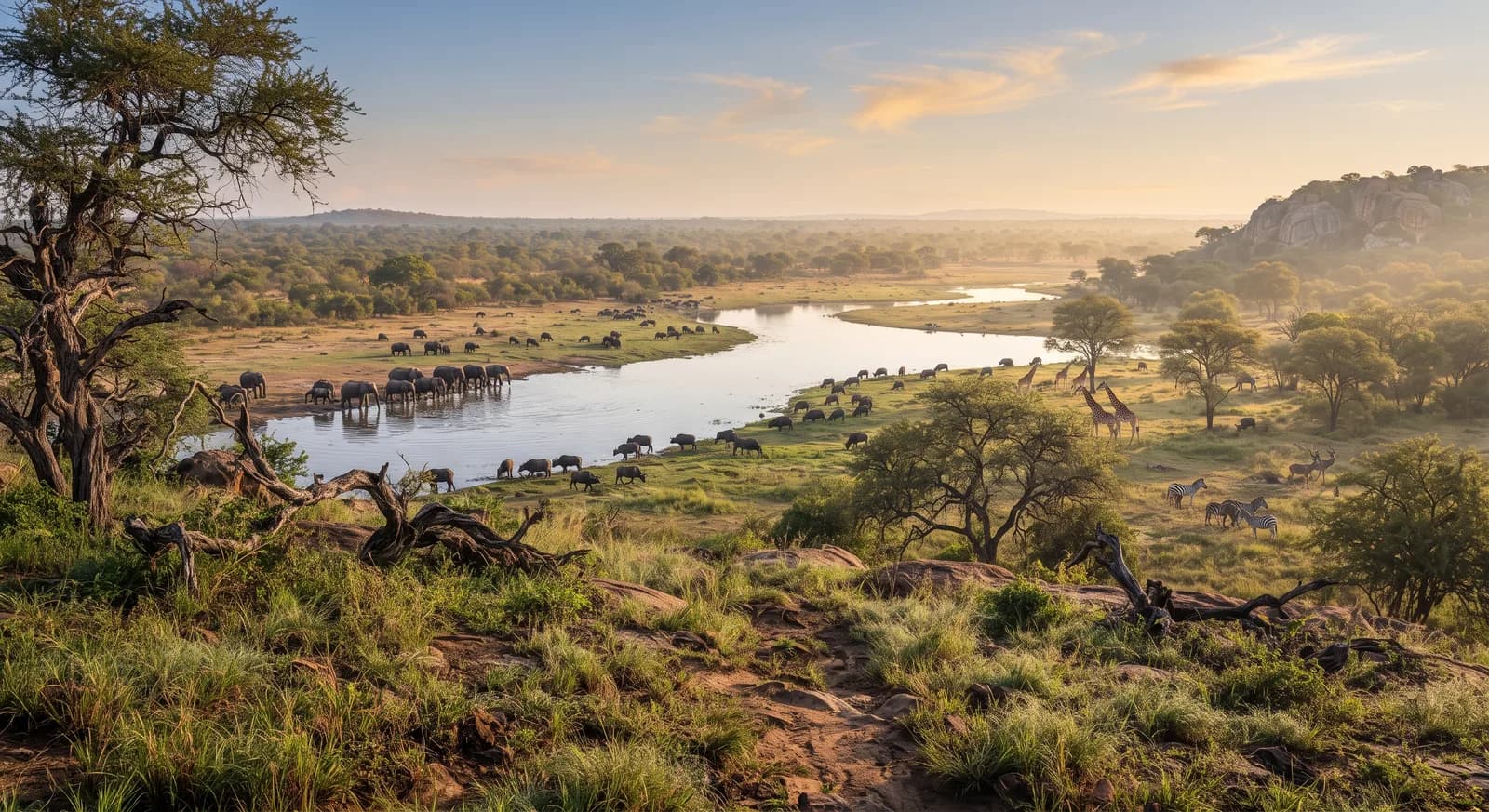
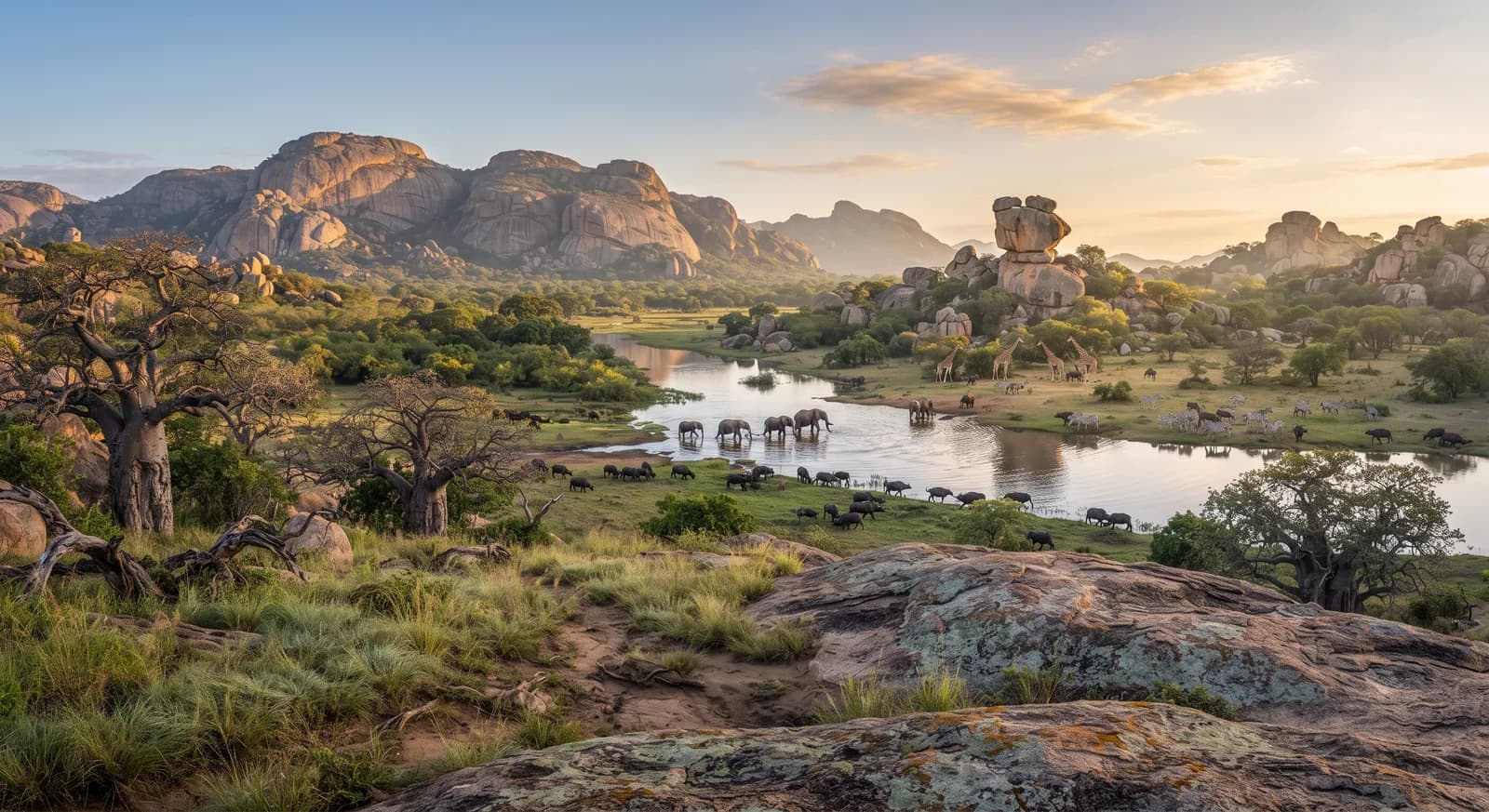
Ecosystems found in Zimbabwe, where Victoria Falls / Mosi-oa-Tunya lies.
What is worth looking out for this month in Zimbabwe?
Now is a good time: Elephant concentrations at the Hwange waterholes (June to October (highest concentration August to October))
Which other parks are like this one?
Same country: Zimbabwe
Same country: Zimbabwe
Same country: Zimbabwe
Same country: Zimbabwe
Based on what we already know about this park.
Share your experience visiting Victoria Falls / Mosi-oa-Tunya, or a tip for other travellers.
Be the first to comment.
Climate
Tropical, Arid / desert
Route duration
1–2 days
Route difficulty
Easy
 Zimbabwe