 Least Concern
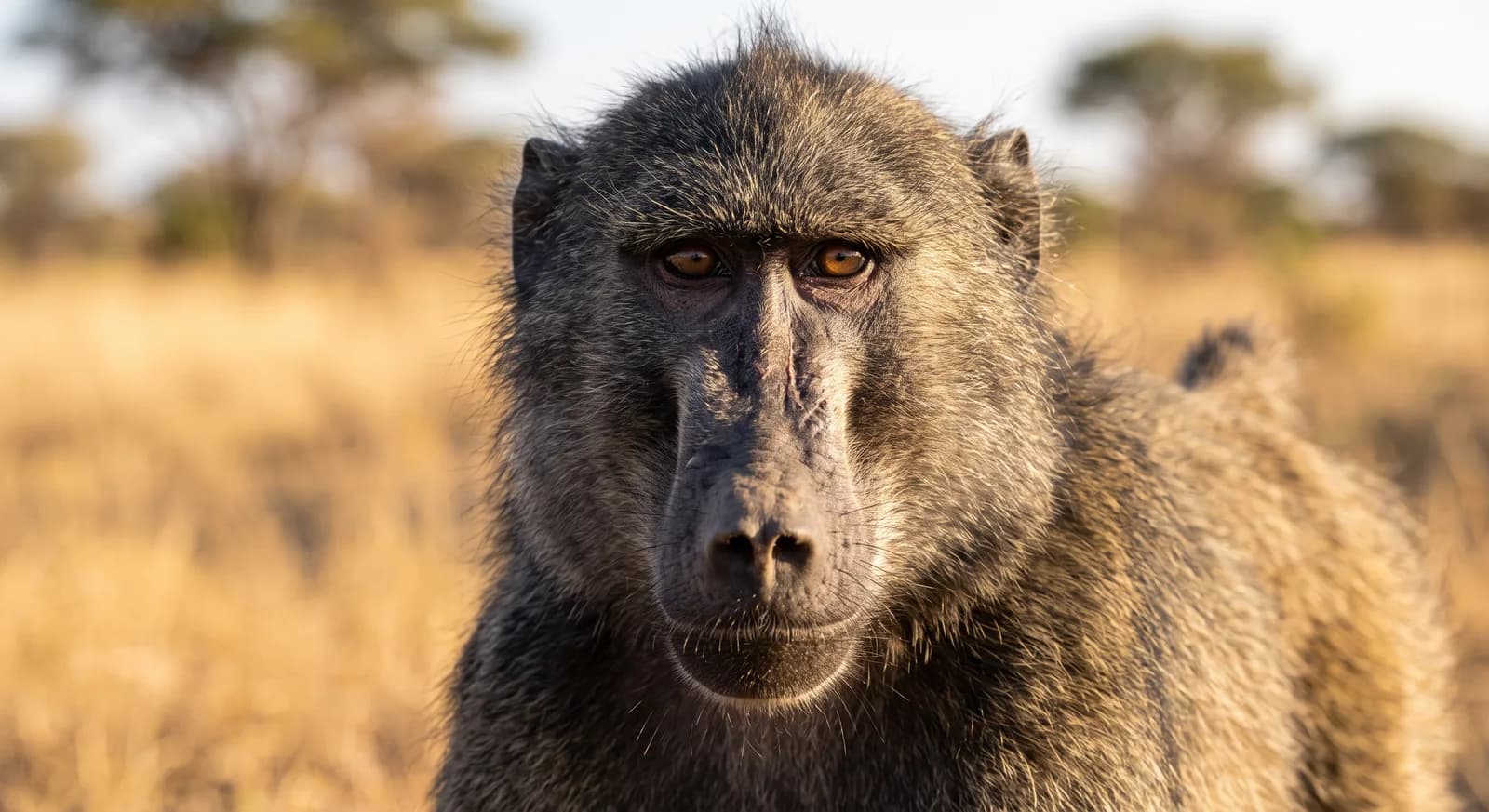
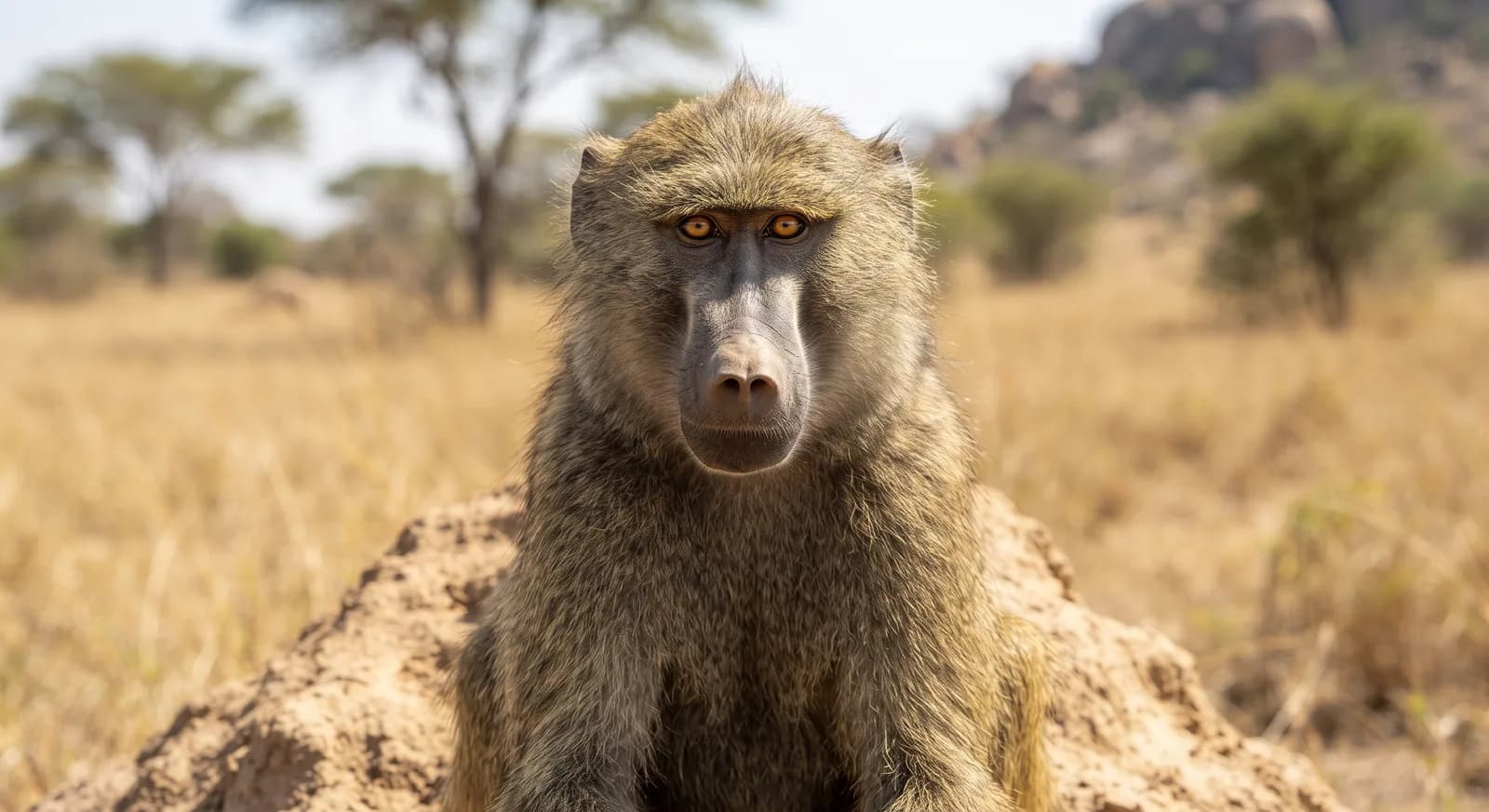
Yellow Baboon
Papio cynocephalus
One of the 2 baboons on WAnimals
Mammals · Primates · Cercopithecidae
Papio anubis
The species is abundant and widely distributed; it faces no significant short-term risk.
It is the most widely distributed baboon, found in 25 countries across sub-Saharan Africa, and is much used in biomedical and behavioural research.
Weight
10 kg – 37 kg
Size
60 cm – 76 cm
Life expectancy
30 years
Diet
Omnivore
Combines animal and plant food depending on availability.
Activity
Diurnal
Active mainly during the day.
Social structure
Herd
Lives in large groups as a strategy against predators.
Sighting difficulty
Easy
Sources consulted: AboutAnimals; A-Z Animals; Animal Diversity Web; PMC (segmental morphometrics study, Zika infection study); Animalia.bio
Best time: All year round, by day, in savannah, gallery forest and rocky country of central and eastern Africa.
Parks and dive sites where this species has been documented — showing 10 of 26.
Other species in the catalogue with the most in common with Olive Baboon — same habitat, park, country, tags or family.
Based on what we already know about olive baboon.
Share an experience, a fun fact or a tip for seeing the olive baboon.
Be the first to comment.
The pins mark the parks where its presence is documented.