Skip to content
WAnimals
  • Map
  • Species
  • Parks
  • Diving
Log inCreate account
WAnimals

The guide for travellers and animal lovers: discover, plan and share your wild adventures around the world.

Discover wildlife

  • Species
  • Ecosystems
  • Glossary
  • Tags

Explore places

  • Map
  • Countries
  • Parks
  • Diving

Plan experiences

  • Guides

Learn

  • Blog

Resources

  • Help centre
  • Contact
  • Install the app

Follow us

Account

  • Log in
  • Create account

© 2026 WAnimals. All rights reserved.

About usHow we build our profilesTerms of servicePrivacyLegal notice
MapSpeciesParksDiving
  1. Home
  2. Species
  3. Bolle's Pigeon

One of the 10 pigeons on WAnimals

Birds · Columbiformes · Columbidae

Bolle's Pigeon

Columba bollii

Near Threatened

It could become threatened in the near future if current threats go unchecked.

Spotted something wrong?

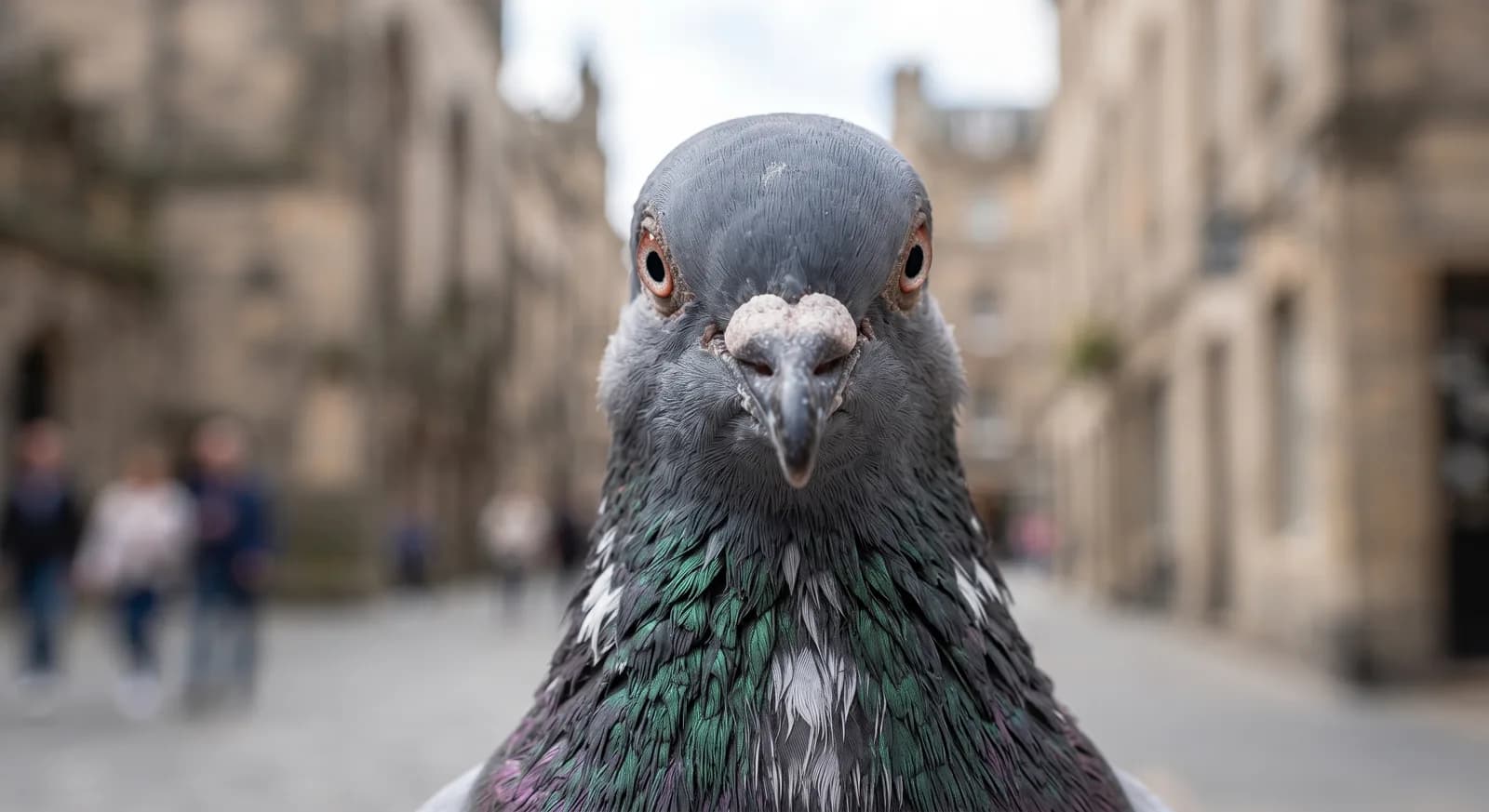
Bolle's pigeon is the more strictly forest-dwelling of the two pigeons endemic to the Canary Islands: it lives inside the densest, dampest laurel forest and is far harder to see than the laurel pigeon. It is told apart by the dark band on its tail and by the greenish and purplish sheen of its neck. It feeds on the fruits of the laurel-forest trees and is likewise an essential disperser of their seeds. Its population is concentrated on La Palma, La Gomera, Tenerife and El Hierro.

Weight

300 g – 400 g

Size

36 cm – 38 cm

Life expectancy

12 years

Diet

Herbivore

Feeds mainly on plants.

Activity

Diurnal

Active mainly during the day.

Social structure

In pairs

Usually lives in pairs, sometimes for life.

Sighting difficulty

Moderate

Temperate forestMountainIslands
1countries3parks11same family

Fun facts

  • It is so unobtrusive and so tied to the forest interior that for decades it was thought far rarer than it really is: surveys using call playback and cameras have revealed larger populations than had been estimated.
  • Its scientific name, bollii, honours the German naturalist Carl Bolle, who described it in the nineteenth century during his travels in the Canary Islands.

Life cycle and biology

Skeleton type
Vertebrate - internal bony skeleton (bird)
Habitat and environment
Interior of the dense, humid laurel forest of the western Canary Islands
Sexual maturity
12 months
Gestation / incubation
18 days of incubation
Litter / clutch size
1 egg

Sources consulted: https://www.iucnredlist.org/ | https://animaldiversity.org/ | https://es.wikipedia.org/

Where to find it

Loading map…

The pins mark the parks where its presence is documented.

Where to see it

Parks and dive sites where this species has been documented.

Related species

Other species in the catalogue with the most in common with Bolle's Pigeon — same habitat, park, country, tags or family.

Same taxonomic family
Shares a park
Shares a park

Keep exploring

Based on what we already know about bolle's pigeon.

Comments

Share an experience, a fun fact or a tip for seeing the bolle's pigeon.

Be the first to comment.

See full glossary
This page in other languages: Español · Deutsch · Français · Português · Italiano
See its range on the interactive map→
TeideSpain
GarajonaySpain
Caldera de TaburienteSpain
Near Threatened

Laurel Pigeon

Columba junoniae

Rock PigeonLeast Concern

Rock Pigeon

Columba livia

Least Concern

Common Wood Pigeon

Columba palumbus

Least Concern

Eurasian Collared Dove

Streptopelia decaocto

Least Concern

Atlantic Canary

Serinus canaria

Eleonora's FalconLeast Concern

Eleonora's Falcon

Falco eleonorae

CountriesSpain
ParksTeideSpain
TagsHerbivore
Herbivore
Diurnal
In pairs
Near Threatened
Bird
Temperate forest
Mountain
Islands
Spain