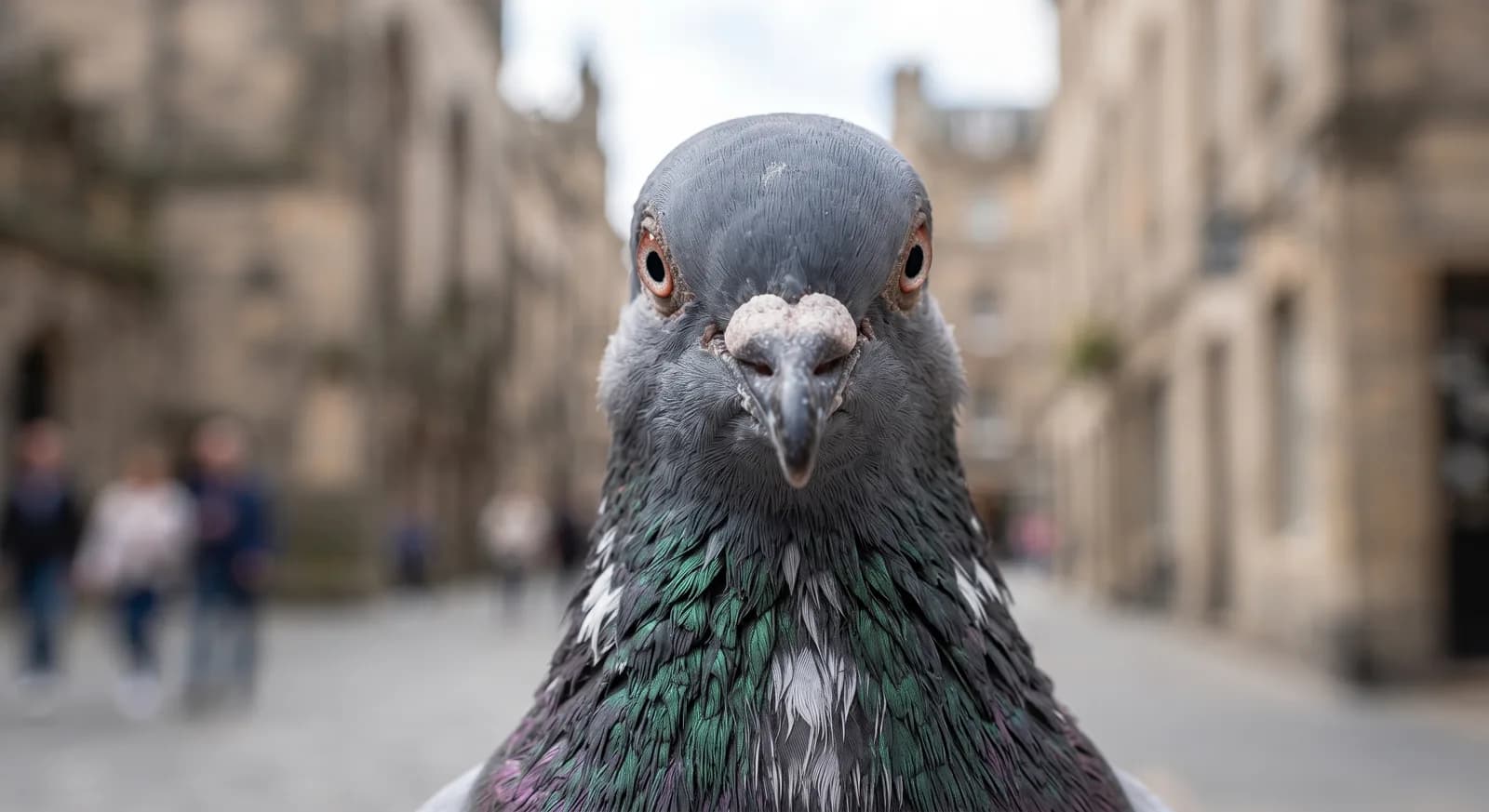
 Least Concern
Rock Pigeon
Columba livia
One of the 10 pigeons on WAnimals
Birds · Columbiformes · Columbidae
Columba junoniae
It could become threatened in the near future if current threats go unchecked.
The laurel pigeon is one of the two pigeons endemic to the Canarian laurel forest, along with Bolle's pigeon. It is recognised by its long tail with a broad pale terminal band and by the wine-coloured tone of its breast. It feeds almost exclusively on the fruits of the trees of the monteverde, the Canarian laurel-forest belt, above all the til and the viñátigo, and is their chief seed disperser. It was on the brink of extinction in the middle of the twentieth century and has recovered with the protection of the laurel forest.
Weight
350 g – 450 g
Size
37 cm – 38 cm
Life expectancy
12 years
Diet
Herbivore
Feeds mainly on plants.
Activity
Diurnal
Active mainly during the day.
Social structure
In pairs
Usually lives in pairs, sometimes for life.
Sighting difficulty
Moderate
Sources consulted: https://www.iucnredlist.org/ | https://animaldiversity.org/ | https://es.wikipedia.org/
The pins mark the parks where its presence is documented.
Parks and dive sites where this species has been documented.
Other species in the catalogue with the most in common with Laurel Pigeon — same habitat, park, country, tags or family.
Based on what we already know about laurel pigeon.
Share an experience, a fun fact or a tip for seeing the laurel pigeon.
Be the first to comment.
