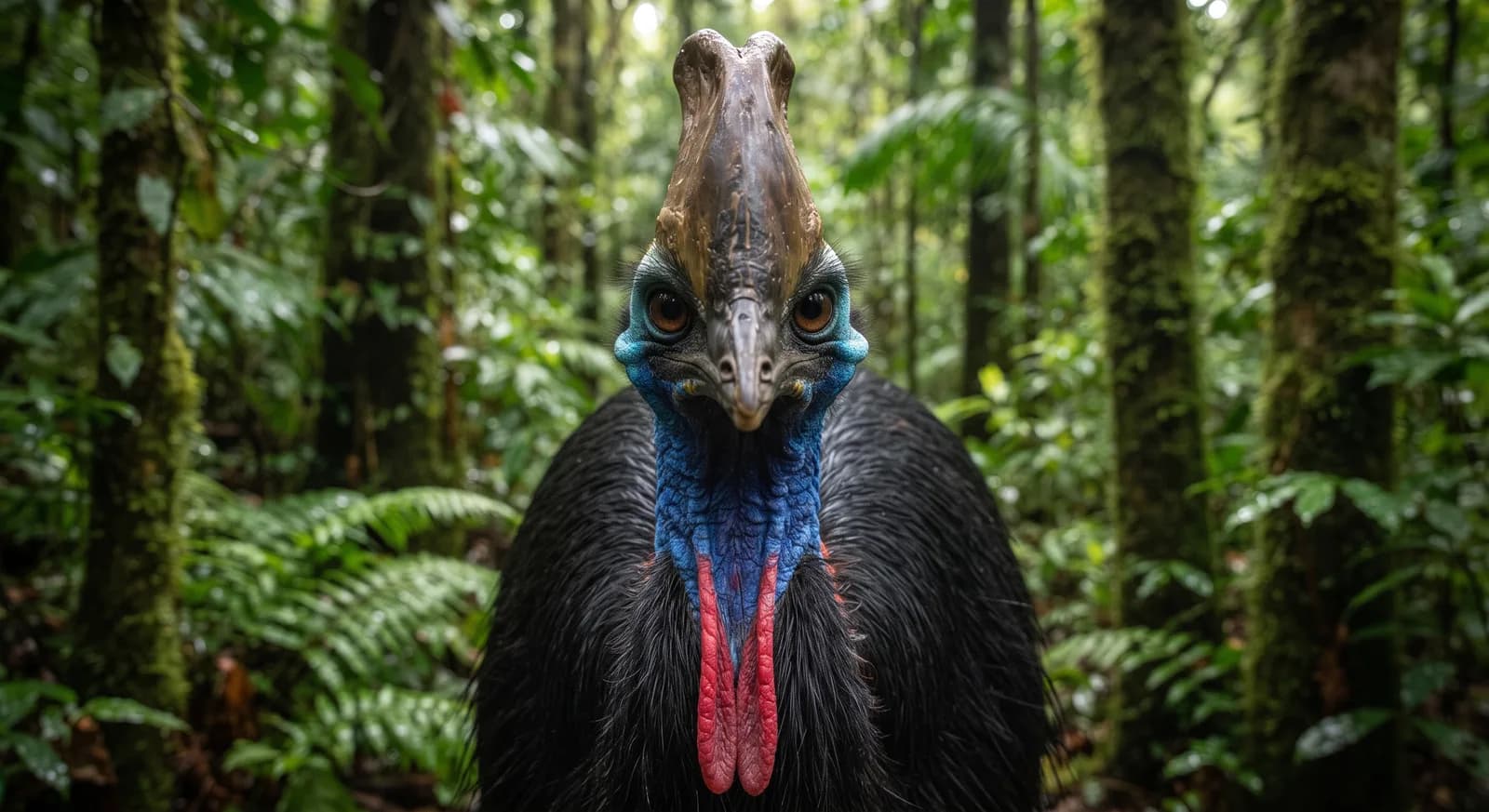
 Endangered
Southern Cassowary
Casuarius casuarius
Birds · Psittaciformes · Psittaculidae
Trichoglossus haematodus
The species is abundant and widely distributed; it faces no significant short-term risk.
Unlike most parrots it cannot crack seeds: its tongue is brush-tipped, with specialised papillae for lapping nectar and pollen from flowers.
Weight
75 g – 167 g
Size
25 cm – 30 cm
Life expectancy
20 years
Diet
Nectarivore
Feeds mainly on flower nectar.
Activity
Diurnal
Active mainly during the day.
Social structure
Colony
Lives in large concentrations, often for breeding reasons.
Sources consulted: AnAge (genomics.senescence.info) · Northern Parrots · SeaWorld/Busch Gardens · The Animal Facts · Birds in Backyards · JRank Articles · Rain Forest Reports · PMC (genome study)
Best time: All year round in northern and eastern Australia and in New Guinea, by day; it gathers noisily in flowering eucalypts and other blossoming trees.
The pins mark the parks where its presence is documented.
Parks and dive sites where this species has been documented — showing 10 of 25.
Other species in the catalogue with the most in common with Coconut Lorikeet — same habitat, park, country, tags or family.
Based on what we already know about coconut lorikeet.