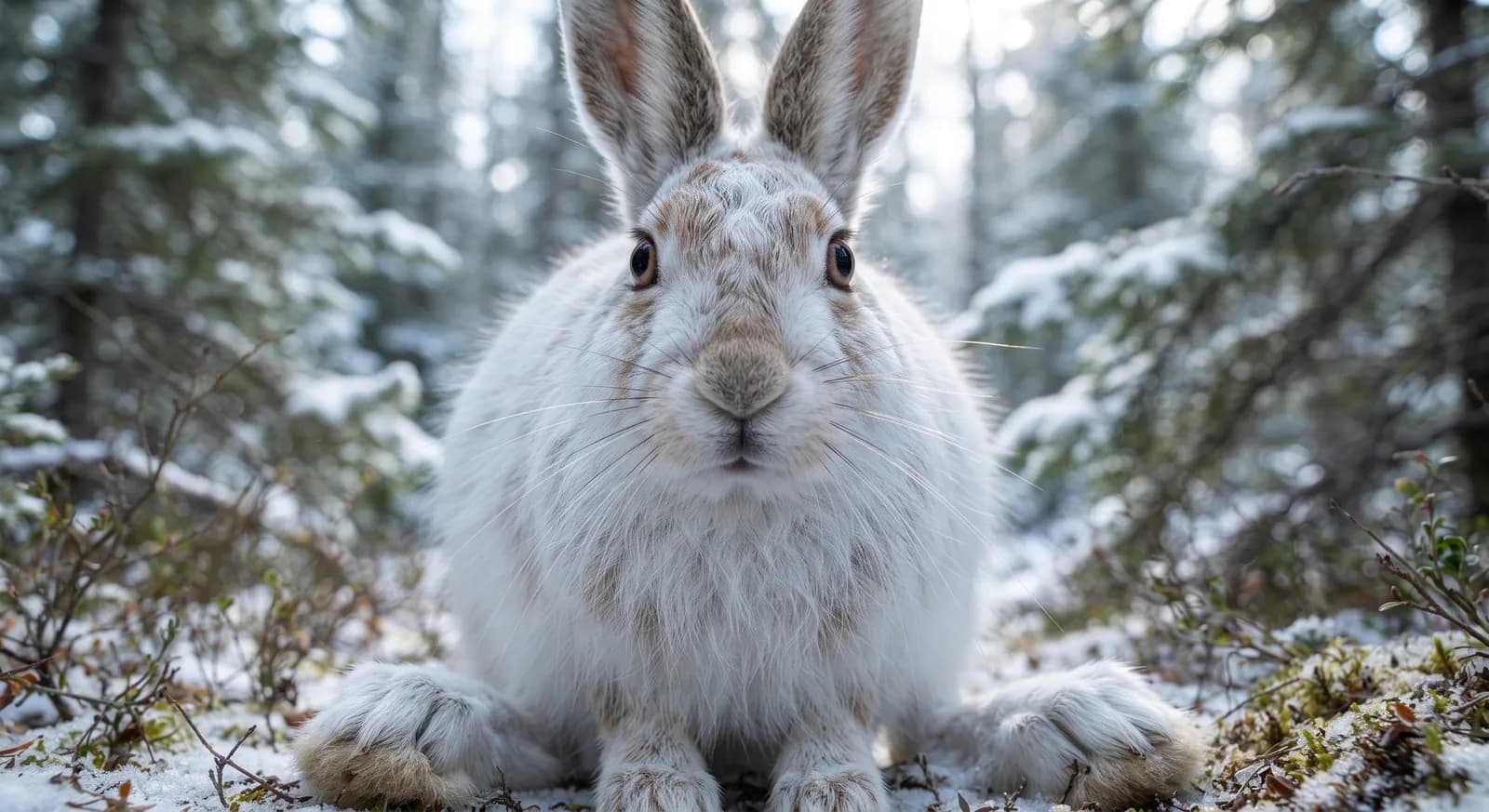
Least Concern
Black-tailed Jackrabbit
Lepus californicus
One of the 3 rabbits on WAnimals
Mammals · Lagomorpha · Leporidae
Sylvilagus floridanus
The species is abundant and widely distributed; it faces no significant short-term risk.
For all its extraordinary fecundity — as many as 6 litters a year — barely 15% of its young survive their first year in the wild. It is polyandrous: a female may mate with several males in a season.
Weight
800 g – 1.8 kg
Size
39.5 cm – 47.7 cm
Life expectancy
1 year
Diet
Herbivore
Feeds mainly on plants.
Activity
Crepuscular
Active mainly at dawn and dusk.
Social structure
Solitary
Lives and hunts alone, joining others only to breed.
Sighting difficulty
Easy
Sources consulted: Virginia DWR; Animalia.bio; National Geographic Kids; Sciencing; PMC; Iowa DNR; Ontario Wildlife Federation fact sheet; Animal Diversity Web; BioKIDS
Best time: All year round, at dawn and dusk, along field edges, hedges and open ground in North America.
Parks and dive sites where this species has been documented — showing 10 of 55.
Other species in the catalogue with the most in common with Eastern Cottontail — same habitat, park, country, tags or family.
Based on what we already know about eastern cottontail.
Share an experience, a fun fact or a tip for seeing the eastern cottontail.
Be the first to comment.
The pins mark the parks where its presence is documented.