Skip to content
WAnimals
  • Map
  • Species
  • Parks
  • Diving
Log inCreate account
WAnimals

The guide for travellers and animal lovers: discover, plan and share your wild adventures around the world.

Discover wildlife

  • Species
  • Ecosystems
  • Glossary
  • Tags

Explore places

  • Map
  • Countries
  • Parks
  • Diving

Plan experiences

  • Guides

Learn

  • Blog

Resources

  • Help centre
  • Contact
  • Install the app

Follow us

Account

  • Log in
  • Create account

© 2026 WAnimals. All rights reserved.

About usHow we build our profilesTerms of servicePrivacyLegal notice
MapSpeciesParksDiving
  1. Home
  2. Species
  3. Horseshoe Whip Snake

One of the 10 colubrid snakes on WAnimals
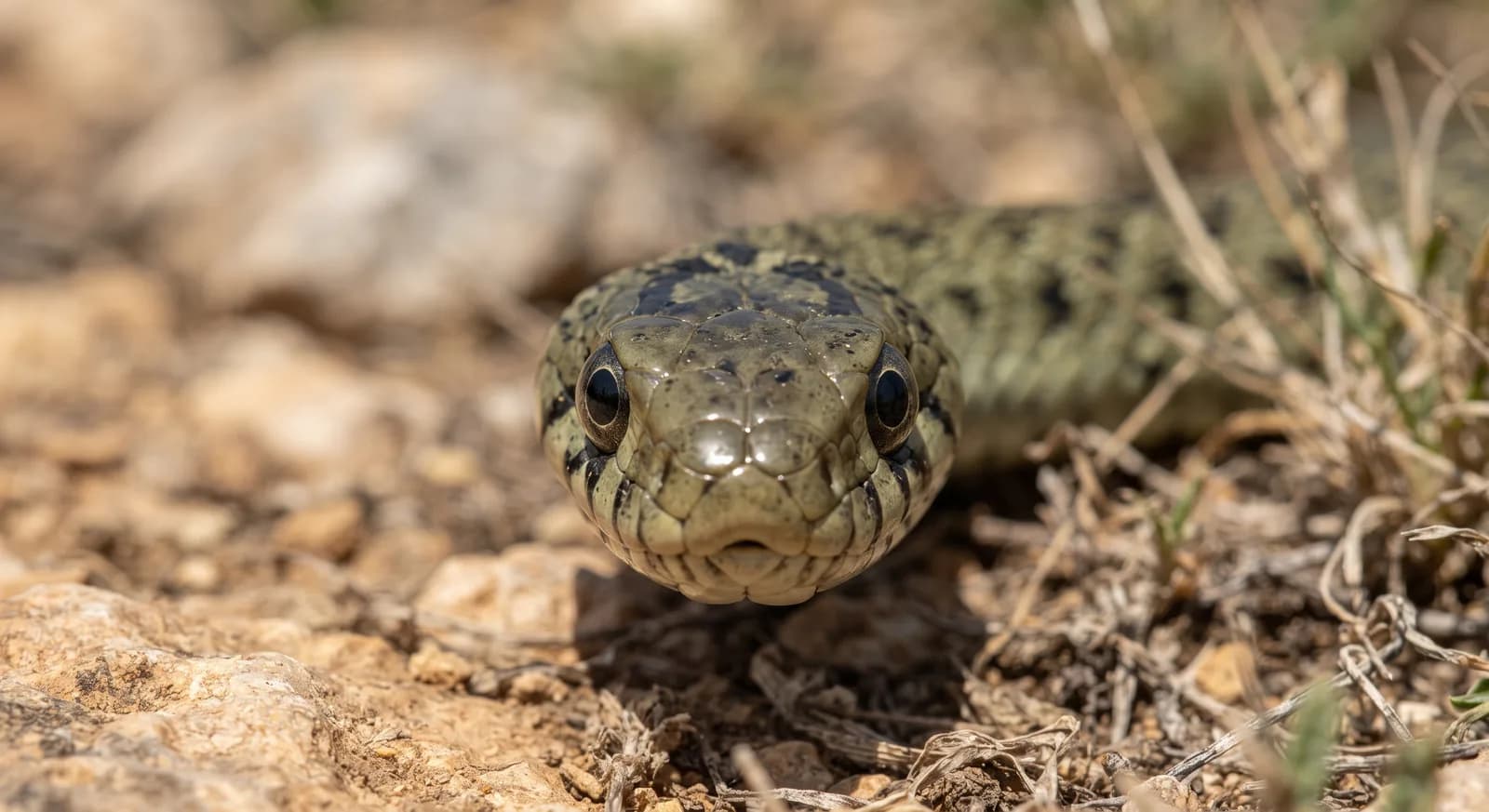
Horseshoe Whip Snake (Hemorrhois hippocrepis)

Reptiles · Squamata · Colubridae

Horseshoe Whip Snake

Hemorrhois hippocrepis

Least Concern

The species is abundant and widely distributed; it faces no significant short-term risk.

Spotted something wrong?

The horseshoe whip snake is a snake of the family Colubridae. These snakes have a slender build, a pointed head clearly set off from the body and a long, thin tail. It is a very agile snake that can climb shrubs, trees and rock faces with astonishing ease in search of prey or birds' nests. The horseshoe whip snake can measure from a metre — on average — up to 156 cm. In the Balearics a tendency to gigantism has been detected in this species, with some exceptional animals reaching almost two metres. This snake shows a barely visible yellow ground colour, since both the head and the back bear black blotches that together give the reptile a dark, almost black tone. On the back of the head one of these blotches frequently takes the form of a horseshoe encircling the nape. It is to this feature that it owes its common name.

Size

1 m – 1.8 m

Life expectancy

15 years
Diet

Carnivore

Feeds mainly on other animals.

Activity

Diurnal

Active mainly during the day.

Social structure

Solitary

Lives and hunts alone, joining others only to breed.

Sighting difficulty

Easy

Temperate forestMountainGrassland
8countries60parks17same family

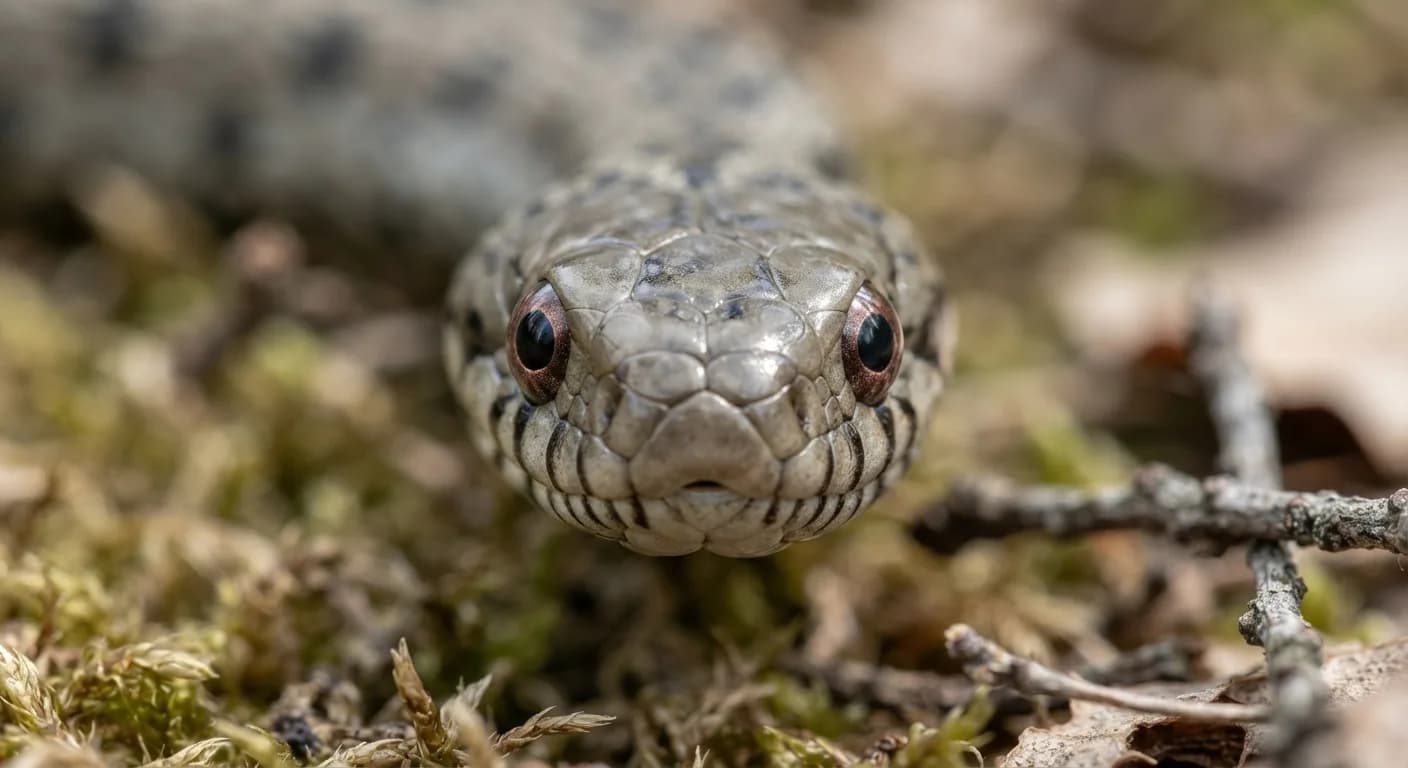
AI-generated images: illustrations, not photographs.

Fun facts

  • GeneralIt can be identified by the horseshoe mark on its nape; it is invasive on Ibiza and Formentera.
  • It reached Ibiza and Formentera inside century-old olive trees imported from the mainland for landscaping: the snakes travelled in the root balls, and since being detected in 2003 they have spread across almost all of Ibiza.
  • On the Pityusic Islands it is decimating the Ibiza wall lizard, a Balearic endemic that evolved without land predators and has no defences against it: one of the most urgent conservation problems in the Balearics.
  • It is a fast, climbing snake that goes up walls and trees with ease, and bites readily if handled, though it has no venom dangerous to people.

Life cycle and biology

Skeleton type
Vertebrate - internal bony skeleton (reptile)
Habitat and environment
Mediterranean scrub, rocky ground, dry-stone walls, olive groves and farmland of the Iberian Peninsula and the Maghreb
Size at birth
About 25-30 cm on hatching
Sexual maturity
3 years
Gestation / incubation
60 days of incubation
Litter / clutch size
8 eggs

Sources consulted: https://es.wikipedia.org/wiki/Hemorrhois_hippocrepis

Where to find it

Best time: From March to October, by day, on sunny slopes with stone walls and Mediterranean scrub in southern Iberia.

Loading map…

Where to see it

Parks and dive sites where this species has been documented — showing 10 of 60.

Related species

Other species in the catalogue with the most in common with Horseshoe Whip Snake — same habitat, park, country, tags or family.

Same taxonomic family

Keep exploring

Based on what we already know about horseshoe whip snake.

Comments

Share an experience, a fun fact or a tip for seeing the horseshoe whip snake.

Be the first to comment.

See full glossary
This page in other languages: Español · Deutsch · Français · Português · Italiano

The pins mark the parks where its presence is documented.

See its range on the interactive map→
Doñana National ParkSpain
Picos de EuropaSpain
Ordesa y Monte PerdidoSpain
Aiguestortes i Estany de Sant MauriciSpain
Sierra de las NievesSpain
Peneda-GeresPortugal
IchkeulTunisia
ToubkalMorocco
Majjistral ParkMalta
CabañerosSpain
See all 60 parks
Smooth SnakeLeast Concern

Smooth Snake

Coronella austriaca

Aesculapian SnakeLeast Concern

Aesculapian Snake

Zamenis longissimus

Near Threatened

Four-lined Snake

Elaphe quatuorlineata

Least Concern

Viperine Snake

Natrix maura

Least Concern

Grass Snake

Natrix natrix

Least Concern

California Kingsnake

Lampropeltis californiae

CountriesSpain
ParksDoñana National ParkSpain
TagsCarnivore
Carnivore
Diurnal
Solitary
Reptile
Temperate forest
Mountain
Grassland
Spain
Portugal
Morocco
Algeria
Italy
Malta
Tunisia
Gibraltar