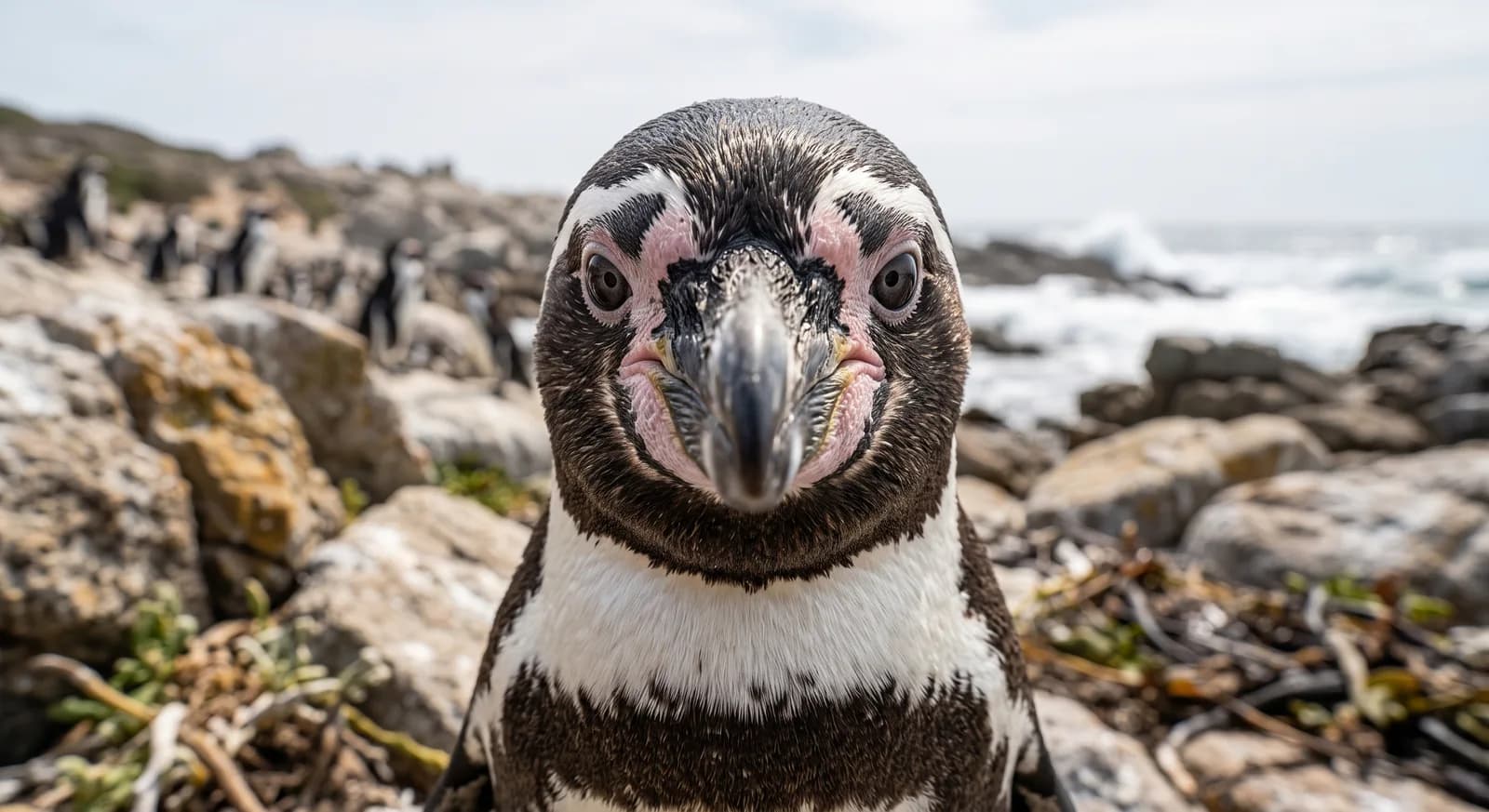
One of the 15 penguins on WAnimals
Birds · Sphenisciformes · Spheniscidae
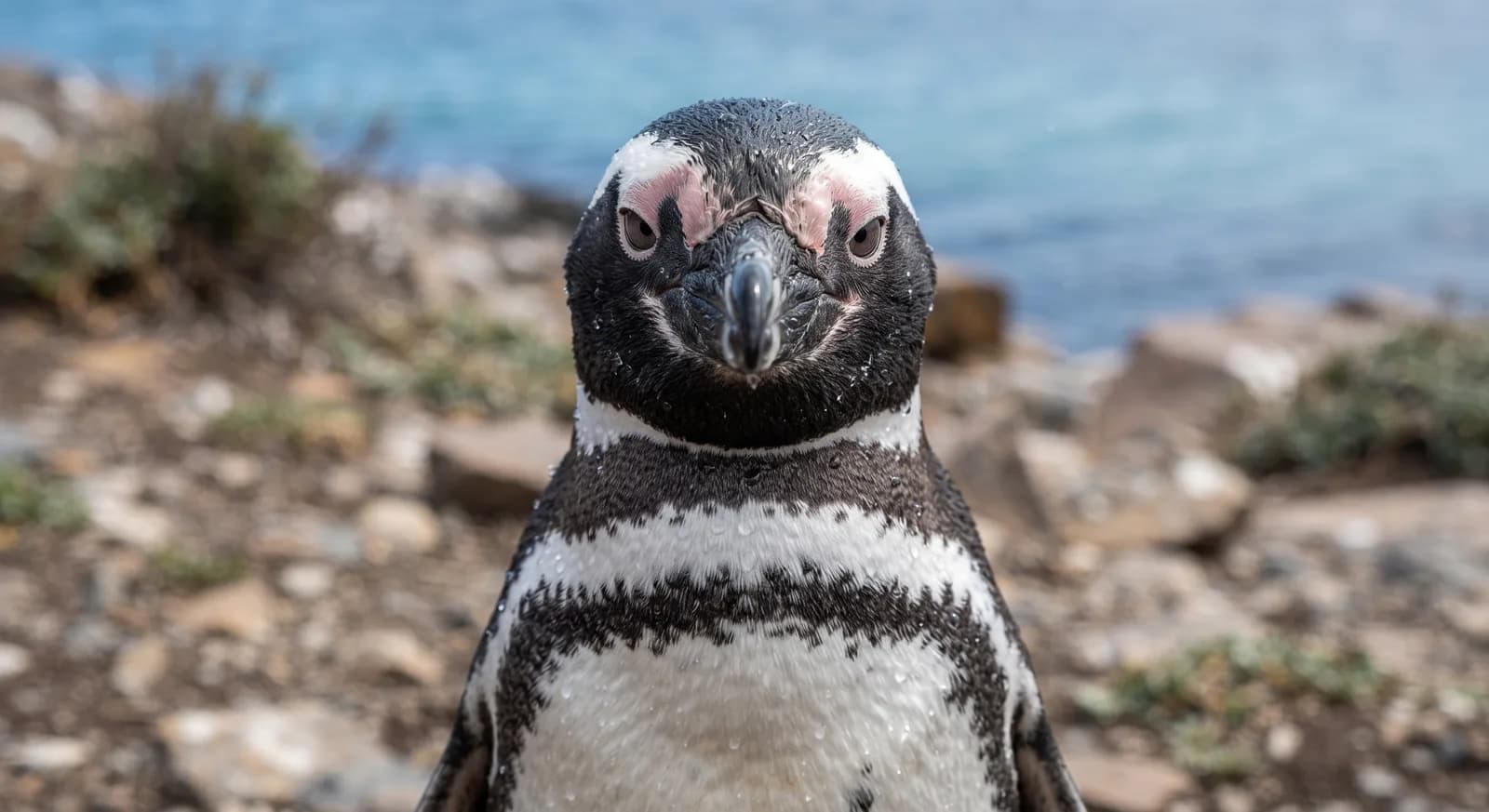
Magellanic Penguin
Spheniscus magellanicus
Least Concern
The species is abundant and widely distributed; it faces no significant short-term risk.
The Magellanic penguin, also called the Patagonian penguin, is a bird of the penguin family (Spheniscidae) that nests in the Falkland Islands and on the coasts and islands of Patagonia in Argentina and Chile, migrating north in winter and reaching the milder waters of Uruguay and south-eastern Brazil, and occurring as a vagrant in Australia, Peru, Colombia and other South Atlantic islands. It is the most numerous member of the genus Spheniscus. The other species in this genus are the African penguin, the Humboldt penguin and the Galápagos penguin.
Weight
3.8 kg – 4.5 kg
Size
61 cm – 76 cm
Life expectancy