Skip to content
WAnimals
  • Map
  • Species
  • Parks
  • Diving
Log inCreate account
WAnimals

The guide for travellers and animal lovers: discover, plan and share your wild adventures around the world.

Discover wildlife

  • Species
  • Ecosystems
  • Glossary
  • Tags

Explore places

  • Map
  • Countries
  • Parks
  • Diving

Plan experiences

  • Guides

Learn

  • Blog

Resources

  • Help centre
  • Contact
  • Install the app

Follow us

Account

  • Log in
  • Create account

© 2026 WAnimals. All rights reserved.

About usHow we build our profilesTerms of servicePrivacyLegal notice
MapSpeciesParksDiving
  1. Home
  2. Species
  3. Mozambique Spitting Cobra

One of the 7 cobras on WAnimals
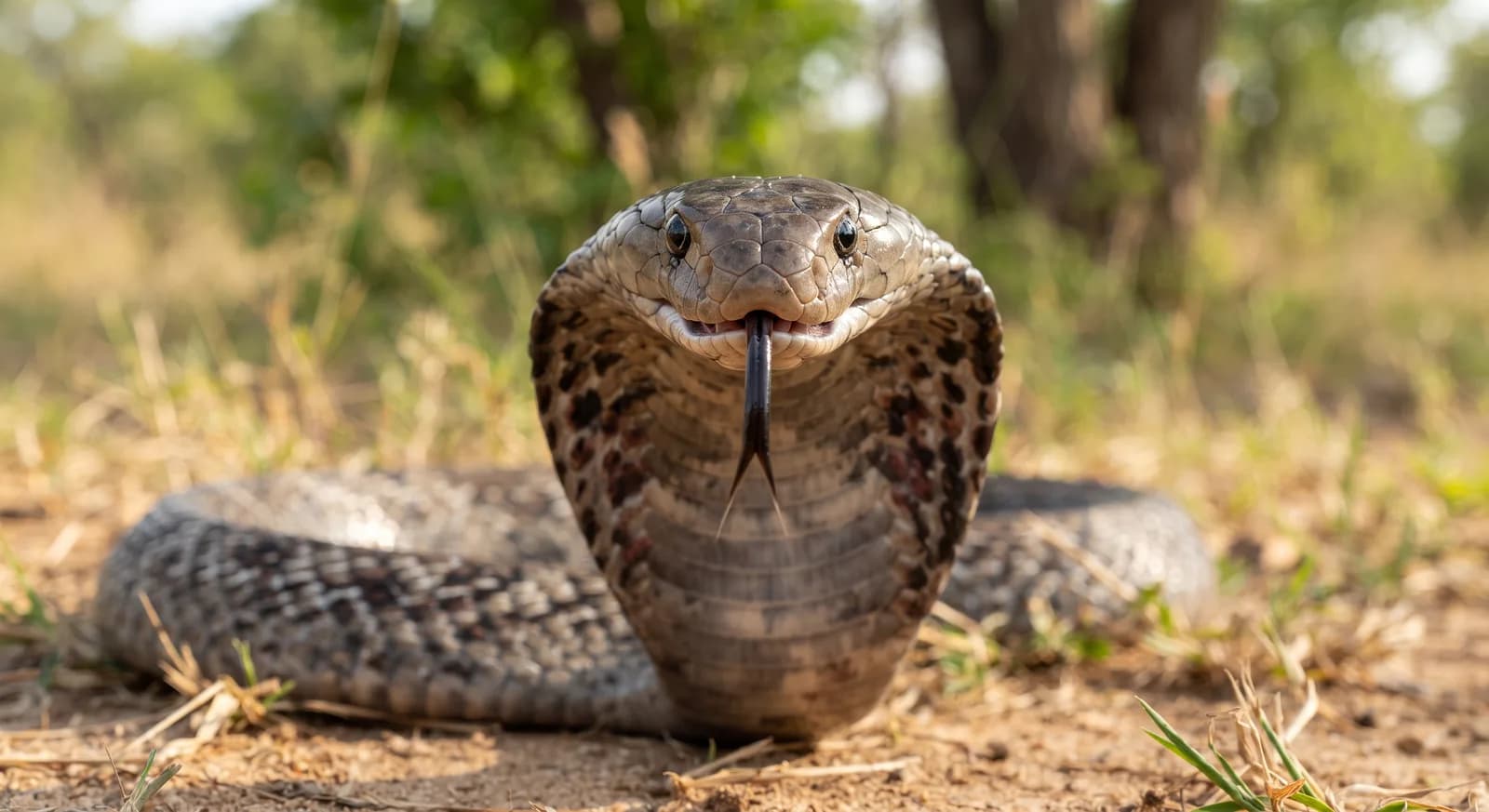
Mozambique Spitting Cobra (Naja mossambica)

Reptiles · Squamata · Elapidae

Mozambique Spitting Cobra

Naja mossambica

Least Concern

The species is abundant and widely distributed; it faces no significant short-term risk.

Spotted something wrong?

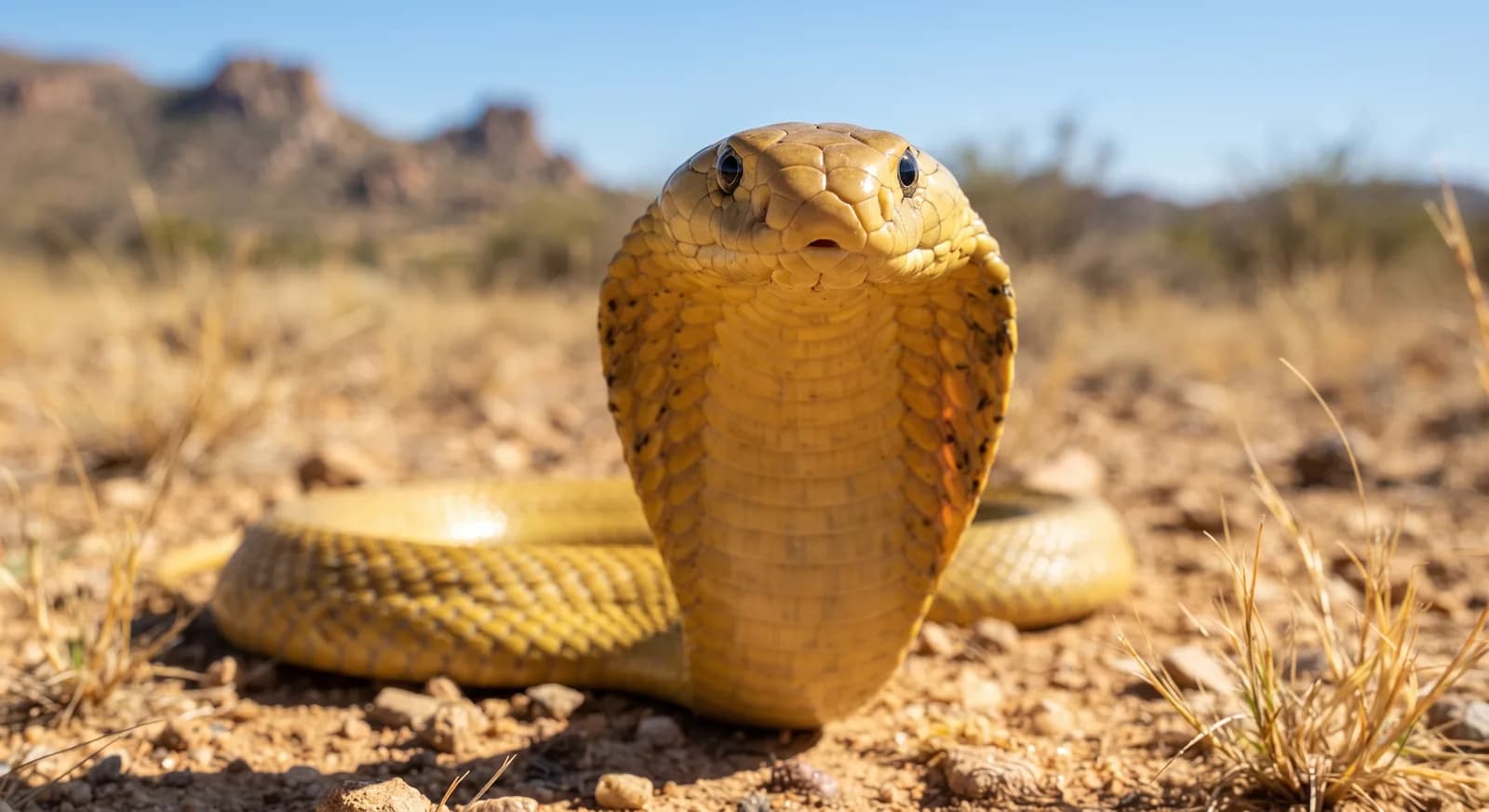
The Mozambique spitting cobra is one of the snakes of greatest medical importance in southern Africa, not for its lethality but for how often it causes accidents: it comes into houses at night looking for rodents and spits venom into the eyes with extraordinary accuracy, causing serious eye injuries.

Weight

8.8 kg on average

Size

90 cm – 1.5 m

Life expectancy

20 years
Diet

Carnivore

Feeds mainly on other animals.

Activity

Nocturnal

Active mainly at night.

Social structure

Solitary

Lives and hunts alone, joining others only to breed.

Sighting difficulty

Easy

SavannaTemperate forestGrassland
10countries33parks17same family

AI-generated images: illustrations, not photographs.

Fun facts

  • GeneralIt sprays venom at the eyes from as far as 3 m, and can do so several times over.
  • It spits venom into the eyes from more than two metres with remarkable accuracy, aiming specifically at the face and following the movement of the aggressor's head.
  • It is the main cause of serious snakebites in several regions of southern Africa, above all because it enters rural homes at night following the rodents and bites people while they sleep.
  • If spitting does not work, it plays dead: it writhes, rolls onto its back and lies with its mouth open and its tongue hanging out, a behaviour very few snakes use.

Life cycle and biology

Skeleton type
Vertebrate - internal bony skeleton (reptile)
Habitat and environment
Savannah, scrub, open woodland and inhabited areas of south-eastern Africa
Sexual maturity
3 years
Gestation / incubation
65 days of incubation
Litter / clutch size
12 eggs

Sources consulted: https://www.iucnredlist.org/ | https://animaldiversity.org/ | https://es.wikipedia.org/

Where to find it

Loading map…

The pins mark the parks where its presence is documented.

Where to see it

Parks and dive sites where this species has been documented — showing 10 of 33.

Related species

Other species in the catalogue with the most in common with Mozambique Spitting Cobra — same habitat, park, country, tags or family.

Same taxonomic family
Shares a park

Keep exploring

Based on what we already know about mozambique spitting cobra.

Comments

Share an experience, a fun fact or a tip for seeing the mozambique spitting cobra.

Be the first to comment.

See full glossary
This page in other languages: Español · Deutsch · Français · Português · Italiano
See its range on the interactive map→
Kruger National ParkSouth Africa
KgalagadiSouth Africa
Moremi (Okavango Delta)Botswana
ChobeBotswana
EtoshaNamibia
HwangeZimbabwe
South LuangwaZambia
GorongosaMozambique
Liwonde National ParkMalawi
Nyerere (formerly Selous)Tanzania
See all 33 parks
Least Concern

Black-necked Spitting Cobra

Naja nigricollis

Cape CobraLeast Concern

Cape Cobra

Naja nivea

Green MambaLeast Concern

Green Mamba

Dendroaspis angusticeps

Black MambaLeast Concern

Black Mamba

Dendroaspis polylepis

Egyptian CobraLeast Concern

Egyptian Cobra

Naja haje

Least Concern

Thick-tailed Greater Galago

Otolemur crassicaudatus

CountriesSouth Africa
ParksKruger National ParkSouth Africa
TagsCarnivore
Carnivore
Nocturnal
Solitary
Reptile
Savanna
Temperate forest
Grassland
South Africa
Botswana
Malawi
Mozambique
Namibia
Tanzania
Angola
Botswana
Eswatini
Malawi
Mozambique
Namibia
South Africa
Tanzania
Zambia
Zimbabwe