Skip to content
WAnimals
  • Map
  • Species
  • Parks
  • Diving
Log inCreate account
WAnimals

The guide for travellers and animal lovers: discover, plan and share your wild adventures around the world.

Discover wildlife

  • Species
  • Ecosystems
  • Glossary
  • Tags

Explore places

  • Map
  • Countries
  • Parks
  • Diving

Plan experiences

  • Guides

Learn

  • Blog

Resources

  • Help centre
  • Contact
  • Install the app

Follow us

Account

  • Log in
  • Create account

© 2026 WAnimals. All rights reserved.

About usHow we build our profilesTerms of servicePrivacyLegal notice
MapSpeciesParksDiving
  1. Home
  2. Species
  3. Cape Cobra

One of the 7 cobras on WAnimals
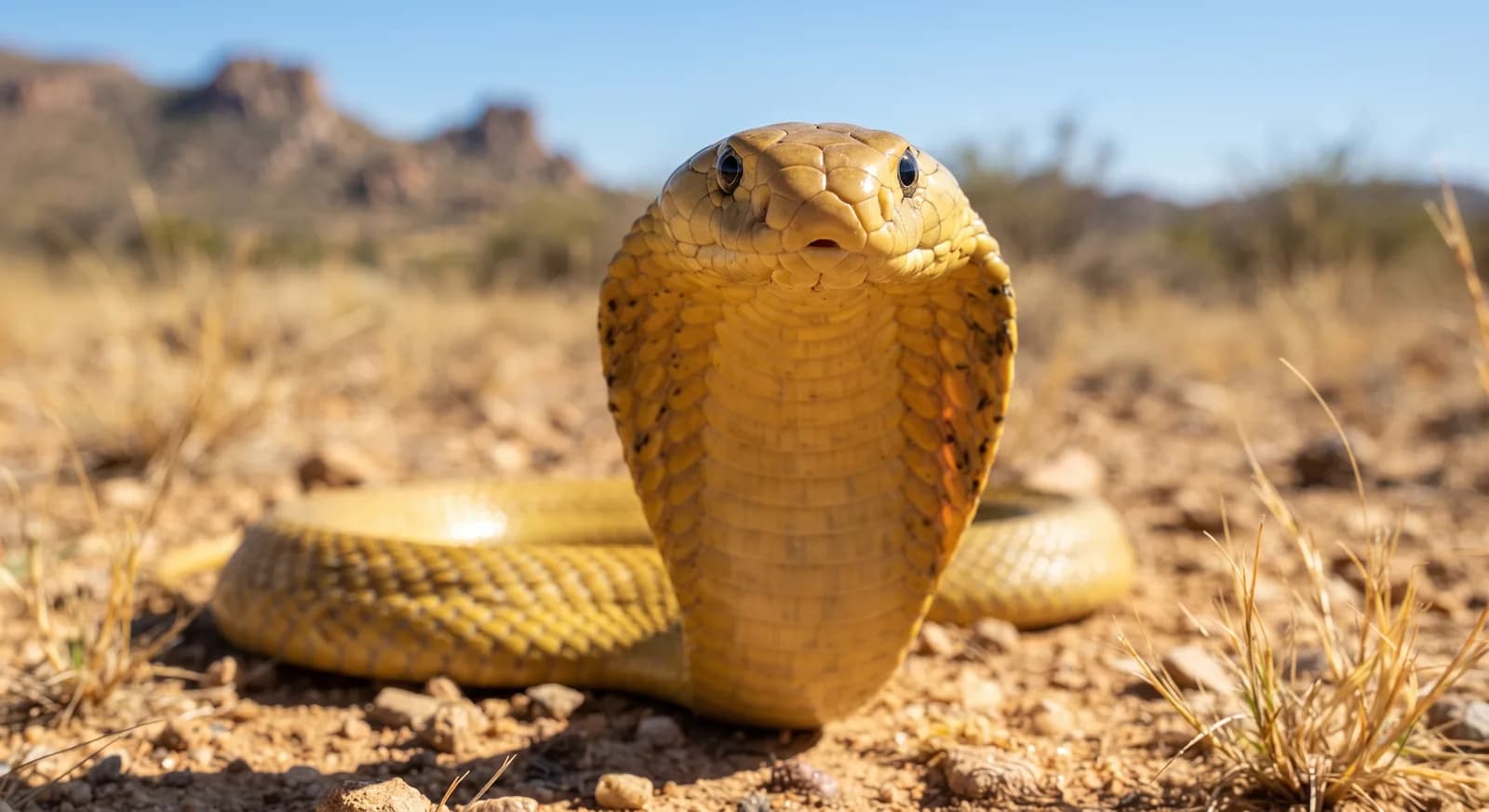
Cape Cobra (Naja nivea)

Reptiles · Squamata · Elapidae

Cape Cobra

Naja nivea

Least Concern

The species is abundant and widely distributed; it faces no significant short-term risk.

Spotted something wrong?

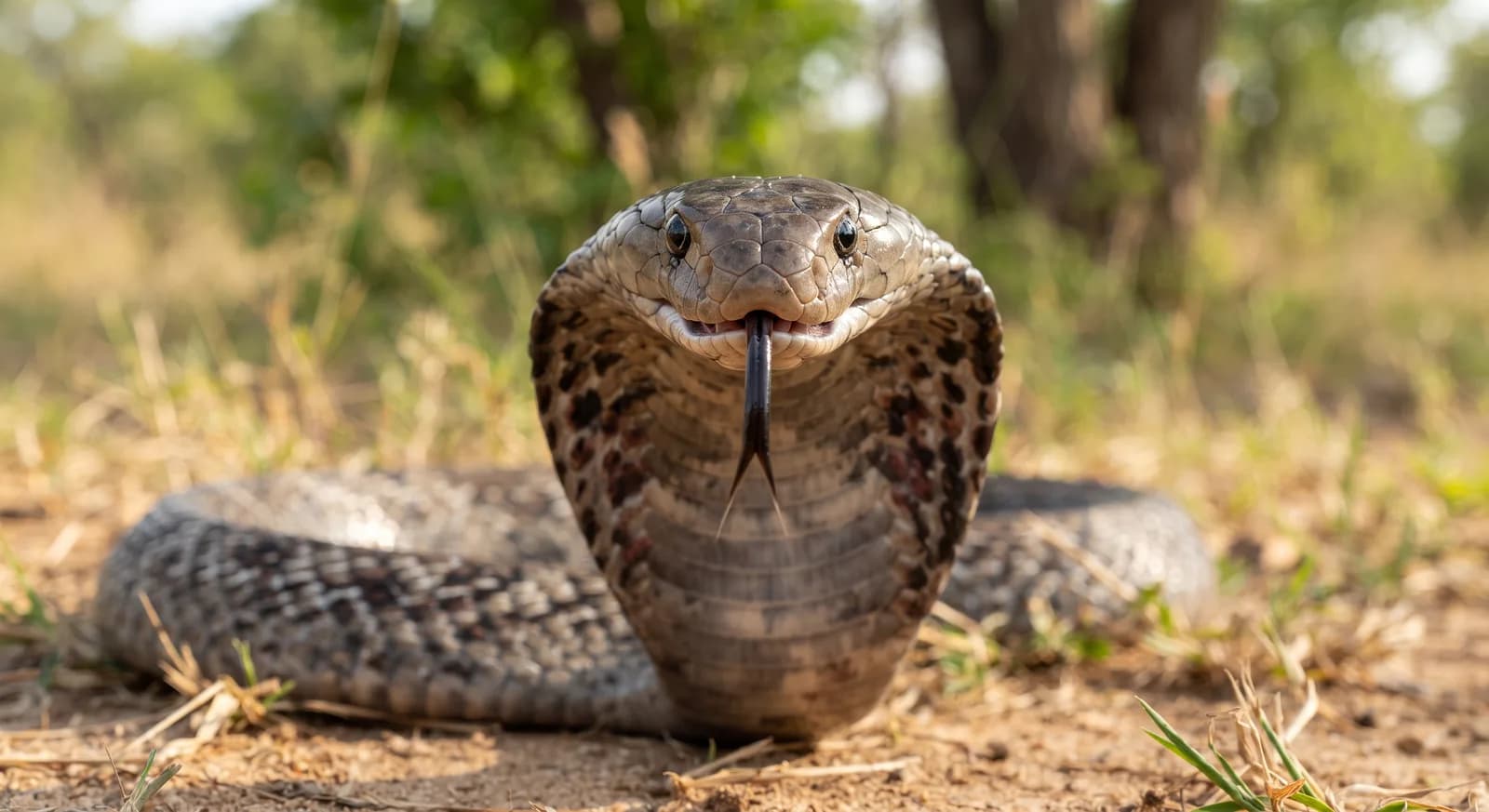
The Cape cobra is one of the most venomous snakes in Africa and the most variable in colour: within a single population there are yellow, golden, brown and almost black individuals. It lives in southern Africa, including farmland and the outskirts of towns, and spreads the hood characteristic of cobras when it feels threatened.

Size

1.2 m – 1.8 m

Life expectancy

20 years

Diet

Carnivore

Feeds mainly on other animals.
Activity

Diurnal

Active mainly during the day.

Social structure

Solitary

Lives and hunts alone, joining others only to breed.

Sighting difficulty

Easy

SavannaDesertGrassland
10countries16parks17same family

AI-generated images: illustrations, not photographs.

Fun facts

  • Its colouring varies so much within a single population that bright yellow animals and almost black ones may be siblings from the same clutch, which is disconcerting for anyone trying to identify it.
  • It is one of the few African snakes that habitually eat other snakes, including cobras of its own species.
  • It climbs trees to raid weaver nests, and in the sociable weaver colonies of the Kalahari it is a regular predator of those enormous communal nests.

Life cycle and biology

Skeleton type
Vertebrate - internal bony skeleton (reptile)
Habitat and environment
Fynbos, karoo, arid scrub, savannah and farmland of southern Africa
Size at birth
About 30-35 cm on hatching
Sexual maturity
3 years
Gestation / incubation
70 days of incubation
Litter / clutch size
15 eggs

Sources consulted: https://es.wikipedia.org/wiki/Naja_nivea

Where to find it

Best time: From September to April in south-western South Africa and Namibia, by day, in arid country and fynbos: it is one of the few cobras active in daylight.

Loading map…

The pins mark the parks where its presence is documented.

Where to see it

Parks and dive sites where this species has been documented — showing 10 of 16.

Related species

Other species in the catalogue with the most in common with Cape Cobra — same habitat, park, country, tags or family.

Same taxonomic family
Shares a park
Shares a park

Keep exploring

Based on what we already know about cape cobra.

Comments

Share an experience, a fun fact or a tip for seeing the cape cobra.

Be the first to comment.

See full glossary
This page in other languages: Español · Deutsch · Français · Português · Italiano
See its range on the interactive map→
Table MountainSouth Africa
KgalagadiSouth Africa
EtoshaNamibia
Namib-NaukluftNamibia
Fish River CanyonNamibia
Central Kalahari Game ReserveBotswana
KarooSouth Africa
Augrabies FallsSouth Africa
Ai-Ais RichtersveldSouth Africa
Mountain ZebraSouth Africa
See all 16 parks
Least Concern

Black-necked Spitting Cobra

Naja nigricollis

Mozambique Spitting CobraLeast Concern

Mozambique Spitting Cobra

Naja mossambica

Black MambaLeast Concern

Black Mamba

Dendroaspis polylepis

Egyptian CobraLeast Concern

Egyptian Cobra

Naja haje

Least Concern

Helmeted Turtle

Pelomedusa subrufa

Puff AdderLeast Concern

Puff Adder

Bitis arietans

CountriesSouth Africa
ParksTable MountainSouth Africa
TagsCarnivore
Carnivore
Diurnal
Solitary
Reptile
Savanna
Desert
Grassland
South Africa
Namibia
Botswana
Angola
Eswatini
Lesotho
Angola
Botswana
Eswatini
Lesotho
Malawi
Mozambique
Namibia
South Africa
Zambia
Zimbabwe