Skip to content
WAnimals
  • Map
  • Species
  • Parks
  • Diving
Log inCreate account
WAnimals

The guide for travellers and animal lovers: discover, plan and share your wild adventures around the world.

Discover wildlife

  • Species
  • Ecosystems
  • Glossary
  • Tags

Explore places

  • Map
  • Countries
  • Parks
  • Diving

Plan experiences

  • Guides

Learn

  • Blog

Resources

  • Help centre
  • Contact
  • Install the app

Follow us

Account

  • Log in
  • Create account

© 2026 WAnimals. All rights reserved.

About usHow we build our profilesTerms of servicePrivacyLegal notice
MapSpeciesParksDiving
  1. Home
  2. Species
  3. Egyptian Cobra

One of the 7 cobras on WAnimals
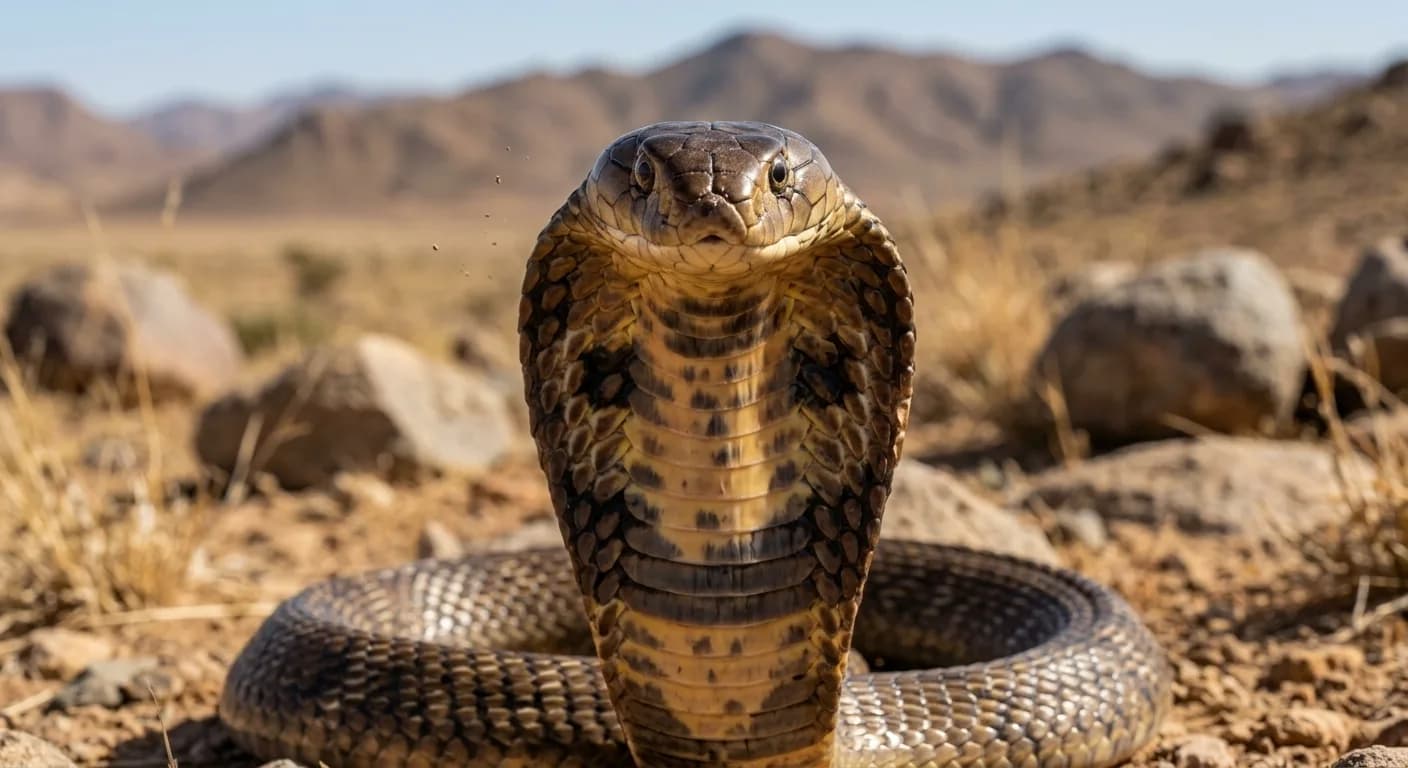
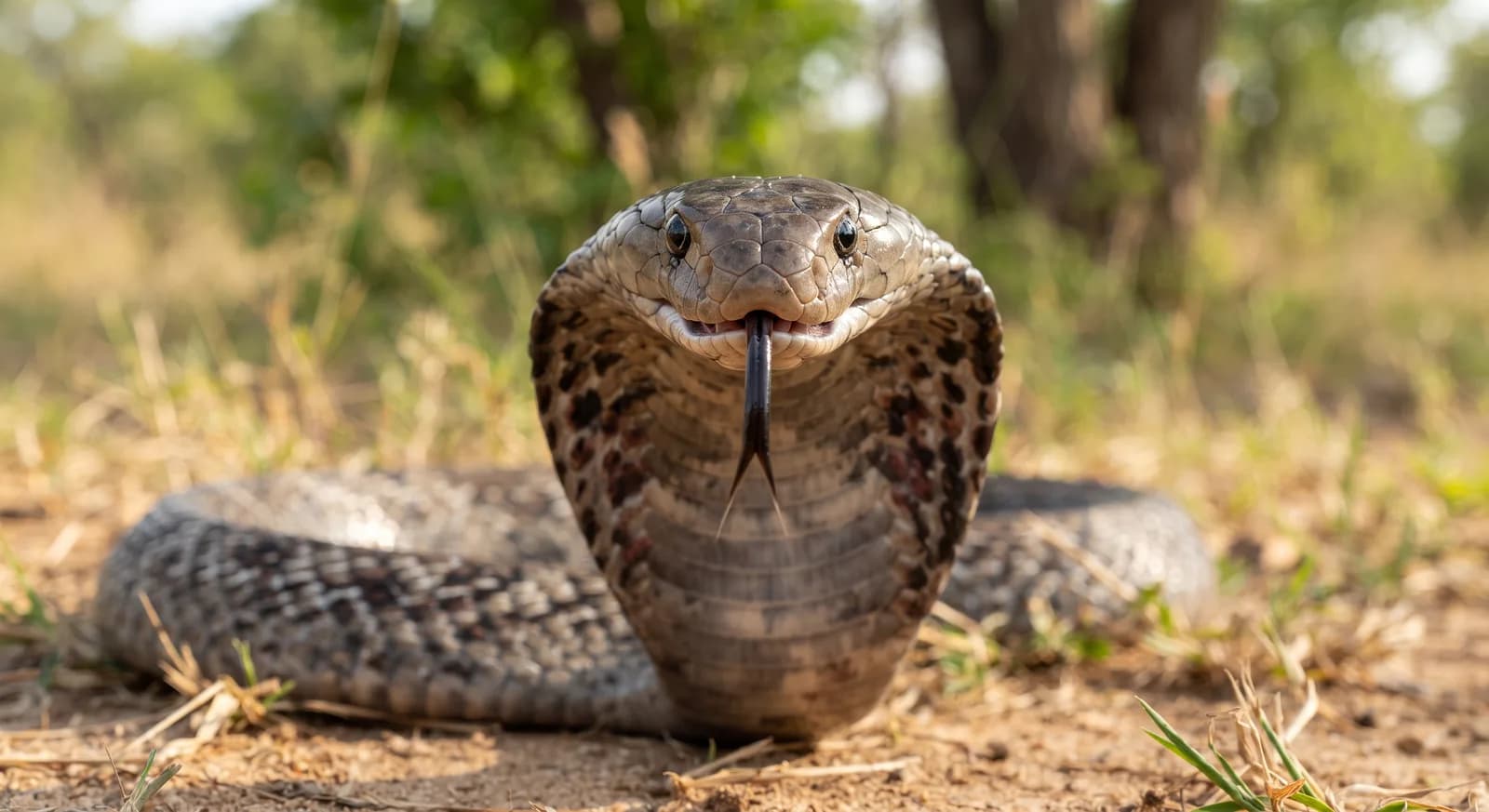
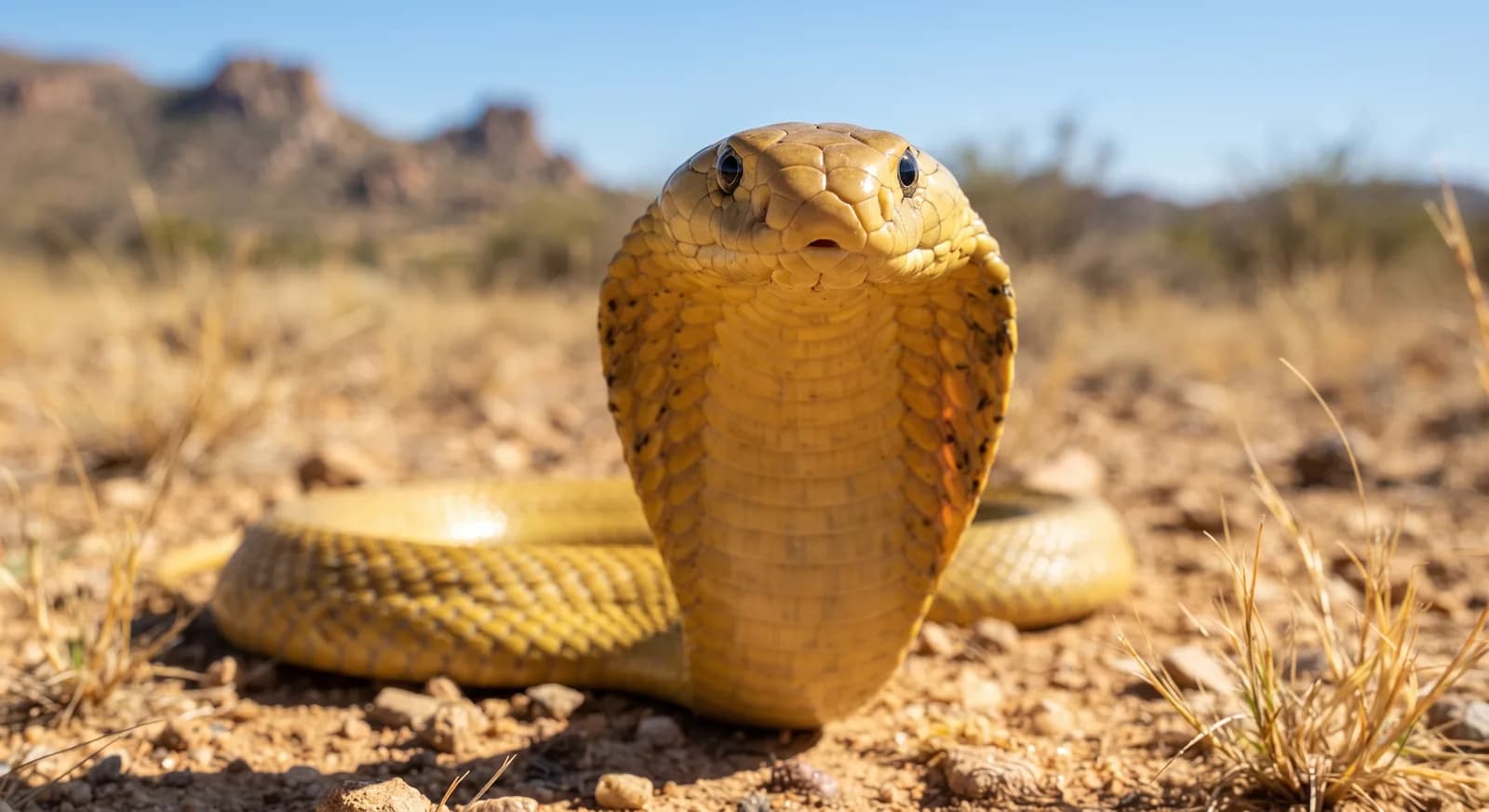
Egyptian Cobra (Naja haje)

Reptiles · Squamata · Elapidae

Egyptian Cobra

Naja haje

Least Concern

The species is abundant and widely distributed; it faces no significant short-term risk.

Spotted something wrong?

The Egyptian cobra is one of the largest snakes in Africa and one of the most laden with symbolism in history: it is the uraeus, the rearing cobra that crowns the foreheads of the pharaohs as an emblem of royalty and divine protection. It is nocturnal, shelters in ruins and burrows and hunts toads, birds and other snakes.

Weight

6.8 kg on average

Size

1.4 m – 2.5 m

Life expectancy

25 years
Diet

Carnivore

Feeds mainly on other animals.

Activity

Nocturnal

Active mainly at night.

Social structure

Solitary

Lives and hunts alone, joining others only to breed.

Sighting difficulty

Easy

SavannaDesertGrassland
68countries36parks17same family

AI-generated images: illustrations, not photographs.

Fun facts

  • GeneralIt is identified with the asp of ancient Egypt and with the death of Cleopatra.
  • It is the uraeus of Ancient Egypt: the rearing cobra that crowns the foreheads of the pharaohs, symbol of the goddess Wadjet and of the protection of royalty, present on funerary masks and crowns for three millennia.
  • Tradition attributes the death of Cleopatra to an Egyptian cobra, although modern historians dispute both the method and the species: an asp two and a half metres long would be hard to smuggle in hidden in a basket of figs.
  • It is one of the snakes routinely used by charmers in North Africa, who take advantage of its tendency to rear up and spread its hood in response to movement.

Life cycle and biology

Skeleton type
Vertebrate - internal bony skeleton (reptile)
Habitat and environment
Dry savannah, semi-desert, farmland, oases and ruins of northern and eastern Africa and Arabia
Sexual maturity
3 years
Gestation / incubation
60 days of incubation
Litter / clutch size
18 eggs

Sources consulted: https://www.iucnredlist.org/ | https://animaldiversity.org/ | https://es.wikipedia.org/

Where to find it

Loading map…

Where to see it

Parks and dive sites where this species has been documented — showing 10 of 36.

Related species

Other species in the catalogue with the most in common with Egyptian Cobra — same habitat, park, country, tags or family.

Same taxonomic family
Shares a park

Keep exploring

Based on what we already know about egyptian cobra.

Comments

Share an experience, a fun fact or a tip for seeing the egyptian cobra.

Be the first to comment.

See full glossary
This page in other languages: Español · Deutsch · Français · Português · Italiano

The pins mark the parks where its presence is documented.

See its range on the interactive map→
ComoeCôte d’Ivoire
MoleGhana
KakumGhana
TaiCôte d’Ivoire
Niokolo-KobaSenegal
W National ParkNiger
ZakoumaChad
IchkeulTunisia
Banc d'ArguinMauritania
Tassili n'Ajjer National ParkAlgeria
See all 36 parks
Least Concern

Black-necked Spitting Cobra

Naja nigricollis

Black MambaLeast Concern

Black Mamba

Dendroaspis polylepis

Least Concern

Common Krait

Bungarus caeruleus

Mozambique Spitting CobraLeast Concern

Mozambique Spitting Cobra

Naja mossambica

Cape CobraLeast Concern

Cape Cobra

Naja nivea

Least Concern

Little Owl

Athene noctua

CountriesAlgeria
ParksComoeCôte d’Ivoire
TagsCarnivore
Carnivore
Nocturnal
Solitary
Reptile
Savanna
Desert
Grassland

Africa48

Asia20

Algeria
Chad
Egypt
Ethiopia
Tunisia
Côte d’Ivoire
Algeria
Angola
Benin
Botswana
Burkina Faso
Burundi
Cameroon
Central African Republic
Chad
Côte d’Ivoire
Democratic Republic of the Congo
Djibouti
Egypt
Equatorial Guinea
Eritrea
Eswatini
Ethiopia
Gabon
Gambia
Ghana
Guinea
Guinea-Bissau
Kenya
Lesotho
Liberia
Libya
Malawi
Mali
Mauritania
Morocco
Mozambique
Namibia
Niger
Nigeria
Republic of the Congo
Rwanda
Senegal
Sierra Leone
Somalia
South Africa
South Sudan
Sudan
Tanzania
Togo
Tunisia
Uganda
Zambia
Zimbabwe
Afghanistan
Armenia
Azerbaijan
Bahrain
Iran
Iraq
Israel
Jordan
Kuwait
Lebanon
Oman
Pakistan
Palestine
Qatar
Saudi Arabia
Syria
Türkiye
Turkmenistan
United Arab Emirates
Yemen