Skip to content
WAnimals
  • Map
  • Species
  • Parks
  • Diving
Log inCreate account
WAnimals

The guide for travellers and animal lovers: discover, plan and share your wild adventures around the world.

Discover wildlife

  • Species
  • Ecosystems
  • Glossary
  • Tags

Explore places

  • Map
  • Countries
  • Parks
  • Diving

Plan experiences

  • Guides

Learn

  • Blog

Resources

  • Help centre
  • Contact
  • Install the app

Follow us

Account

  • Log in
  • Create account

© 2026 WAnimals. All rights reserved.

About usHow we build our profilesTerms of servicePrivacyLegal notice
MapSpeciesParksDiving
  1. Home
  2. Species
  3. Pharaoh Ant

One of the 13 ants on WAnimals

Insects · Hymenoptera · Formicidae

Pharaoh Ant

Monomorium pharaonis

Not Evaluated

It has not yet been assessed against the IUCN criteria.

Spotted something wrong?

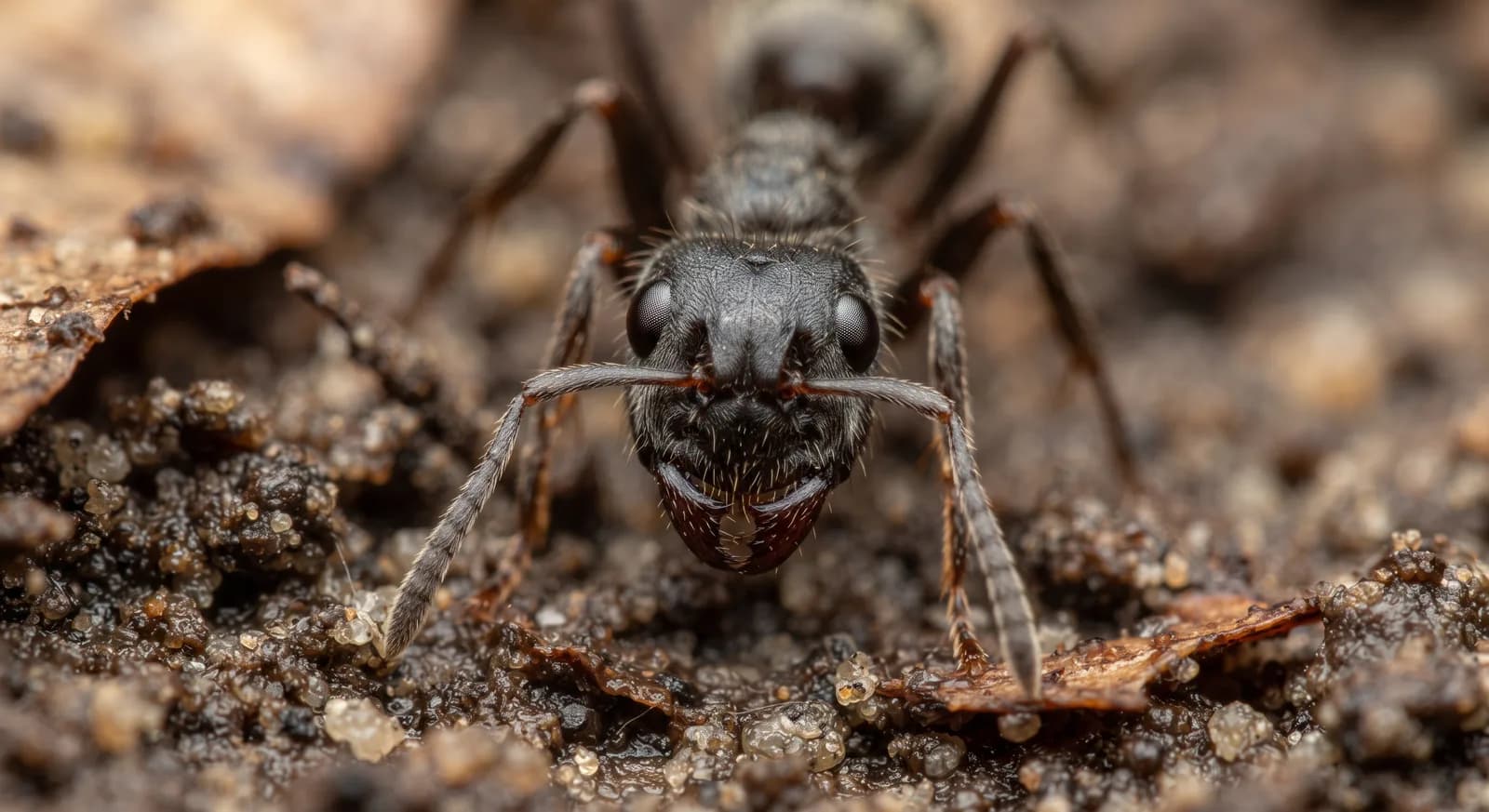
The pharaoh ant is a small ant (2 mm), yellow or light brown and almost transparent, notorious as a major indoor pest, especially in hospitals. It is a cryptogenic species and has reached practically every part of the world, including Europe, the Americas, Australasia and South-East Asia. It is a major pest in the United States, Australia and Europe.

Size

0.2 cm – 0.4 cm

Life expectancy

1 year

Diet

Omnivore

Combines animal and plant food depending on availability.

Activity

Nocturnal

Active mainly at night.

Social structure

Colony

Lives in large concentrations, often for breeding reasons.

Sighting difficulty

Unknown

Grassland
6countries10same family

Fun facts

  • GeneralIts nests hold several queens and split when sprayed, which makes the infestation worse.
  • That is why control relies solely on slow-acting baits that the workers carry back to the queens.
  • In hospitals it has been documented in surgical equipment, drips and patients' wounds, which makes it a health problem and not merely a domestic one.
  • It makes no nuptial flights: it mates inside the nest and spreads by budding, when a queen leaves with a few workers and brood to found a new nest. That is why a badly applied treatment scatters it instead of eliminating it.
  • It does not recognise its own nestmates, so neighbouring colonies do not fight and in effect form a supercolony.
  • It is a serious problem in hospitals: it seeks warmth and damp, gets under soiled dressings and carries bacteria from drains and rubbish into clean areas.
  • An established infestation can reach several million workers and hundreds of queens.

Life cycle and biology

Skeleton type
Invertebrate - chitin exoskeleton (insect)
Habitat and environment
Buildings, hospitals, bakeries and kitchens
Sexual maturity
The workers complete development from egg to adult in about 36 days and the winged reproductives in about 44
Gestation / incubation
From egg to adult, between 25 and 54 days
Litter / clutch size
From 10 to 12 eggs per reproductive bout and up to about 400 over the queen's lifetime; other sources cite up to 35 eggs a day

Sources consulted: https://es.wikipedia.org/wiki/Monomorium_pharaonis; IUCN GISD (Alvares et al. 1993); Texas Invasive Species Institute; IUCN GISD, ficha Monomorium pharaonis; AntWiki; AntWiki, Monomorium pharaonis (Bolton 1987); Texas Invasive Species Institute, ficha Monomorium pharaonis; IUCN GISD; fichas de manejo de hormiga faraon

Where to find it

Best time: Active all year in heated interiors; it does not hibernate and does not tolerate cold, so in a temperate climate it lives exclusively inside buildings

Loading map…

Related species

Other species in the catalogue with the most in common with Pharaoh Ant — same habitat, park, country, tags or family.

Same taxonomic family

Keep exploring

Based on what we already know about pharaoh ant.

Comments

Share an experience, a fun fact or a tip for seeing the pharaoh ant.

Be the first to comment.

See full glossary
This page in other languages: Español · Deutsch · Français · Português · Italiano
See its range on the interactive map→
Not Evaluated

South American Fire Ant

Solenopsis invicta

Argentine AntNot Evaluated

Argentine Ant

Linepithema humile

Not Evaluated

Red Bull Ant

Myrmecia gulosa

Not Evaluated

Kerengga Ant

Oecophylla smaragdina

Not Evaluated

Australian Honeypot Ant

Camponotus inflatus

Not Evaluated

Hercules Ant

Camponotus herculeanus

CountriesAustralia
TagsOmnivore
Omnivore
Insect
Grassland
Australia
Brazil
Canada
Germany
United Kingdom
United States