Skip to content
WAnimals
  • Map
  • Species
  • Parks
  • Diving
Log inCreate account
WAnimals

The guide for travellers and animal lovers: discover, plan and share your wild adventures around the world.

Discover wildlife

  • Species
  • Ecosystems
  • Glossary
  • Tags

Explore places

  • Map
  • Countries
  • Parks
  • Diving

Plan experiences

  • Guides

Learn

  • Blog

Resources

  • Help centre
  • Contact
  • Install the app

Follow us

Account

  • Log in
  • Create account

© 2026 WAnimals. All rights reserved.

About usHow we build our profilesTerms of servicePrivacyLegal notice
MapSpeciesParksDiving
  1. Home
  2. Species
  3. Zebra Duiker

One of the 6 duikers on WAnimals

Zebra Duiker (Cephalophus zebra)

Mammals · Artiodactyla · Bovidae

Zebra Duiker

Cephalophus zebra

Vulnerable

At high risk of extinction in the wild over the medium term.

Spotted something wrong?

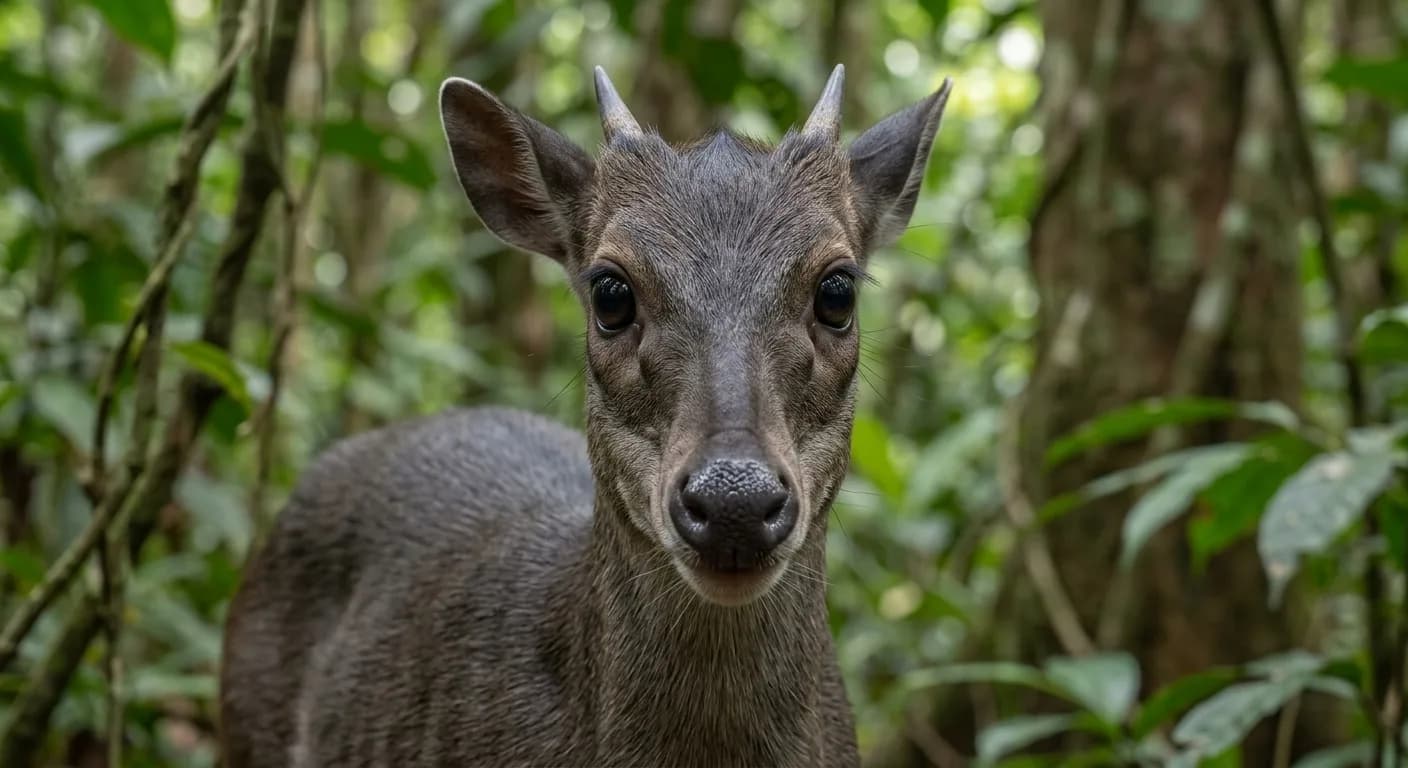
The zebra duiker is one of the most striking antelopes in Africa: a reddish gold coat crossed by between twelve and fifteen vertical black bands recalling a zebra's. It lives only in the primary forests of Liberia, Sierra Leone, Côte d'Ivoire and Guinea, and depends on mature woodland. It is diurnal and solitary, and feeds on fallen fruit and leaves. It has a notably thickened skull that it is thought to use for striking hard fruit open.

Weight

15 kg – 20 kg

Size

85 cm – 95 cm

Life expectancy

13 years
Diet

Omnivore

Combines animal and plant food depending on availability.

Activity

Diurnal

Active mainly during the day.

Social structure

Solitary

Lives and hunts alone, joining others only to breed.

Sighting difficulty

Moderate

Rainforest
4countries4parks86same family

AI-generated images: illustrations, not photographs.

Fun facts

  • Its vertical black bands on a golden ground are unique among African antelopes and work as disruptive camouflage in the dappled light of the understorey.
  • The frontal bone of its skull is abnormally thick, and it is thought to use it as a hammer to break hard-shelled fruit against the ground or against tree trunks.

Life cycle and biology

Skeleton type
Vertebrate - internal bony skeleton (mammal)
Habitat and environment
Primary lowland rainforest of the Upper Guinean forest region, in West Africa
Sexual maturity
14 months
Gestation / incubation
7.5 months
Litter / clutch size
1

Sources consulted: https://es.wikipedia.org/wiki/Cephalophus_zebra

Where to find it

Loading map…

The pins mark the parks where its presence is documented.

Where to see it

Parks and dive sites where this species has been documented.

Related species

Other species in the catalogue with the most in common with Zebra Duiker — same habitat, park, country, tags or family.

Same taxonomic family
Shares a park
Shares a park
Shares a park

How to help

The zebra duiker is classified as vulnerable. Organisations such as the IUCN, WWF and the Wildlife Conservation Society work specifically on its conservation and that of its habitat; looking into their programmes is a good starting point if you want to get involved.

It's documented in 4 protected areas — one reason why protecting these places matters for its conservation.

Keep exploring

Based on what we already know about zebra duiker.

Comments

Share an experience, a fun fact or a tip for seeing the zebra duiker.

Be the first to comment.

See full glossary
This page in other languages: Español · Deutsch · Français · Português · Italiano
See its range on the interactive map→
TaiCôte d’Ivoire
Mount Nimba Strict Nature ReserveGuinea
Sapo National ParkLiberia
Gola RainforestSierra Leone
Maxwell's DuikerLeast Concern

Maxwell's Duiker

Philantomba maxwellii

Least Concern

Royal Antelope

Neotragus pygmaeus

BongoNear Threatened

Bongo

Tragelaphus eurycerus

LeopardVulnerable

Leopard

Panthera pardus

Diana MonkeyVulnerable

Diana Monkey

Cercopithecus diana

Vulnerable

African Golden Cat

Caracal aurata

CountriesCôte d’Ivoire
ParksTaiCôte d’Ivoire
TagsHerbivore
Herbivore
Omnivore
Diurnal
Solitary
Vulnerable
Rainforest
Mammal
Côte d’Ivoire
Guinea
Liberia
Sierra Leone