One of the 5 albatrosses on WAnimals
Birds · Procellariiformes · Diomedeidae
Waved Albatross
Phoebastria irrorata
It faces an extremely high risk of imminent extinction in the wild. See full glossary
The Galápagos albatross or waved albatross is the only member of the family Diomedeidae that lives in the tropics. It breeds only on the Ecuadorian island of the Galápagos Islands, and on Isla de la Plata. The nests are built on lava fields. Outside the breeding season these birds live mainly off the coasts of Peru and Ecuador, and are vagrants to Chile and Colombia. This long-lived bird, which can reach 80 years of age, is one of the most efficient travellers thanks to its 3-metre wingspan, built for gliding, with which it reaches speeds of 90 km an hour.
Weight
2.7 kg – 4 kg
Size
85 cm – 93 cm
Lifespan
45 years
Diet
Carnivore
Feeds mainly on other animals.
Activity
Diurnal
Active mainly during the day.
Social structure
Colony
Lives in large concentrations, often for breeding reasons.
Sighting difficulty
Very hard
Estimated population
Around 35,000 individuals
Fun facts
- conservaciónIt breeds almost entirely on a single island of the archipelago, Española, which gives it one of the most restricted breeding ranges of any seabird in the world.
- It is the only tropical albatross in the world, and its entire breeding population fits on an island of sixty square kilometres.
- Its courtship dance includes a bill duel in which the pair clatter them together with a rattle audible from a distance, alternating bows and swaying and ending with both pointing at the sky: each pair perfects its own version over the years.
- The birds roll their eggs along the ground during incubation, sometimes for several metres, a behaviour that has never been fully explained.
Life cycle & biology
- Skeleton type
- Vertebrate - internal bony skeleton (bird)
- Habitat & environment
- The Humboldt Current off Peru and Ecuador; breeds almost exclusively on Española island, in the Galápagos
- Sexual maturity
- 8.3 years
- Gestation / incubation
- 62 days of incubation
- Litter / clutch size
- 1 egg
Sources consulted: https://es.wikipedia.org/wiki/Phoebastria_irrorata
Where to watch it
Parks and dive sites where this species has been documented.
Related species
Other species in the catalogue with the most in common with Waved Albatross — same habitat, park, country, tags or family.
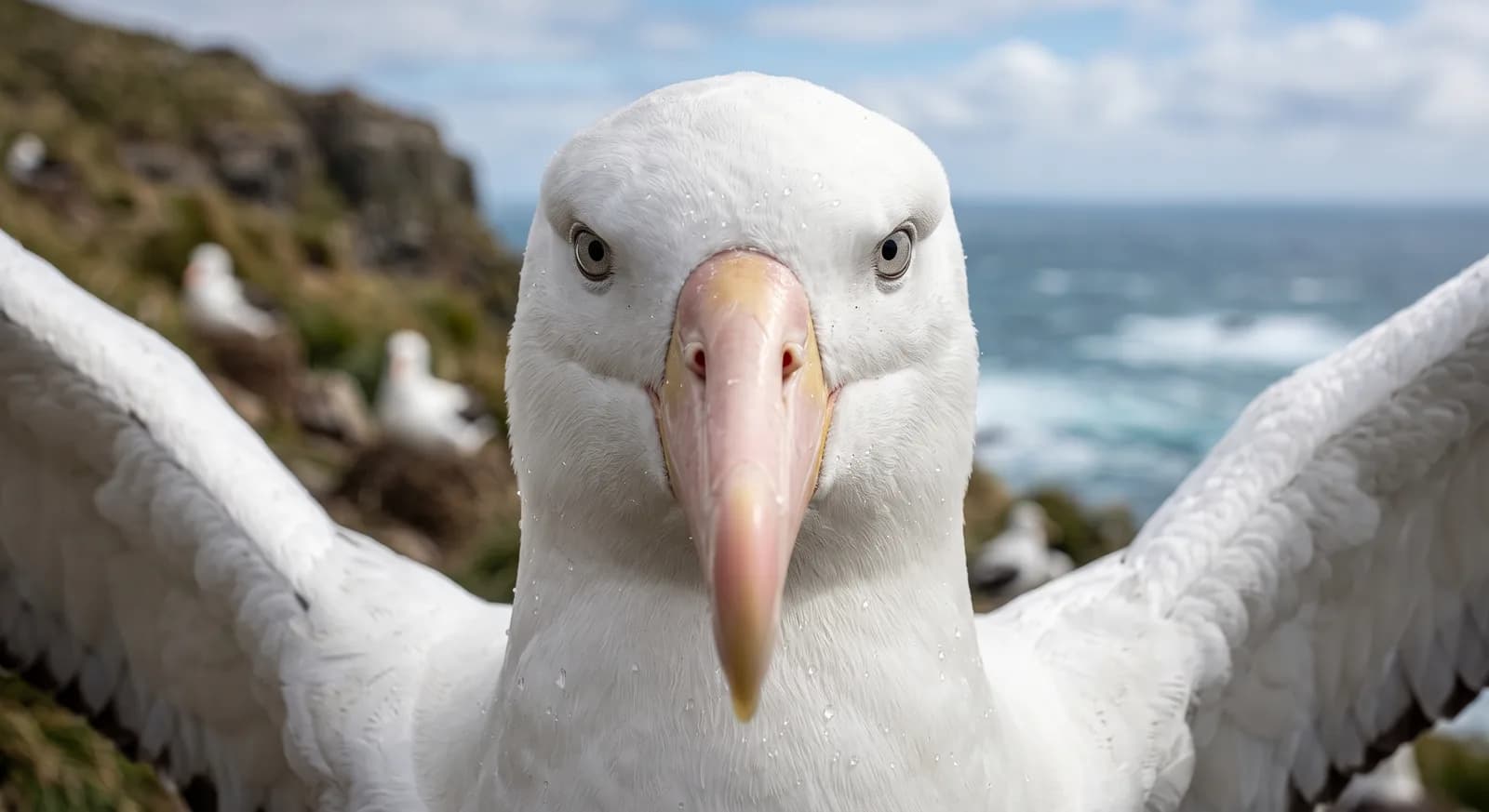
Wandering Albatross
Diomedea exulans
 Least Concern
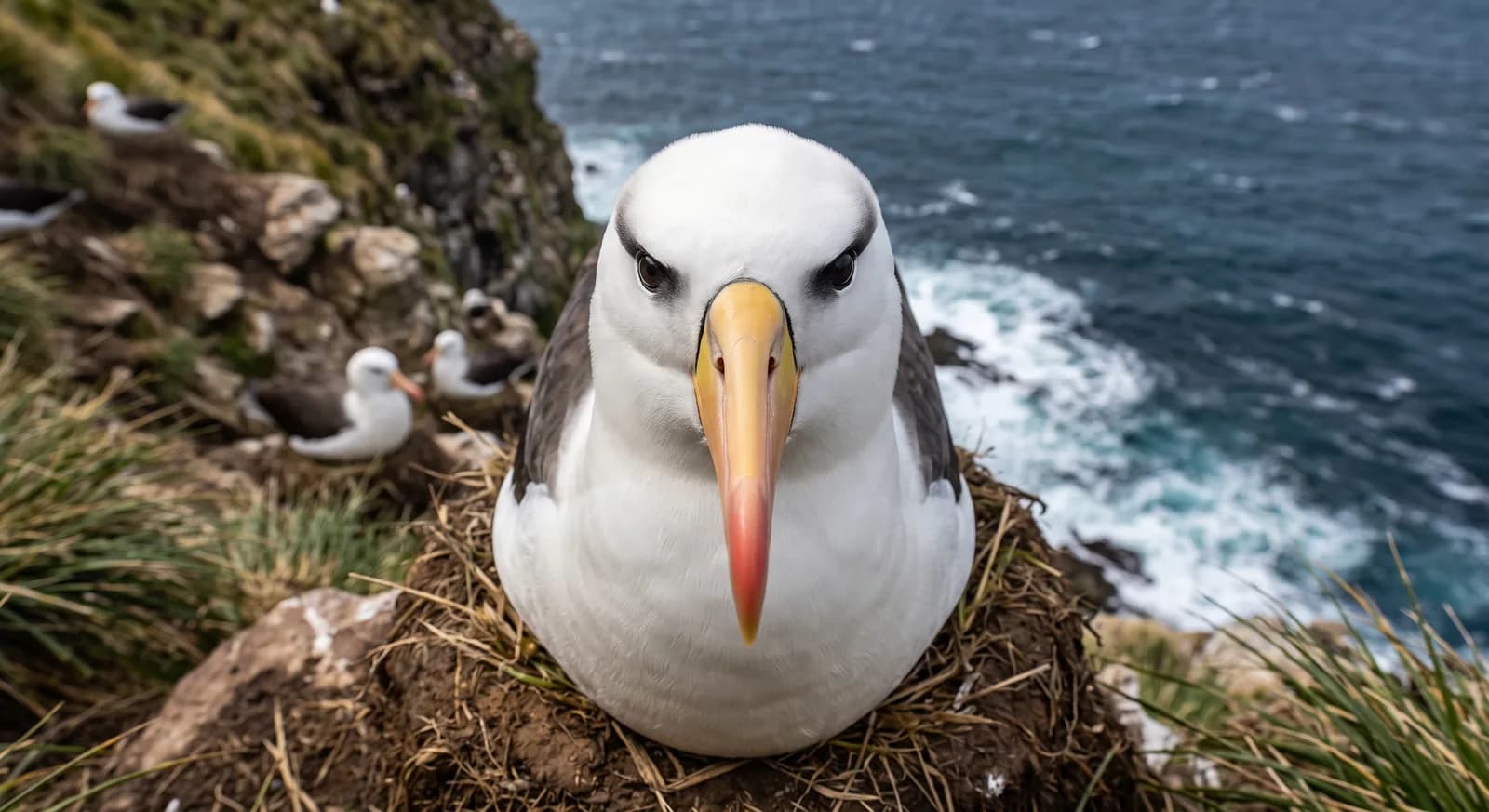
Black-browed Albatross
Thalassarche melanophris
 Vulnerable
Southern Royal Albatross
Diomedea epomophora
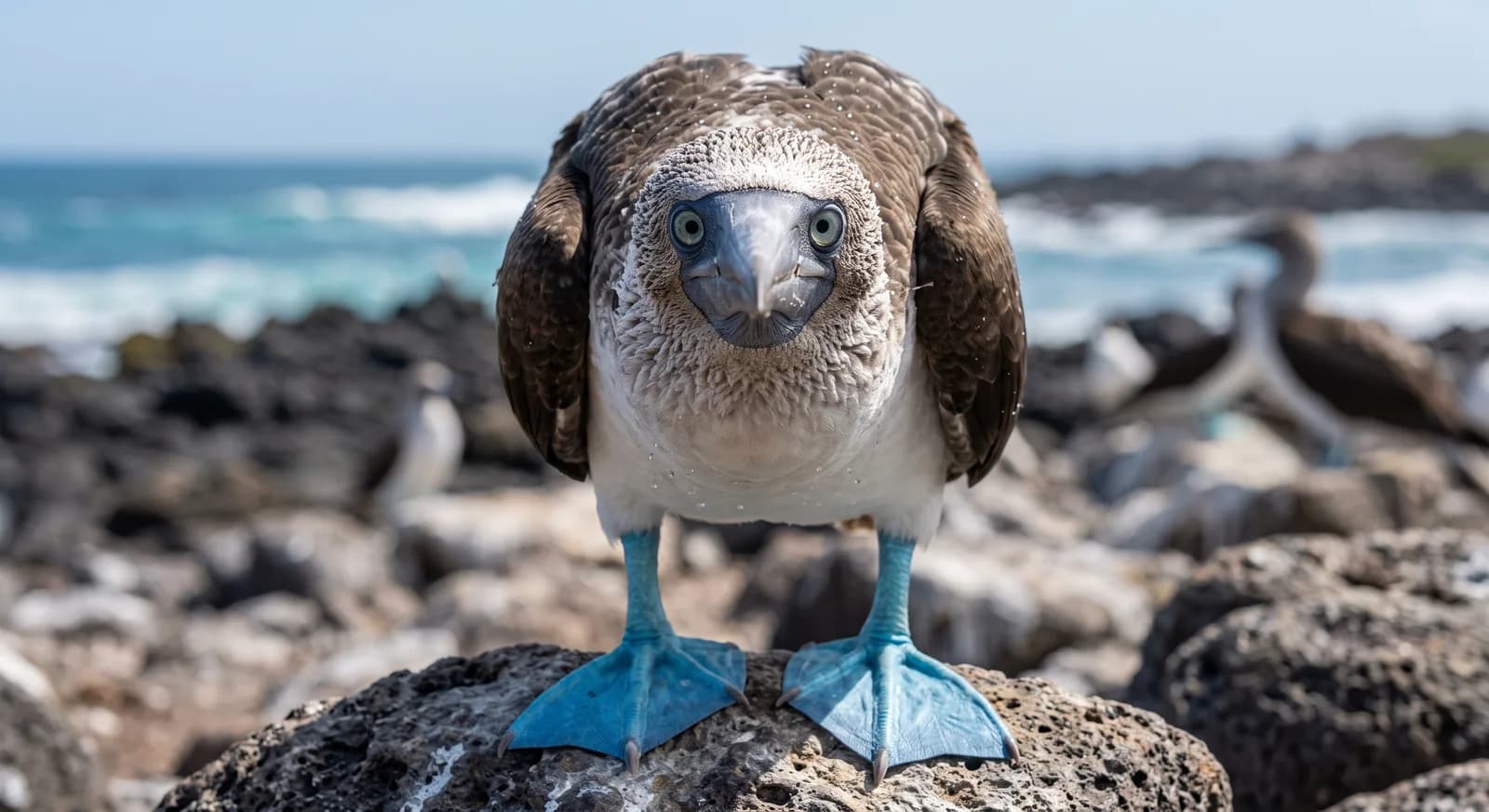 Least Concern
Blue-footed Booby
Sula nebouxii
Flightless Cormorant
Nannopterum harrisi
 Least Concern
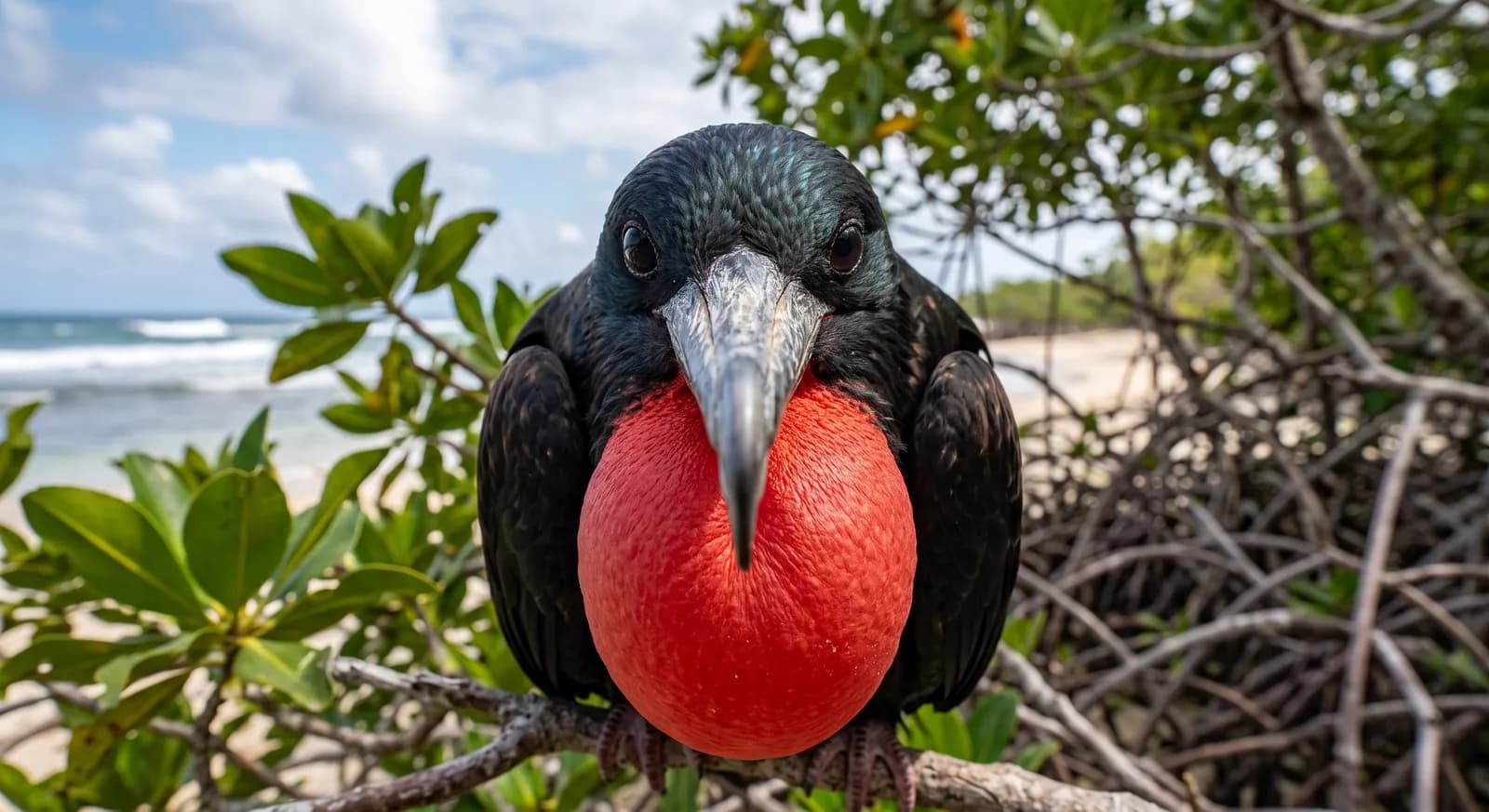
Magnificent Frigatebird
Fregata magnificens
How to help
The waved albatross is classified as critically endangered. Organizations such as UICN, WWF y Wildlife Conservation Society work specifically on its conservation and that of its habitat; looking into their programs is a good starting point if you want to get involved.
It's documented in 1 real protected area — part of why protecting these places matters for its conservation.
Keep exploring
Based on what we already know about waved albatross.
Comments
Share an experience, a fun fact or a tip for seeing the waved albatross.
Be the first to comment.