Species group · Birds
Albatrosses
WAnimals has 5 species of albatross, all in the family Diomedeidae.
- 5 species
- 1 family
- 20 countries
- 20 parks
- Weight
- 2.7 kg – 12.7 kg
- Length
- 70 cm – 1.4 m
- Lifespan
- 40 – 70 years
Ranges calculated from the entries that record the figure, not from all 5.
All 5 species of albatrosses on WAnimals
Each one has its own full entry. This group does not replace them: it brings them together.
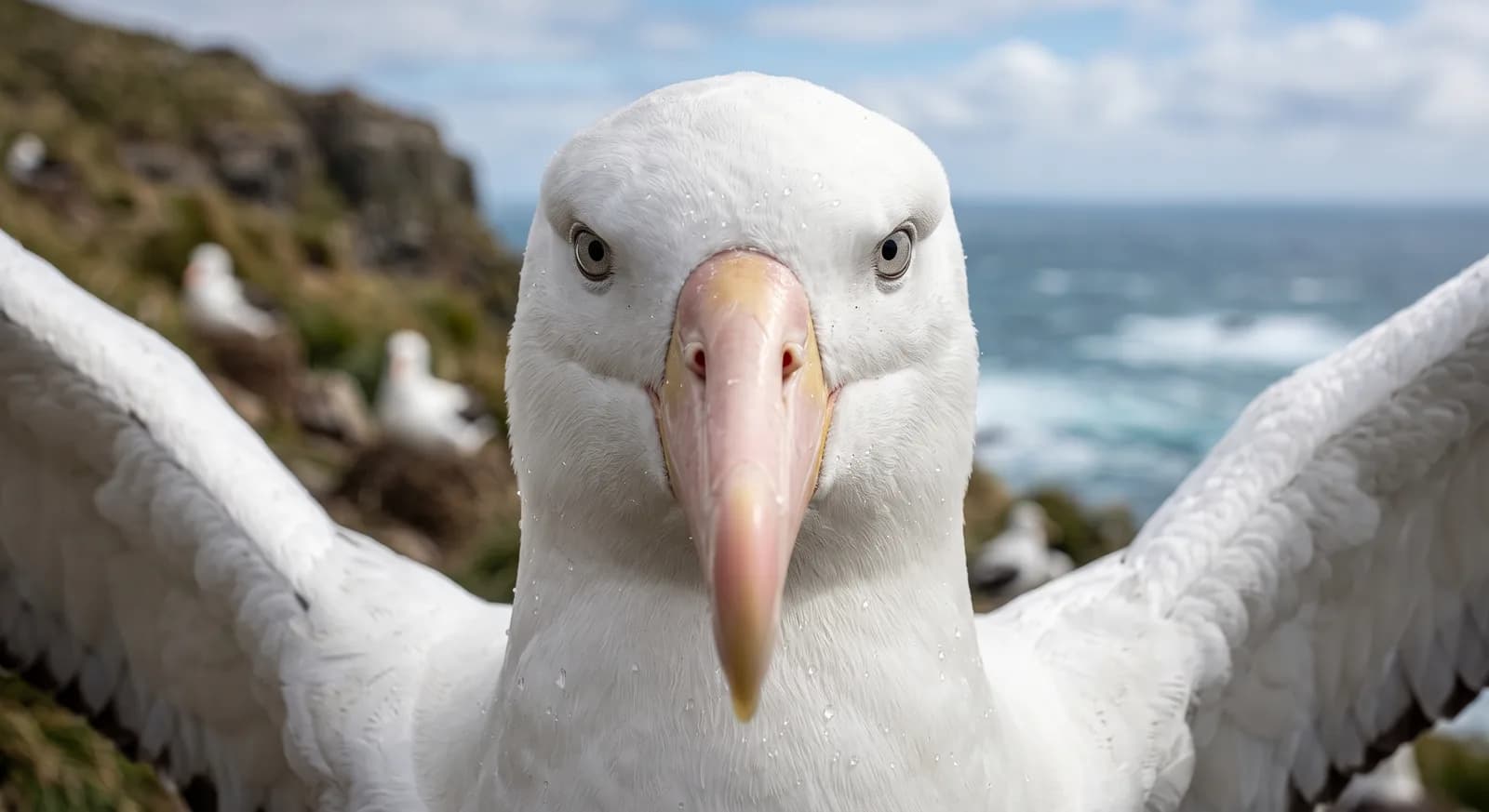 Vulnerable
Southern Royal Albatross
Diomedea epomophora
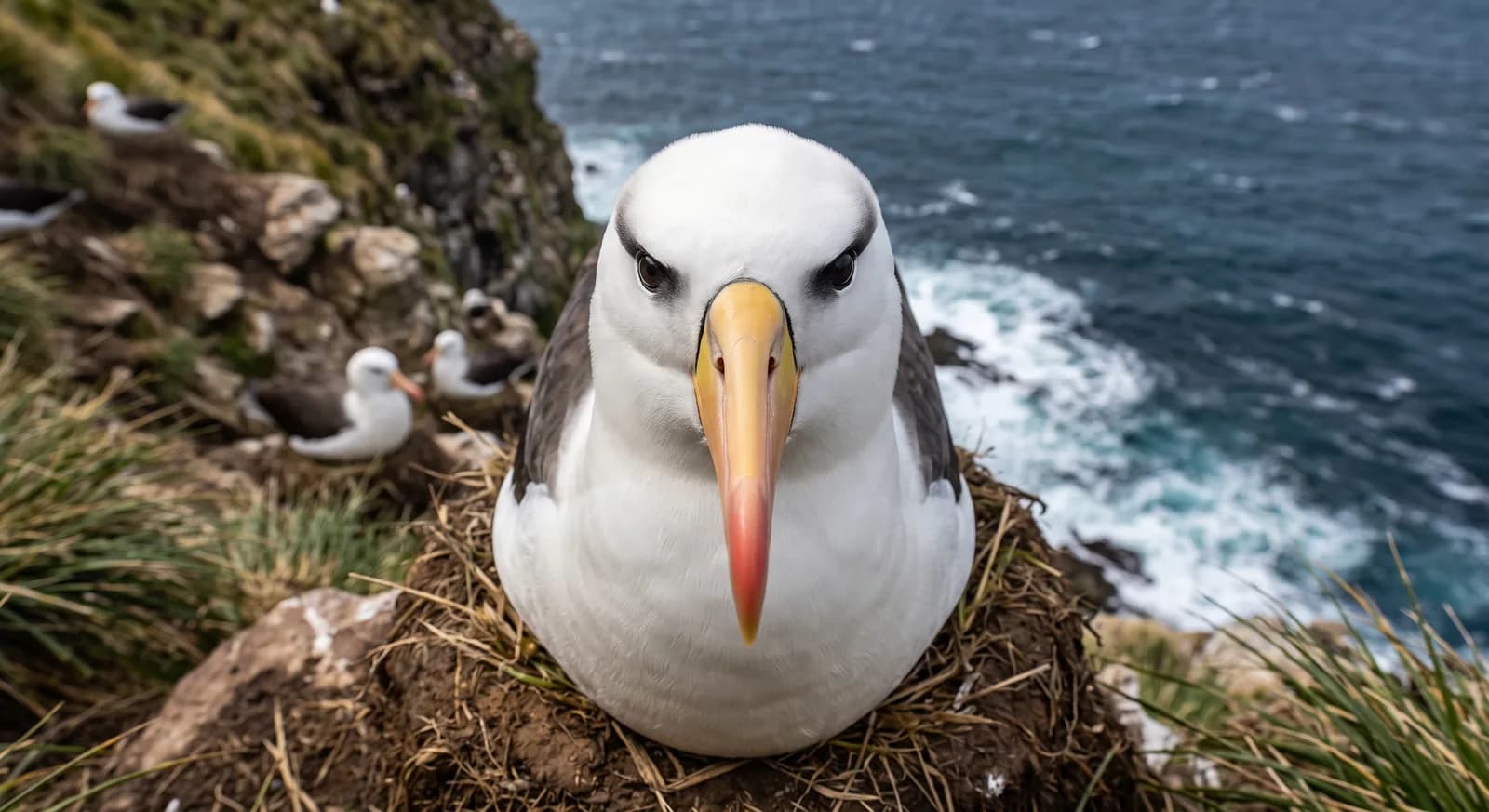 Least Concern
Black-browed Albatross
Thalassarche melanophris
Wandering Albatross
Diomedea exulans
Grey-Headed Albatross
Thalassarche chrysostoma
Waved Albatross
Phoebastria irrorata
Conservation status
4 especies in this group están en alguna categoría de riesgo real según la UICN.
See the global conservation statusWhere they live
Recorded in 20 countries. The ones with the most species in the group:
Where to see them
- Isla Macquarie4 species
- Islas Diego Ramirez4 species
- Islas Subantárticas de Nueva Zelanda4 species
- Georgias del Sur (Grytviken y bahía de San Andrés)3 species
- Isla Ave (Bird Island), Georgias del Sur3 species
- Isla San Pedro (Georgias del Sur)3 species
- Islas Kerguelen3 species
- Mar de Ross (Area Marina Protegida)3 species
- Tierras y Mares Australes Franceses3 species
- Fiordland2 species
- Islas Gough e Inaccesible2 species
- Islas Heard y McDonald2 species
- Stewart Island (Foveaux Strait)diving
Did you know…
It can glide thousands of kilometres with barely a wingbeat thanks to dynamic soaring: it exploits the difference in wind speed between the water's surface and fifteen metres up, and a tendon locks the outstretched wing without any muscular effort.
The colony at Taiaroa Head in New Zealand is the only great albatross colony in the world on the mainland and open to the public, and it has been monitored continuously since 1938.
It can live for several decades and pairs monogamously for life, performing elaborate synchronised courtship rituals that are repeated every breeding season.
Its recovery is one of the best pieces of news in recent marine conservation: it went from Endangered in 2003 to Least Concern in 2013 thanks to bird-scaring lines, weighted hooks and night setting on longlines.
An individual called Albert has been turning up every spring for more than three decades at a gannet colony in Scotland, thousands of kilometres from his own species, in search of a mate he will never find.
It pairs monogamously for life and can cover more than 10,000 km a year without ever returning to land outside the breeding season.
From Wandering Albatross
It eats cephalopods — squid above all — along with small fish and crustaceans taken at the surface.
From Wandering Albatross
It breeds every other year rather than annually, laying a single egg.
From Wandering Albatross